Welcome to the new issue of ‘The Latest from UBA’!
Too often, attention focuses only on the costs of climate and environmental protection. But what social knock-on costs are actually caused by greenhouse gases and air pollutants? The newly updated UBA Handbook on Environmental Value Factors sets out the answer, and we would like to introduce it to you in this newsletter. We also take a look at how Germany is progressing on climate action and air pollution control, and at how textiles in the EU could become more environmentally sustainable.
We hope you find it an interesting read
Your UBA Press and Public Relations team
New UBA Handbook on Environmental Value Factors quantifies the substantial damage caused by greenhouse gases and air pollutants
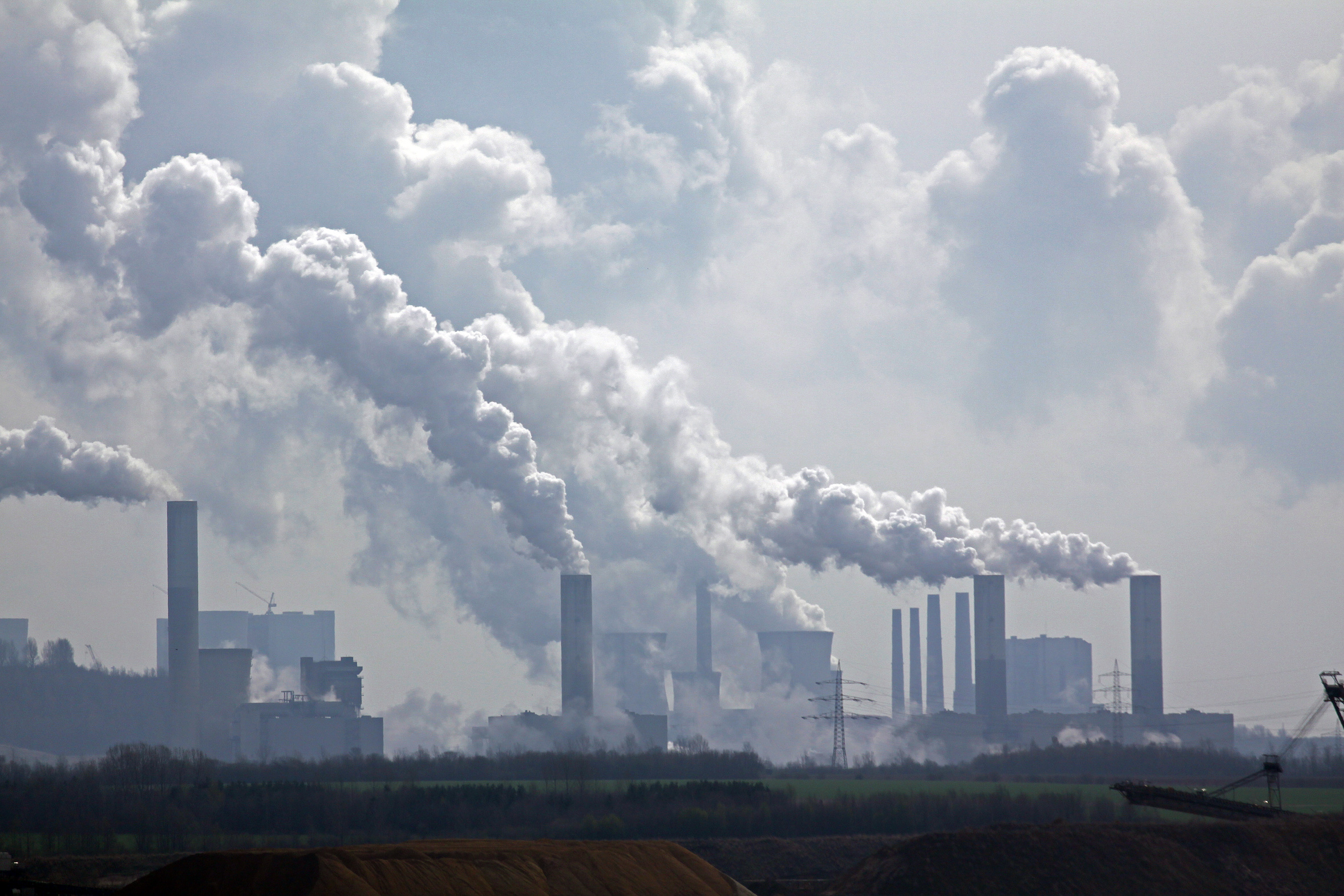
Greenhouse gas emissions cause billions of euros worth of damage worldwide.
Source: ClaudiaOtte / Fotolia
Climate and environmental protection help prevent real damage to health, prosperity, infrastructure and economic performance. To make the damage caused by environmental pollution visible and comparable, the UBA has, since 2007, published value factors in its Handbook on Environmental Value Factors – Methodological Convention, which convert these impacts into euro values.
According to the recently published version of the handbook, which includes updated and expanded value factors, the emission of one tonne of carbon dioxide causes around €990 in climate-related damage, while the emission of one kilogram of particulate matter (particle size below 2.5 micrometres) causes around €128 in health-related damage.
For greenhouse gases emitted in Germany in 2024 alone, the resulting global damage amounts to €647 billion for current and future generations, for example through crop failures caused by droughts or rising heat-related mortality.
UBA President Dirk Messner said: “The Handbook clearly shows that climate change will be costly and underscores the need for ambitious climate action.”
The decline in climate-harming emissions in Germany has slowed. This is shown by the emissions data published by the German Environment Agency (UBA) for 2025. According to these figures, Germany emitted around 649 million tonnes of CO₂ equivalents last year.
This year’s Green Cooling Summit, jointly organised by the Deutsche Gesellschaft für Internationale Zusammenarbeit (GIZ) and the German Environment Agency (UBA) on behalf of the Ministry for the Environment, deals with the question of how single-split air conditioning appliances with the natural refrigerant propane (R 290) can be leveraged on a global scale.
Part 2: Atmospheric data on SF₆ and NF₃ in Europe and Germany
SF₆ and NF₃ are long-lived greenhouse gases with extremely high global warming potentials. Their use, especially in switchgear and in the semiconductor industry, has led to a significant rise in their atmospheric mixing ratios globally.
Regular measurements of both substances were established at the Taunus Observatory of Goethe University Frankfurt. The measurements are fully incorporated into the…
In Article 2.1 (c) of the Paris Agreement, the international community sets itself the goal of aligning global financial flows with the objectives of the Agreement. But how can we determine whether this goal is being achieved?
This paper reviews and evaluates existing assessment frameworks for tracking progress under Article 2.1(c), identifying key trends, gaps, and lessons for the future…
The project aimed to identify how the EU can achieve climate neutrality by 2050. Three transformation pathways were modelled based on different assumptions. A reference scenario reflecting current policies showed that climate neutrality cannot be reached under existing measures. Two target scenarios were then developed: one relying mainly on technological solutions such as CCS, and another…
Currently, policymakers are debating the design of the Market Stability Reserve (MSR) in the EU Emissions Trading System 2 (EU ETS 2) and its role in smoothing allowance supply, limiting price increases, and safeguarding the system’s environmental integrity. This report uses Veyt’s EU ETS 2 market model to compare seven reform options and analyse their impacts on prices, the Total Number of…
Two years ago, the German Environment Agency (UBA) detected mono-n-hexyl phthalate (MnHexP) in the urine of adults. MnHexP is a breakdown product of the plasticiser di-n-hexyl phthalate (DnHexP), which is considered toxic to reproduction and is therefore not authorised in the EU. The findings could be traced back to contamination of a UV filter used in sunscreens.
Harmonisation of input parameters and interpretation of results
In environmental risk assessments for veterinary medicines, FOCUS models are applied to calculate the concentration in groundwater and surface water. The report suggests harmonised input parameters applicable to veterinary medicines and aids in the analysis of results. It also contains a manual for performing FOCUS simulations. The manual is complemented by a presentation on the use of FOCUS…
For the first time, binding requirements for the sustainability of textiles are planned for the European market. The basis for this is the Ecodesign for Sustainable Products Regulation, which came into force in 2024. A study of the German Environment Agency (UBA) has identified five possible product aspects for which requirements could be made and about which consumers should be informed.
How can our built environment become healthier, more climate-friendly, and more resource-efficient? Recommendations for all levels of politics and administration — from the EU to local government — were developed in the EU Interreg project NonHazCity3 and are now presented with policy briefs and a short video. The focus: digital transparency of ingredients of building products and circularity.
This publication provides an overview about data of the German PRTR (Pollutant Release and Transfer Register). For each pollutant, the number of reported facilities and their releases to air, water and land and their off-site transfer in waste water are clearly displayed. Data for industrial sectors of the current reporting year 2024 are summarized in tables while their developments since 2007 are…
We are pleased to inform you that the German Environment Agency (UBA), together with the European Environment Agency (EEA), will host the high-level event “Insights from Europe’s Environment: Resilient and Innovative Circular Economy” on 21 April, 2026. The event and the following networking reception will take place from 16:30 to 18:30 (CET) at the European Commission Representation in Berlin.
Metal cycles and data gaps in recycling – An analysis of the current data situation
The circular economy is a transformation towards an economy that is resource-efficient, climate-neutral and resilient. Experts from the German Environment Agency and the German Raw Materials Agency systematically analyse available data on metal material cycles, focusing on secondary raw materials, recycling metrics, and material qualities. Case studies on aluminium and cobalt are used to identify…
Air pollution control measures are paying off: In 2025, Germany once again complied with all limit values under the European air quality directives. For particulate matter, this marks the eighth consecutive year; for nitrogen dioxide, the second. However, the average exposure to particulate matter and nitrogen dioxide was higher than in previous years.
Volume I – Current status of national and international legislation
The two-volume policy report is the first comprehensive legal assessment, which systematically compares national legal frameworks for munitions in the Baltic Sea Region and derives tangible proposals for EU-wide harmonisation. This first volume gives an overview on international and European legislation regarding munitions at sea, relevant international research projects and the national situation…
To assess the risks posed by legacy munition contamination, preliminary quality standards for TNT (2,4,6-trinitrotoluene) were developed for the protected resources of pelagic communities in freshwater and seawater, for human health via seafood consumption, and for drinking water. The quality standard for the pelagic community (freshwater and seawater) is the "critical quality standard" for…
Texte
48
Sustainability / Strategies / International matters
The German Environment Agency invites researchers, policymakers, technical experts and civil society representatives to an online workshop held in English as part of its research project “Analysis of measures for the achievement of SDG 15 at EU level”. Three thematic sessions examine biodiversity integration in the NECPs, the role of the EU Commission, and stakeholder and scientific participation.
The EU’s next Multiannual Financial Framework offers an opportunity to align funding with competitiveness and resilience goals. The current proposal suggests a weakening of the environmental and climate priorities. This policy brief advocates for a future-oriented MFF that embrasses resilience, climate change, environment and green innovation. Instruments (Do No Significant Harm (DNSH) principle…
Revision of climate and environmental coefficients in the Performance Regulation necessary
For the EU Multiannual Financial Framework 2028–34, the system of intervention areas (IA) with their climate and environmental coefficients is central to financing environmental and climate-related measures. The Commission’s proposal is analyzed for selected IA, and policy options are outlined. The analysis shows that the COM proposal overestimates positive environmental impacts by assigning…
fact sheet
10
Imprint
Umweltbundesamt Präsidialbereich / Presse- und Öffentlichkeitsarbeit, Internet; Pressesprecher Wörlitzer Platz 1 06844 Dessau-Roßlau E-Mail: buergerservice@uba.de