
German air quality limits were met in 2025

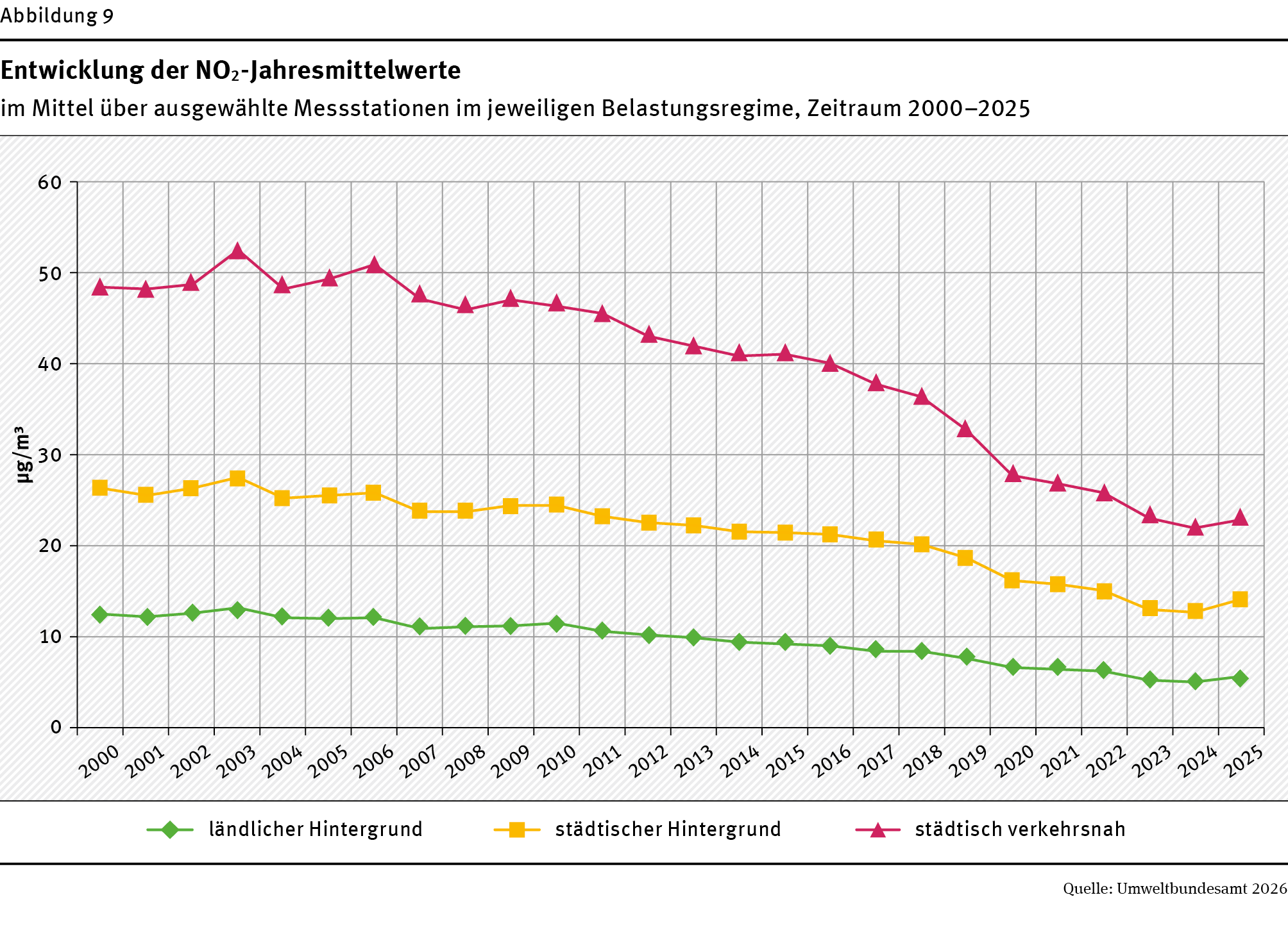
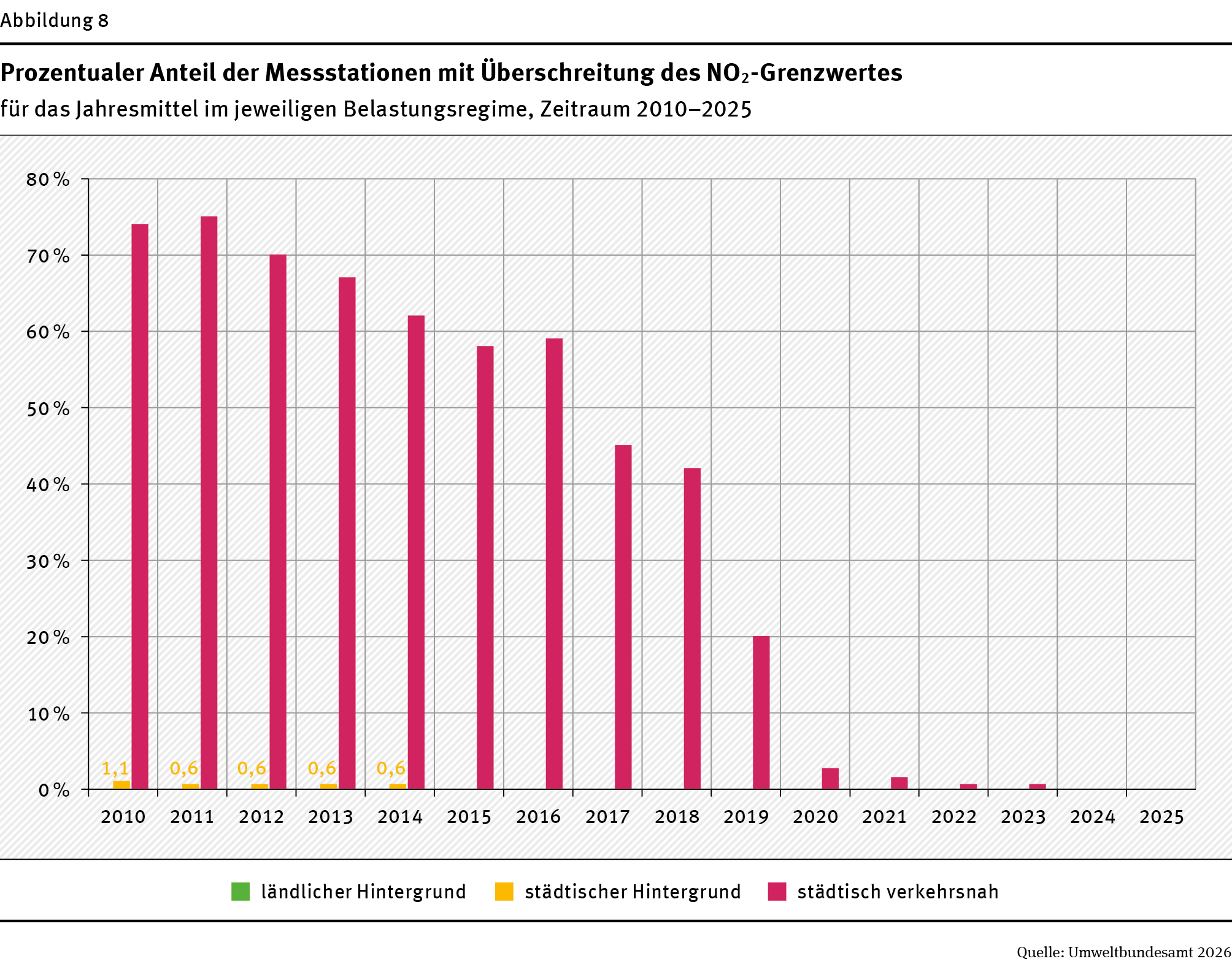
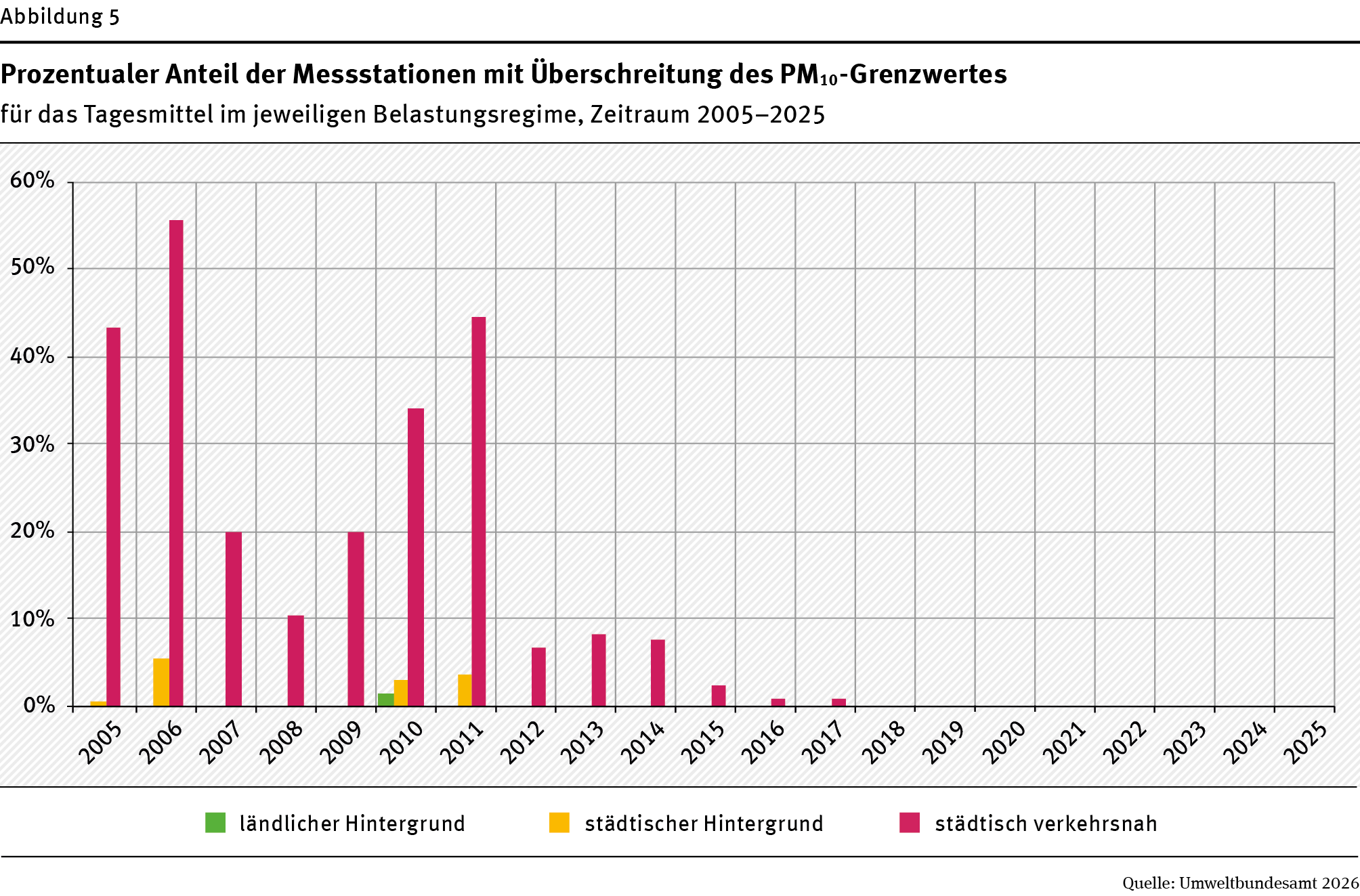
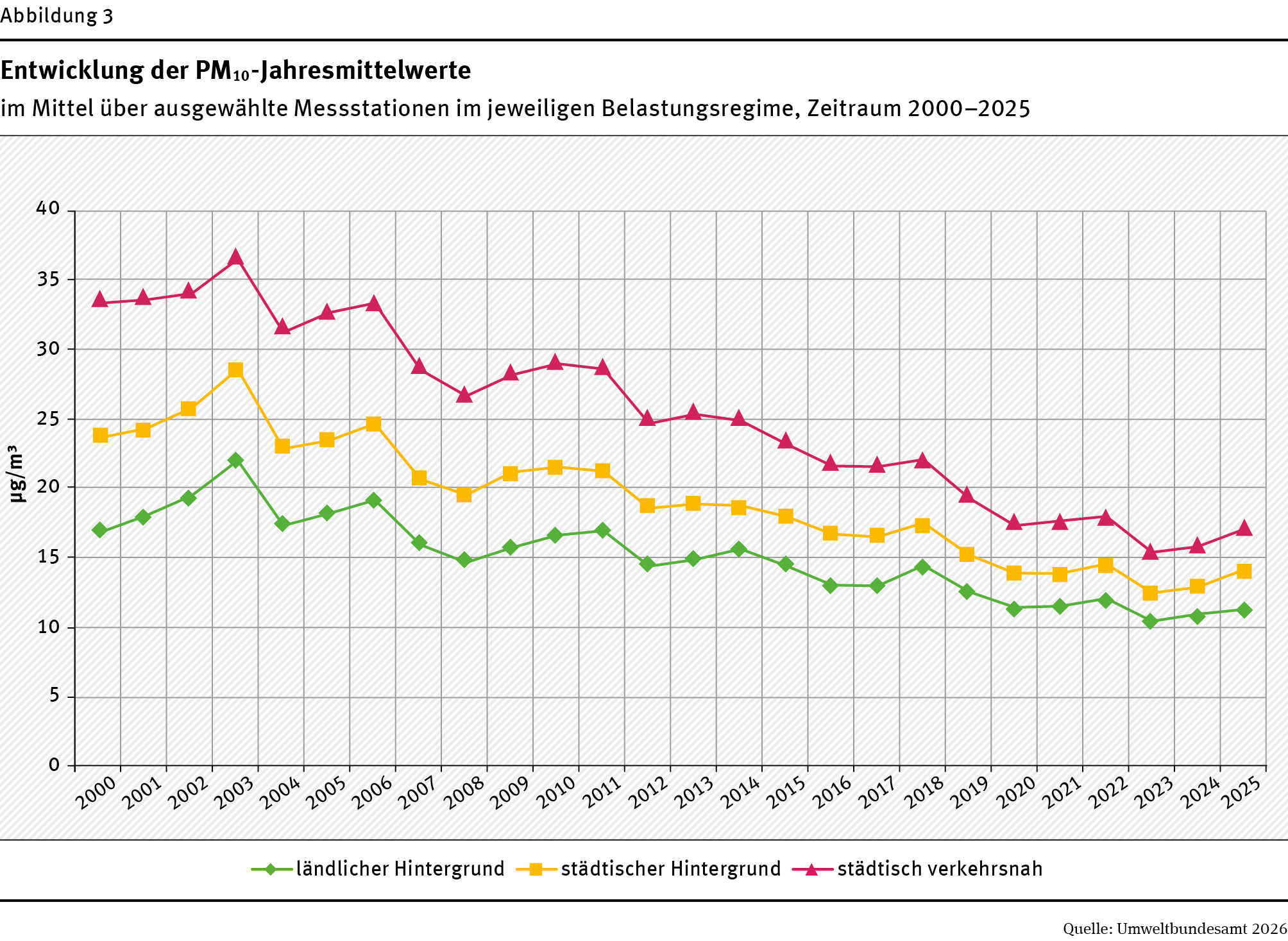
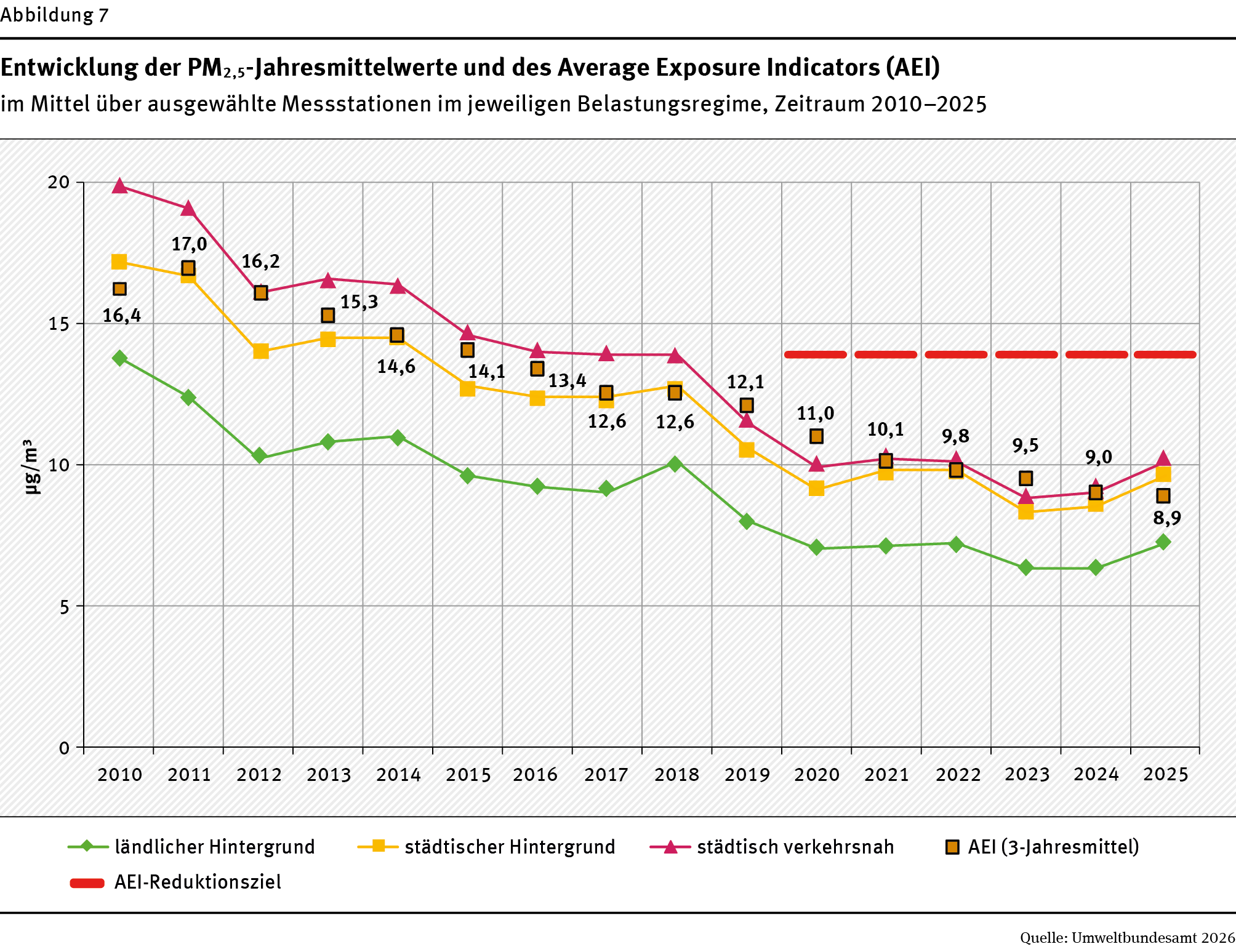
Air pollution control measures are paying off: In 2025, Germany once again complied with all limit values under the European air quality directives. For particulate matter, this marks the eighth consecutive year; for nitrogen dioxide, the second. However, the average exposure to particulate matter and nitrogen dioxide was higher than in previous years. This is shown by the preliminary evaluation of measurement data from the federal states and the German Environment Agency (UBA), based on data from around 600 monitoring stations to date (as of 22 January 2026).
Dirk Messner, President of the UBA, said: “By meeting all limit values, the positive trend of recent years continued in 2025. Nevertheless, further efforts are needed to improve air quality.” From 2030 onwards, the stricter limits of the new European Air Quality Directive must be complied with. For example, the annual mean limit for nitrogen dioxide (NO2) will fall from the current 40 to 20 micrograms per cubic metre (µg/m³), and the fine particulate matter limit value (PM2.5) from the current 25 to 10 µg/m³.
In the long term, the limit values are to be fully aligned with the WHO guidelines. To this end, the new Air Quality Directive stipulates that the limit values will be reviewed at the end of 2030 and every five years thereafter. By 2050, the aim is to reduce air pollutants to such an extent that pollution is no longer considered harmful to humans or the environment. “Although the new European limit values only gradually approach the far more ambitious recommendations of the World Health Organization, every improvement in air quality reduces the health risks for the population as a whole,” said Messner.
Comparison with the limits of the new Air Quality Directive
Comparing the current air monitoring data for 2025 with the stricter limits to be applied from 2030 onwards under the new EU Directive, further improvements are still necessary. Analysis of current data shows that, for nitrogen dioxide (NO2), around 39 percent of all monitoring stations do not yet meet the annual mean value of 20 µg/m³, and for particulate matter PM2.5 around 18 percent do not yet meet the annual mean value of 10 µg/m³. According to UBA estimates, continued improvements in air quality mean that by 2030, compliance with the new limits can be expected for almost all pollutants, with only isolated exceedances for PM2.5 and NO₂. Nationwide compliance with all limit values in Germany is expected to be achievable by 2035, i.e. still within the maximum extension period for compliance with the new Air Quality Directive (2037).
Episodes of high particulate matter pollution in winter
In particular, the months of February and March last year were characterised by episodes of high particulate matter pollution (PM2.5), caused in part by transboundary transport of pollutants. Pollutant levels are also influenced by weather conditions. When it is cold, emissions increase, for example due to higher energy demand and heating needs. During cold, wintry high-pressure weather situations, often characterised by low wind speeds and limited vertical air exchange, pollutants can accumulate in the lower layers of the atmosphere over a period of days, leading to increased pollution levels. During these episodes, the new information thresholds (to be applied from 2030 onward) for particulate matter PM2.5 (50 µg/m³ as a daily mean) and PM10 (90 µg/m³) would have been exceeded. For many days, the Air Quality Index (LQI) indicated poor or even very poor air quality due to PM2.5 concentrations. The unfavourable weather conditions in winter also affected annual average exposure. In 2025, the average annual means for particulate matter (PM10, PM2.5) and nitrogen dioxide were higher than those in 2023 and 2024. However, this does not indicate a trend reversal, as 2023 and 2024 had below-average pollution levels due to favourable weather conditions.
The new Air Quality Index (LQI)
It is particularly important for people with pre-existing conditions to be informed promptly during periods of high pollutant exposure, so that they can adjust their behaviour to the current air quality on short notice. The Air Quality Index evaluates measurement data on particulate matter (PM2.5 and PM10), nitrogen dioxide, ozone and sulphur dioxide. The data is categorised from very good to very poor and presented in an index, which was derived from studies on disease incidence (e.g. hospital admissions due to heart, circulatory and respiratory diseases) and mortality. The forecast of air pollutant concentrations is also displayed as an index value (from very good to very poor). Behavioural recommendations provide guidance for the general population as well as for sensitive groups such as children, older people or persons with respiratory diseases, who are particularly vulnerable to deteriorating air quality. The UBA already uses such an index in its air quality app (Luftqualität), issues warnings in the event of poor air quality and provides health recommendations and behavioural tips.
Accuracy of the data
The evaluation is based on preliminary, not yet fully verified data from the air monitoring networks of the federal states and the UBA (as of 22 January 2026). Due to the extensive quality assurance in the monitoring networks, the final data will not be available until mid-2026. However, the current data allows for a general assessment of the past year.
Associated content
Links
- Air data portal
- „Luftqualität“ app
- The new air quality index
- Air topic page
- EU air quality directive
- Annual evaluation of particulate matter PM10, PM2.5 and NO2
- National trend tables for emissions of air pollutants 1990-2024
- Air topic page
- Particulate matter topic page
- Nitrogen dioxide
- Ozone
- Air date