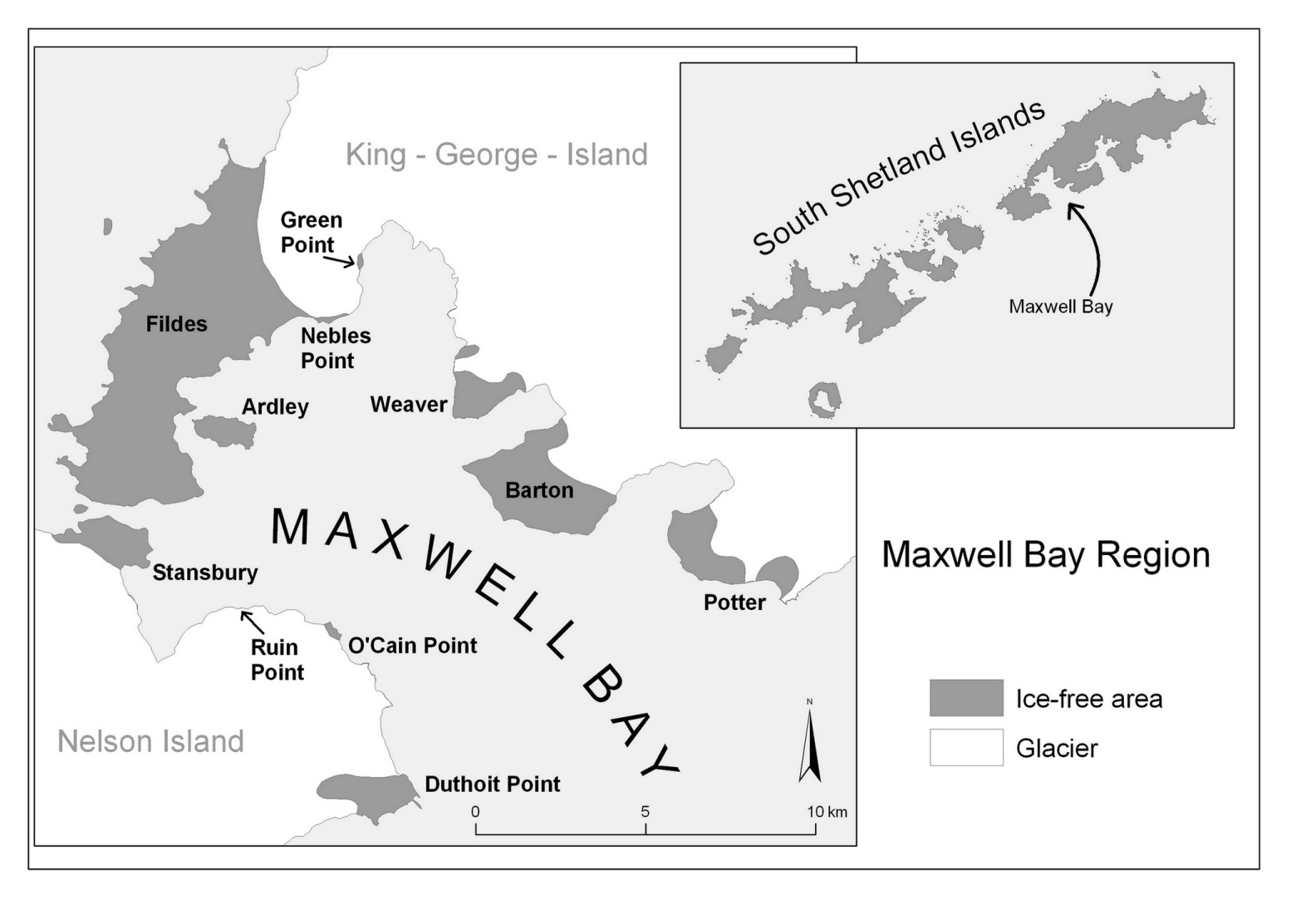
The Fildes Peninsula Region – nature under threat, stuck between logistics and research
King George Island is the largest of the South Shetland Islands and lies nearly 900 kilometres south of Tierra del Fuego. The southwestern end of the island, known as the Fildes Peninsula, is rocky and ice-free.
The Fildes Region has the highest density of stations in all of the Antarctic but also enjoys a relatively high degree of biodiversity. Poor coordination of scientific, logistical and tourism activities on the Fildes Peninsula, which has had considerable environmental impact until recently, was the reason for the many years of efforts at international level to improve management of the area. Five stations and four field huts (operated by Argentina, Brazil, Chile, China, Russia, and Uruguay) located on an area of about 30 km², in addition to a number of other human activities, exert high pressure on the region. The Fildes Peninsula and offshore Ardley Island are used intensively for scientific and logistical activities and are also increasingly exposed to tourism. Literal waste dumps have begun to grow, with serious damage to sensitive vegetation and disturbance of the landscape. Sea birds have been displaced from their breeding sites: the Southern giant petrel in particular has migrated away from some of its traditional breeding sites.