Sustainability in dealing with chemicals
Chemistry is key for sustainable transformation, for two important reasons: its role as a cause of problems such as environmental pollution or damage to health must be massively and globally pushed back. At the same time, chemistry is indispensable for human well-being because it provides diverse solutions for a wide range of areas such as health, nutrition, climate protection and mobility, for example with medicine and functional materials and products such as plastics or electronics. The strategic goals of the necessary transformation for sustainable development with and in chemistry are comprehensive. They require great innovative strength, on the one hand for technical solutions, and on the other hand for management measures, interaction and political framework conditions.
Sustainability in chemistry relates of a multitude of aspects and addresses several impact levels. The German Environment Agency places precautionary environmental and health protection at the center of its considerations and activities. The problems, challenges and options are clearly described (see here) and require concerted, effective action, with more sustainable approaches than hitherto.
Sustainability addresses the entire life cycle of chemicals, thus their starting materials, manufacturing of products and their application resp. use, all action for circularity as well as end-of-life. Thereby, it addresses all related processes, including energy demand, emissions and immissions, among others.
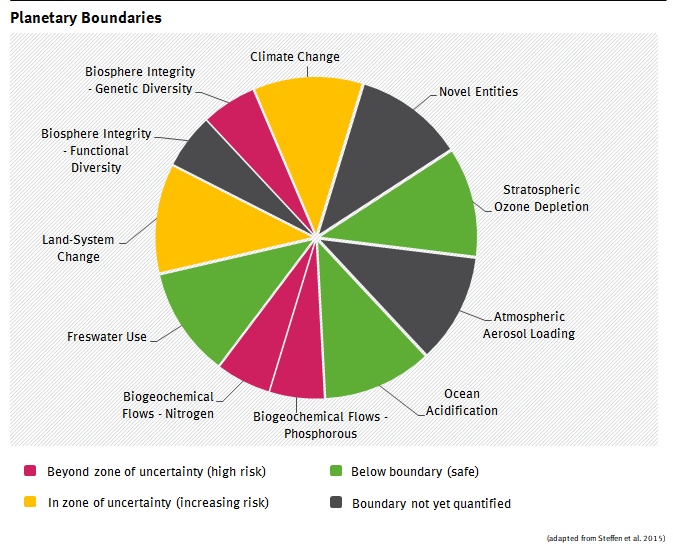
The solution approaches for a sustainable transformation of sectors, value chains and circular systems must take a systemic overall view, take place within the planetary boundaries (see Fig. 1) and serve the SDGs. Only an approach that sets priorities in terms of sustainable development can lead out of the existing imbalance between the economic, social and environmental spheres:
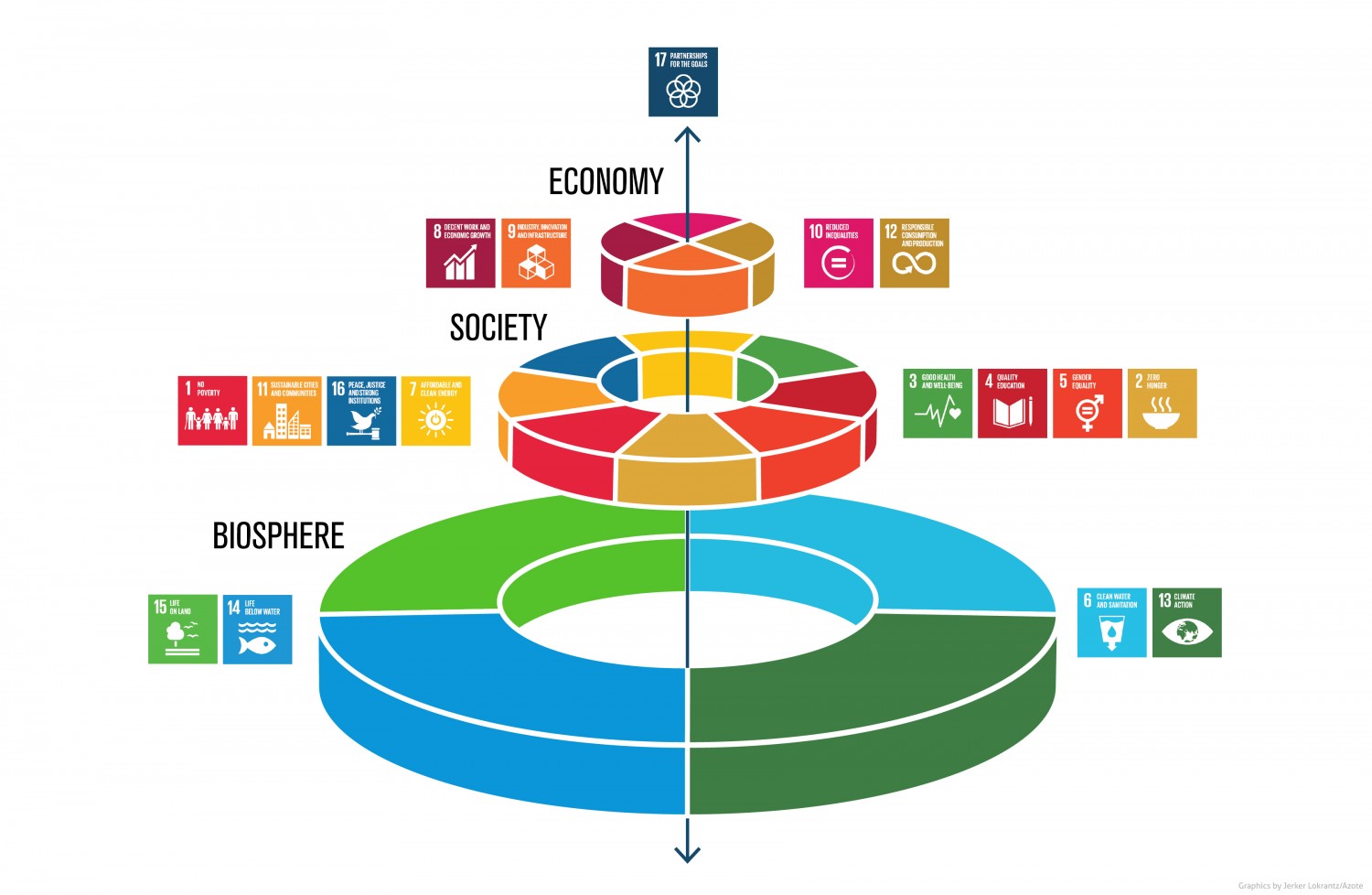
- The primary goal of economic activity and a prerequisite for successful business models must be to enable human well-being and to fulfil all elementary social needs - without harming society or the environment in the process.
- Society, in turn, can only exist within the capacity limits of our planet and is therefore dependent on intact ecosystems and limited resource consumption.
This results in a hierarchy of the three dimensions of sustainability (see Fig. 2).
Sustainability in and with chemistry as broad-based topic needs networked acting of actors from science, industry, environmental and consumer protection associations, as well as public authorities and politics. The cross-section of sectors to be considered with reference to chemistry in turn consists of the chemical and pharmaceutical industry as well as related industries such as, construction, textiles, cosmetics, agriculture and nutrition, mobility, energy, electronics and IT, etc.
Recognising and dealing appropriately with possible conflicts of objectives requires systems thinking. The sectors dealing with chemical entities should frame this as a contribution to sustainable development and address the respective SDG principles.
The application of sustainable chemistry aims to develop particularly safe and innovation-oriented solutions with preferably non-hazardous chemicals. Through long-term strategic planning and implementation of sustainable chemistry, all stakeholders are able to advancing the goals of the Global Framework on Chemicals (GFC) and its target system, which was adopted at the 5th International Conference on Chemicals Management (ICCM5) in Bonn at the end of September 2023.