
Skip to main content Skip to main menu Skip to footer

Nationally Determined Contributions (NDC)

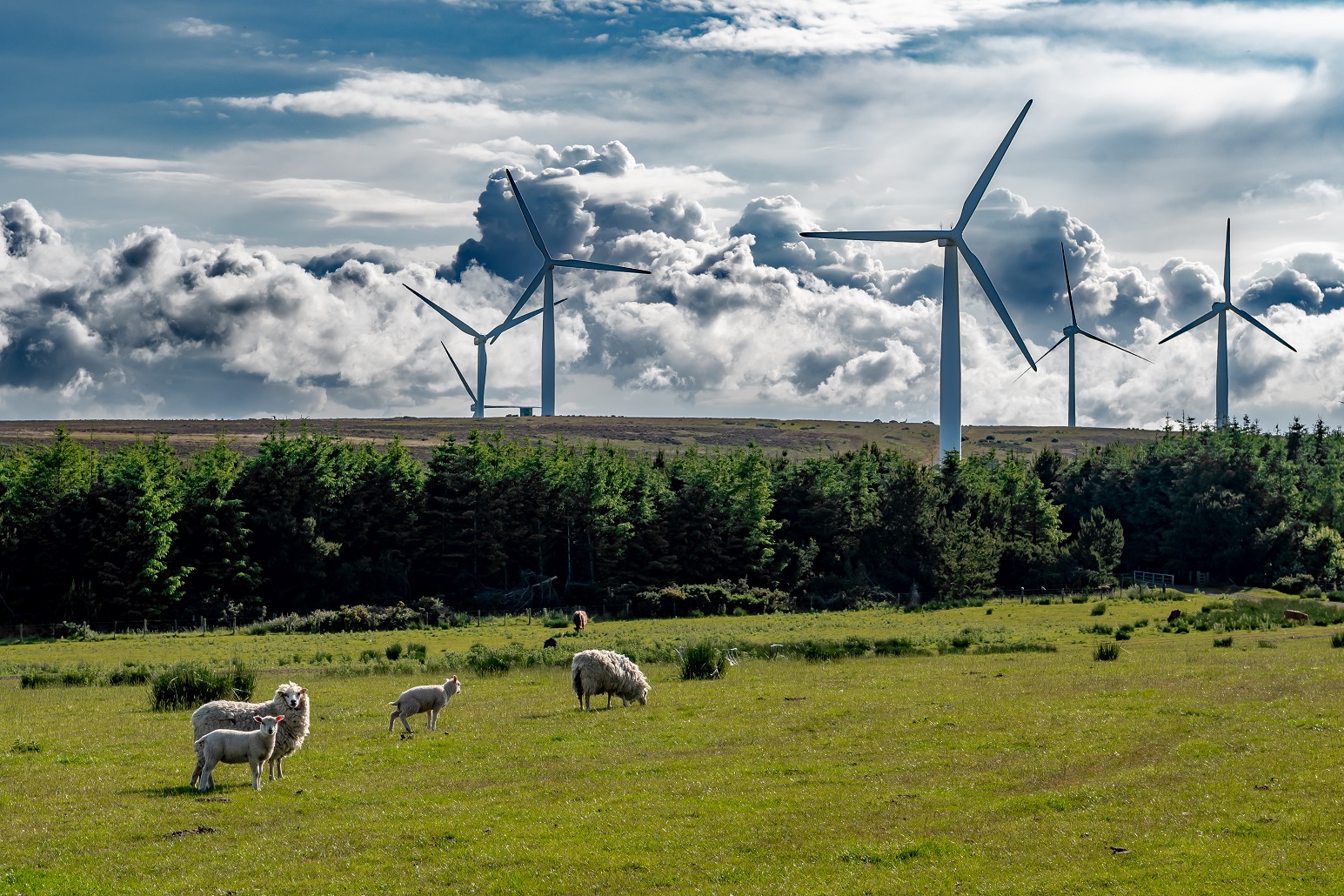
Wind turbines and sheep on a pasture
How ambitious will the new Nationally Determined Contributions - NDCs - be?
Source: grafxart / Adobe Stock

Every five years the Parties to the Paris Agreement have to submit new Nationally Determined Contributions (NDC). In 2023 Parties agreed that the new NDCs should be aligned with the 1.5 degrees climate target. However, with the NDCs submitted in 2025, the world is heading for a global warming of 2.3 to 2.5 degrees by the end of the century.

Table of contents

What are Nationally Determined Contributions?

The Paris Agreement, which was adopted in 2015, set out a five-year cycle for raising ambition in climate action step by step. Part of this ambition mechanism is the so-called Global Stocktake (GST). Looking back, the Global Stocktake identifies progress and gaps in climate action, looking forward, it identifies solutions and implementation options for effective climate action. These findings are then to provide impetus for ambitious national climate targets and international cooperation.

The climate action targets are submitted as so-called Nationally Determined Contributions (NDCs). In 2025, the Parties to the Paris Agreement were required to submit an NDC with a climate target for the year 2035. The so-called Katowice Rulebook (decisions of the international climate conference COP24) provides guidance on the information that should be included in the NDCs. Particularly important: The NDCs should describe the extent to which the results of the Global Stocktake (GST) have been taken into account. With the conclusion of the first GST in 2023, the Parties have agreed to align their new NDCs with the global temperature goal to limit the rise in temperature to 1.5 °C above pre-industrial levels.

Specific demands for greenhouse gas reduction in the first GST include tripling renewable energy capacity globally by 2030, doubling the global average annual rate of energy efficiency improvements by 2030 and the transition away from fossil fuels. Furthermore, nature-based solutions in climate action need to be strengthened and global deforestation is to end and be reversed by 2030. The first GST also calls for circular economy approaches to play a greater role in fighting climate change. A study by the German Environment Agency provides analysis on how these calls have been reflected in NDCs. 
Overview of current Nationally Determined Contributions until 2035

Implementing the Nationally Determined Contributions (NDCs) submitted for the target year 2035 would mean a 12 percent reduction in greenhouse gas emissions by 2035 compared to 2019 (UNFCCC secretariat NDC Synthesis Report Update 2025). Comparing these figures with statements in the Sixth Assessment Report of the Intergovernmental Panel on Climate Change (IPCC) shows just how far away the currents NDCs are from the goals of the Paris Agreement: limiting the temperature increase to 1.5 degrees compared to pre-industrial times can only be achieved if emissions are reduced by 60 percent by 2035 compared to 2019. 

According to the UNEP Emissions Gap Report 2025, the world is heading for a temperature increase of 2.3 to 2.5 degrees above pre-industrial levels in 2025 unless countries ramp up their measures and do more than they have promised in their NDCs for 2035 under the Paris Agreement. In addition, there is a gap between the climate action measures that have been planned or enacted by law in individual countries to date and the climate targets currently submitted by the countries for 2035 (the so-called implementation gap): Current policy scenarios as calculated in the UNEP Emissions Gap Report 2025 point to an increase in global warming of 2.8°C until the end of the century. These scenarios are based on the assumption that no further climate action measures are implemented, that have not already been initiated, planned or ruled as required by law.

Requirements for Nationally Determined Contributions

The NDC targets need to be outlined transparently, i.e. without loopholes, economy-wide, covering all sectors and greenhouse gases and with an absolute, quantifiable target value for greenhouse gas emissions. They should clearly describe the measures and policies that will be taken to implement a fair contribution to global climate action and reflect the goals of the Global Stocktake.

In addition to the NDCs, the Paris Agreement calls on all Parties to develop long-term low greenhouse gas emission development strategies (LT-LEDS). Now that many countries have submitted these long-term strategies in recent years, the new NDCs are expected to become a milestone towards achieving these long-term strategies.

UBA's work on NDCs at international level

The German Environment Agency (UBA) contributes to the exchange of NDC experts from the EU member states and the EU Commission for the international climate negotiations at expert level. 


An UBA project analysed the extent to which the signals and impulses from the results of the first Global Stocktake 2023 have been taken up in 75 new Nationally Determined Contributions submitted in 2025. Based on this analysis of the impact of the results of the first GST, conclusions are drawn for future GST and NDC cycles. The project results are available on the project website and summarized in an infographic.

In the 2020/2021 NDC cycle, in which NDCs with the target year 2030 were submitted, the German Environment Agency developed a method for systematically analysing the NDC design. This also enabled a comparison with previous NDCs. The project used this method to examine NDCs from 20 different countries. On the one hand, the aim was to classify the ambitions, efforts and orientation of countries' Nationally Determined Contributions in a differentiated manner and thus close a gap in existing NDC analysis tools. On the other hand, the analysis method can be used in the development of new NDCs to ensure that all important elements are included in the NDC. The project results are available on the project website and summarized in an infographic.

Associated content

Links

Publications

Tags

Short link: https://www.uba.de/n116052en