
For a tox-free, circular and climate-friendly construction sector
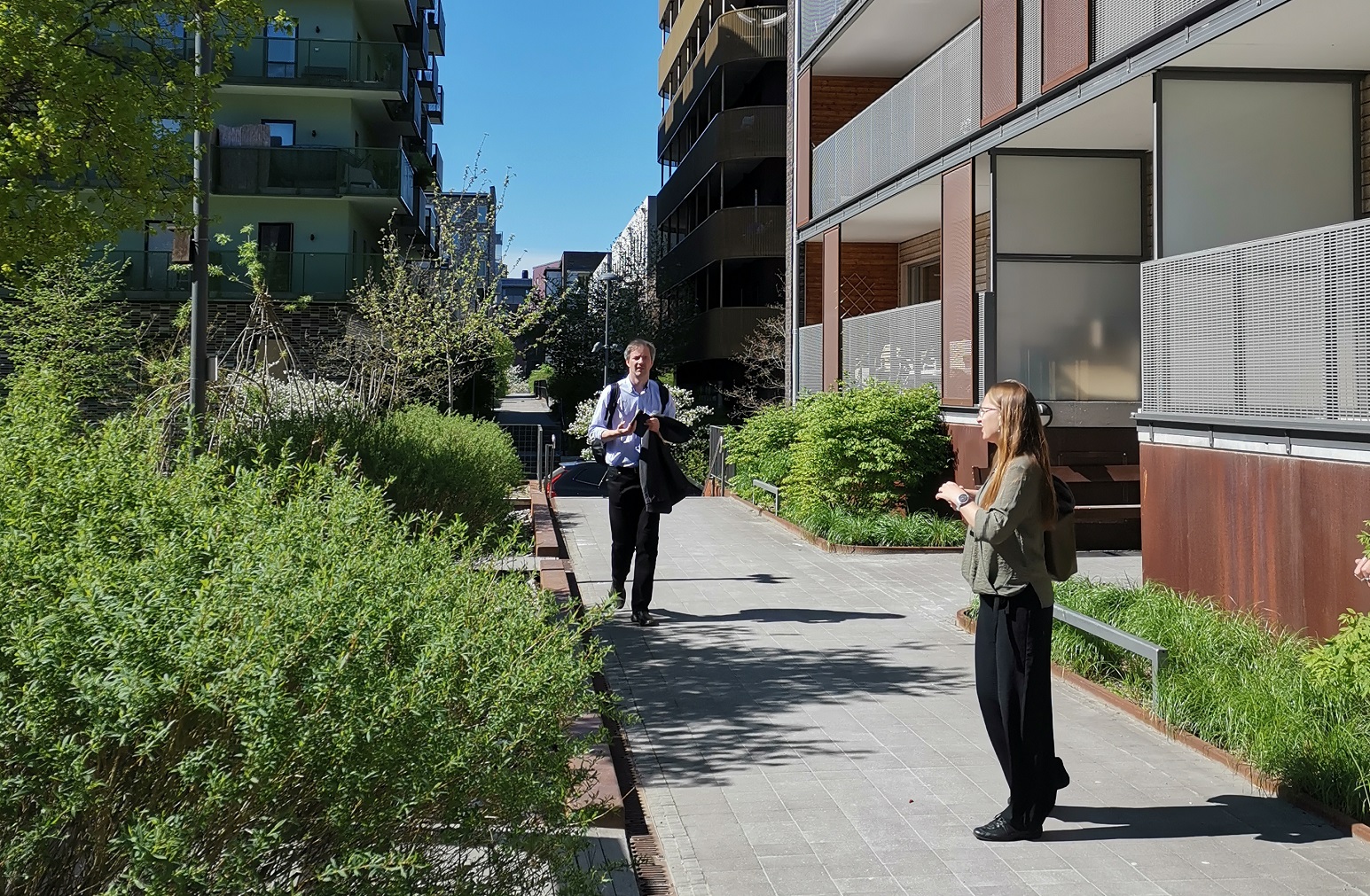
How can our built environment become healthier, more climate-friendly, and more resource-efficient? Recommendations for all levels of politics and administration — from the EU to local government — were developed in the EU Interreg project NonHazCity3 and are now presented with policy briefs and a short video. The focus: digital transparency of ingredients of building products and circularity.
We spend most of our daily lives indoors. This makes one question all the more important: What is actually inside our walls, floors, paints, and insulation materials? And what substances are released from them into the indoor air we breathe, into household dust and ultimately into the environment? Screenings conducted within the NonHazCity3 project show that substances of concern are present in building products, indoor air and the built environment. The good news is that healthy and sustainable construction is already possible today, if these goals are integrated early in the building process. Therefore, NonHazCity3 presents policy recommendations and practical guidelines for a healthy built environment, addressed to architects and engineers as well as private, commercial, and public building owners.
In order to avoid pollutants, the NonHazCity3 project has developed concrete solutions, translated them into practical tools and tested them in eight pilot activities. The aim was to design sustainable and healthy construction in such a way that it becomes easier to plan and implement in everyday life, from small renovation projects to large municipal projects. A key example: for many building products today, easily accessible information on their chemical composition is lacking. This makes it difficult to select low-pollutant alternatives and makes circular construction – i.e. the use of building materials made from recycled materials – risky, because materials can only be safely reused at the end of their life cycle when their contents are clearly known.
What are the results of the NonHazCity3 project?
Recommendations for policymakers and public administrations at national and EU level: Clear guidelines and better data are needed to make low-pollutant and circular construction the norm. This includes requirements for chemical transparency and digital material information. Cities and planners see an urgent need for action in this area.
For local authorities: Cities and municipalities hold a powerful lever through public procurement, particularly in the construction, renovation and furnishing of public buildings. Schools, daycare centres, administrative buildings and sports halls are used by many people every day. The NonHazCity3 practical guide for local authorities compiles tested steps, criteria and process knowledge derived from the pilot studies.
For private individuals: Environmental labels such as the Blue Angel or the EU Ecolabel provide guidance on the selection of building materials for construction, refurbishment and renovation projects. In addition, the NonHazCity3 DIY (Do it yourself) guide offers practical advice on what to consider during renovation and how to choose materials more consciously.
All results are available free of charge from the NonHazCity3 project website.