In-house Research CATS: Climate Action with Transparent Scenarios
Climate change mitigation scenarios use scientific assumptions to convey possible future paths. As part of the CATS project, UBA is working with IIASA to develop its own global climate change mitigation scenarios using the open-source model “MESSAGEix.” The goal is to provide targeted analyses, promote transparency, and examine the social and technological aspects of international climate policy.
Climate change mitigation scenarios from Integrated Assessment Models (IAMs) are central to the evaluation of policy options in light of international climate targets. They combine findings from a wide range of scientific disciplines and highlight the technological, economic, and social changes that are necessary to reach the 1.5 or 2 °C goal of the Paris Agreement. Such scenarios play a key role in Working Group III (Mitigation of Climate Change) of the Intergovernmental Panel on Climate Change (IPCC): they structure the global discourse on emission pathways, distribution issues, and transition pathways, thus providing evidence-based guidance for the UNFCCC negotiators and for national decisions on the design of climate action strategies
UBA research project CATS
With its in-house research project CATS (Climate Action with Transparent Scenarios), the German Environment Agency (UBA) is developing the ability to create and evaluate targeted global climate change mitigation scenarios in-house. The project develops model-based analyses to support political decisions relating to international climate action quickly, transparently, and cost-effectively.
The focus lies on the use and further development of the Integrated Assessment Model (IAM) MESSAGEix, which is being developed at the International Institute for Applied Systems Analysis (IIASA). CATS is thus laying the foundation for calculating global climate change mitigation scenarios within the agency. The expertise gained through its own modeling is used to explain model assumptions and restrictions in a way that is understandable even to laypeople. In addition, research on topics such as socially just transformation, renewable energies, and resource use is being advanced in collaboration with the existing open-source modeling community.
Project goals
Use and further development of the open-source tool MESSAGEix for creating our own sustainable global climate change mitigation scenarios
Development of in-house modeling expertise in order to provide the German government with flexible advice on scenarios and analyses relating to international climate policy—particularly in the context of the IPCC and UNFCCC
Greater transparency through open documentation and scientific discussion of underlying model assumptions
Expansion of MESSAGEix to include topics relevant to the UBA, such as social justice, technology costs, and resource use
Publication of peer-reviewed research results and contribution to the upcoming IPCC Assessment Report (AR7)
Strengthening the role of the UBA as an active partner institution in the MESSAGEix community.
Current project status
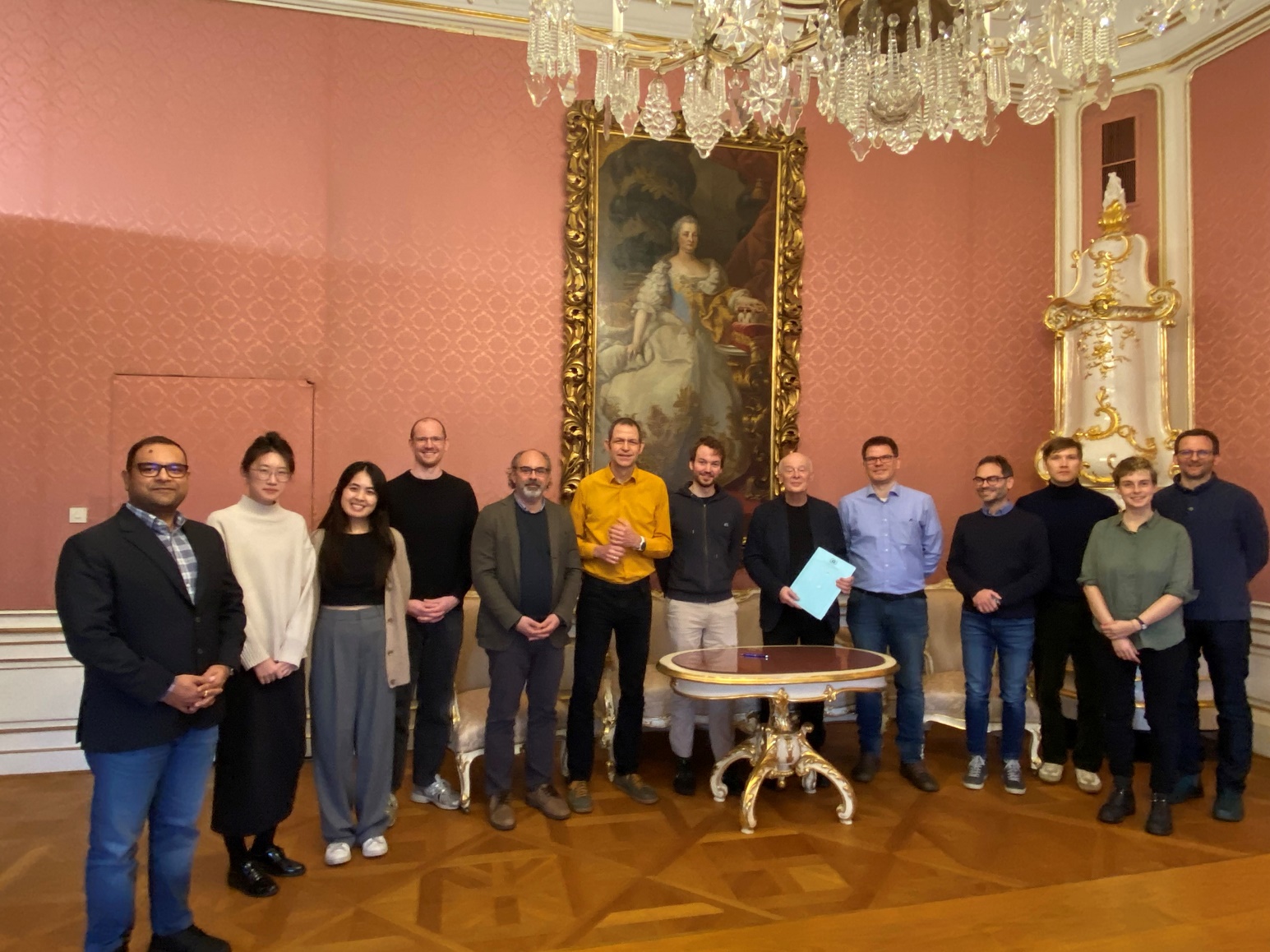
In late 2024, after intensive examination of various open-source models, the CATS team decided to pursue research using the MESSAGEix tool from IIASA. At the kick-off workshop, a permanent cooperation was anchored in a Memorandum of Understanding between the two institutions.
Participants of the kick-off workshop with IIASA Director General Hans Joachim (John) Schellnhuber
Venue: Elisabeth Room of the IIASA in Laxenburg (Austria)
Source: IIASA
The current project period from 2024 to 2027 includes the targeted development of additional research capacities with two in-house research positions at UBA and the implementation of the first in-house module extensions. The focus is on integrating aspects of climate justice and mapping distribution issues—such as the emissions of different income groups within regions and globally—as well as ensuring minimum per capita energy requirements.
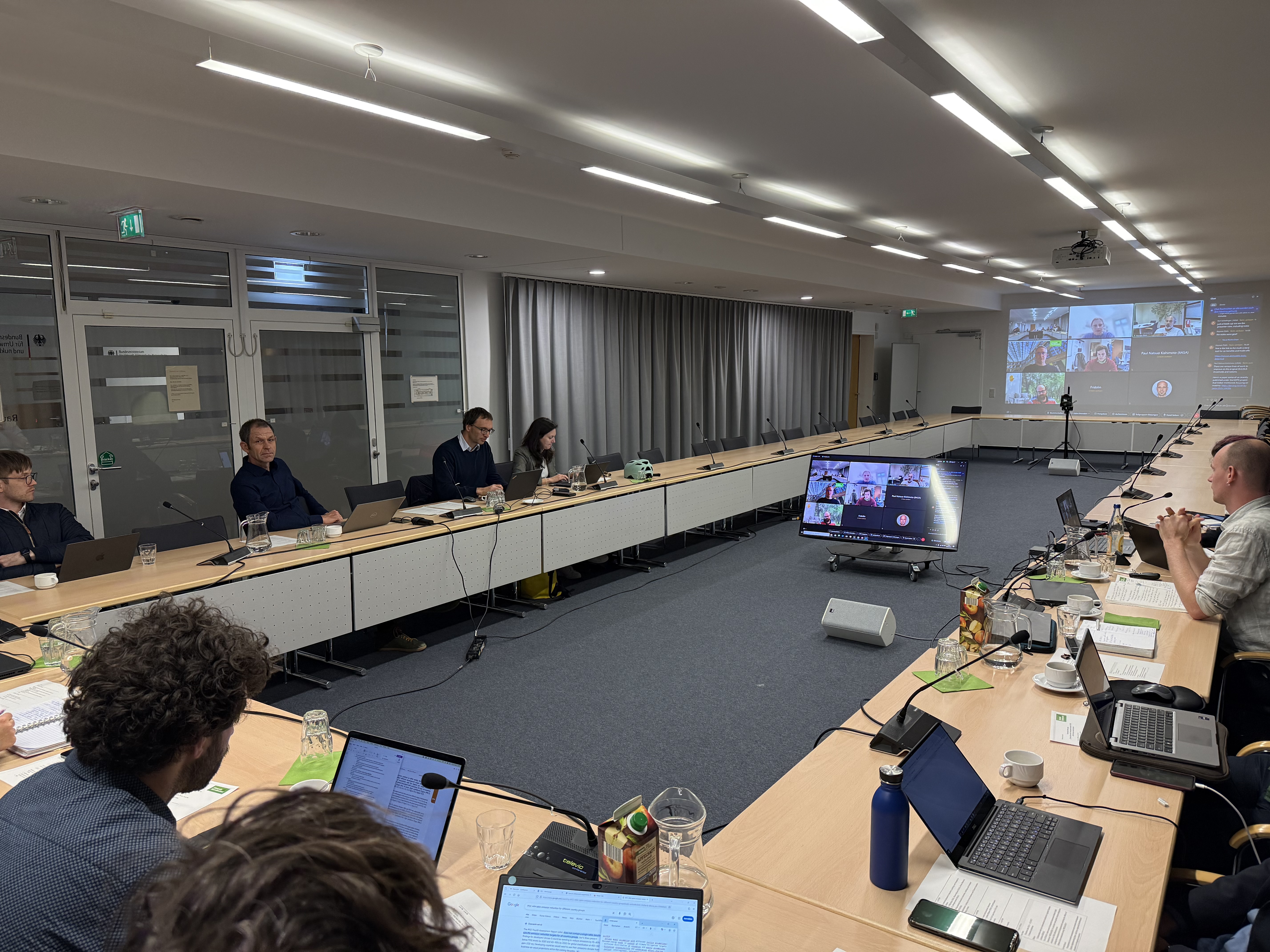
A stakeholder workshop in September 2025 brought together representatives from the German Ministry for the Environment (BMUKN), the German IPCC Coordination Office, IIASA, and UBA. A wide range of possible applications were discussed, from contributions to IPCC reports through scientific publications and advising the German government during its review of IPCC reports, to better integration of equity considerations in climate change mitigation scenarios for UNFCCC negotiators and policymakers.
Participants of the CATS Stakeholder Workshop 2025 at the BMUKN