To what extent are cities and municipalities in Germany already affected by climate change and how are they adapting to these consequences? The results of a survey commissioned by the UBA, which we would like to present to you in this issue of the newsletter, provide some insight. Another survey shows how active cities and municipalities are in protecting the climate. This issue also looks at how transport transition can be a win-win situation for everyone and the online platform DIVID, set up by the single-use plastics fund, in which foreign manufacturers of single-use plastic products can now register and must do so by the end of the year. Last but not least, we would like to draw your attention to the German SUSTAINABLE BUILDING Award. Exemplary projects for design and construction in existing contexts can still be submitted until 18 November 2024.
We hope you find it an interesting read
The Press Office of the German Environment Agency
Large majority of German cities and municipalities are affected by climate change – and are adapting to it
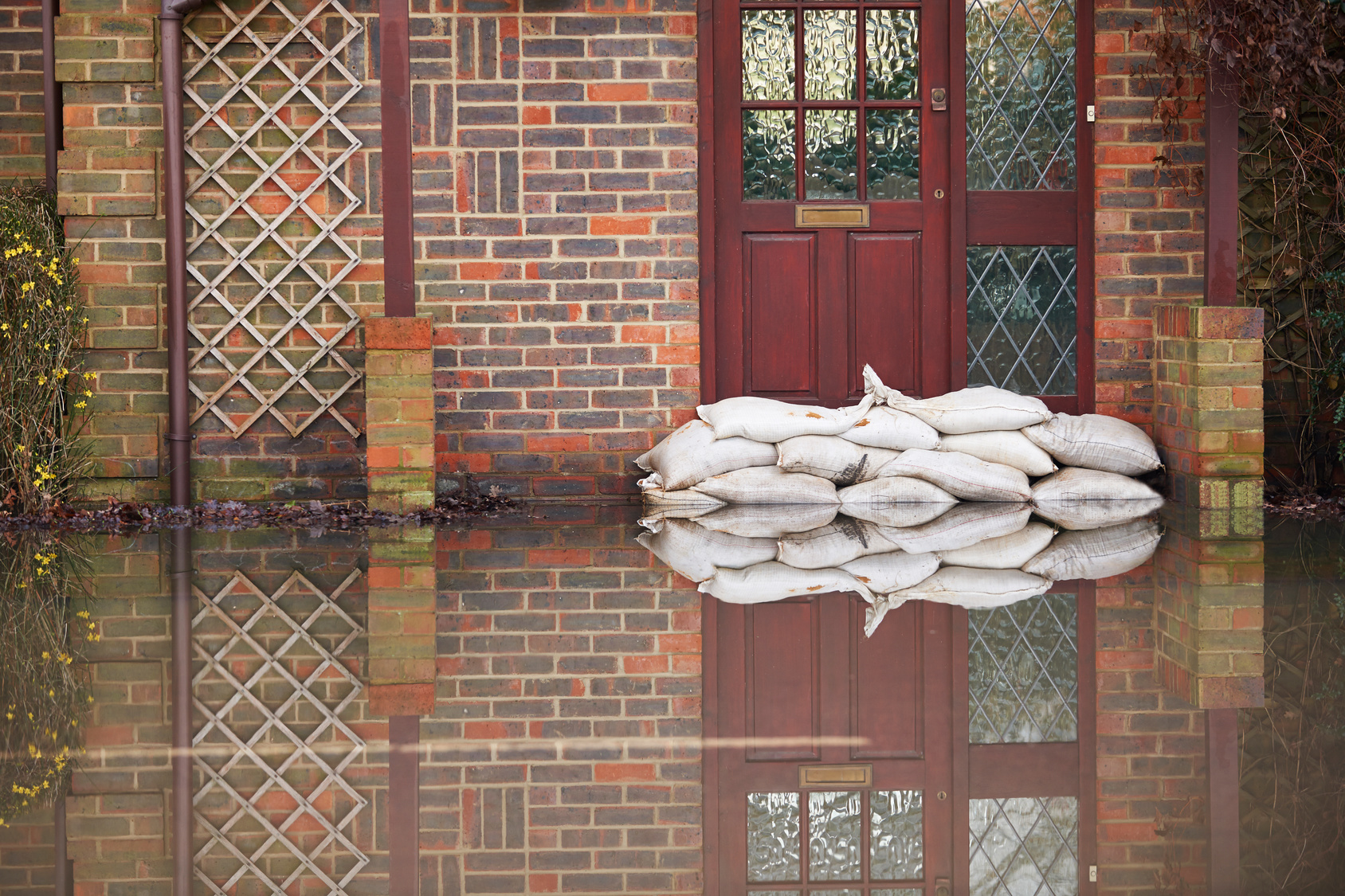
More frequent extreme weather events due to climate change also threaten people and their property
Source: highwaystarz / Fotolia.com
Whether heavy rainfall and flash floods, heatwaves or prolonged droughts – 77 percent of municipalities in Germany that participated in a recent UBA survey have been affected by the consequences of extreme weather events and/or other negative consequences of climate change in the past 10 years. And they expect to be even more affected by almost all extreme weather events and climate consequences in the future, for example in form of more forest fires, intense hail, increased allergies and new diseases. Many municipalities are taking action to prepare for the consequences of the climate crisis, which are expected to be predominantly negative for them. Measures on climate adaptation have already been implemented by over 40 percent of the local authorities, and just under 40 percent more are planning them. This includes, for example, planting climate-adapted tree species, limiting land development to slow down soil sealing and reduce warming and fast runoff of rainwater, restoring water bodies and informing population about risks and preventive protective measures.
These are all results of the first nationwide, representative survey on the status of municipal climate adaptation in Germany, which was carried out on behalf of the German Environment Agency (UBA) and in which over 22 percent of municipalities (1,062 in total) participated. The survey also shows that large independent cities (kreisfreie Städte) are at the forefront of climate adaptation and are better prepared than smaller municipalities or counties (Landkreise). For example, while more than half of the independent cities have a climate adaptation manager, this is only the case in 4 percent of cities and municipalities with less than 20,000 residents. Lack of staff (80 percent) and lack of financial resources (73 percent) are the most significant obstacles to planning or implementing climate adaptation measures for German municipalities.
Dirk Messner, President of the German Environment Agency, states: “Adaptation to the climate crisis is one of the central tasks of the coming years and decades. We therefore need a joint task (Gemeinschaftsaufgabe) that is rooted in the German constitution, in order to ensure that local authorities are well equipped with staff and financial resources.” Climate adaptation is about risk prevention and reduction, protecting health, wellbeing and prosperity. Local authorities play a key role, because they have the best knowledge about local conditions and can therefore adopt suitable and appropriate measures.
The intensive and complex educational work of the German Environment Agency (UBA) in the area of Upstream Emission Reductions (UER) is showing further success: For eight UER projects in China, for which a decision on approval had to be made by 31 August 2024, the UBA will not issue the requested approvals due to irregularities identified by the UBA.
The winners of the German “Blauer Kompass” Prize 2024 confirmed. With over 300 applications, the nationwide competition for the highest state honour for climate crisis preparedness and adaptation once again set a new participation record.
National Inventory Document for the German Greenhouse Gas Inventory 1990 – 2022
As a Party to the United Nations Framework on Climate Change (UNFCCC), since 1994 Germany has been obliged to prepare, publish and regularly update national emission inventories of greenhouse gases. Pursuant to Decision 24/CP.19, all Parties listed in ANNEX I of the UNFCCC are required to prepare and submit annual National Inventory Reports (NIRs) containing detailed and complete information…
A review of recent European Commission impact assessments
This report analyses and critically reviews assumptions on natural carbon dioxide removal (CDR) and storage potentials with a view to the objectives of the EU Land Use, Land-Use Change and Forestry (LULUCF) and Carbon Removal Certification Framework (CRCF) legislation agreed until February 2024.
Therefore, EU impact assessment reports that were published over a period of eight years were analysed…
Robust quantification of carbon dioxide removals (CDR) lies at the heart of any certification mechanism and is central for their functionality and environmental integrity. For the establishment of a Carbon Removal Certification Framework (CRCF) that was recently adopted, the EU Commission is currently conducting an inventory of the existing knowledge base. The objective of most certification…
Climate Change
34
Where do Germany’s municipalities stand on climate protection?
The evaluation of the UBA municipal survey “Climate Protection in Municipalities 2023” provides some answers to this question. For the survey, 1,553 municipalities provided information on their climate protection activities. For example, 842 have climate protection staff, 618 have or are formulating a target for CO₂, greenhouse gas or climate neutrality and 106 have declared a climate emergency. read more (in German)
Frequently asked questions about the new F-Gas Regulation
On 11/3/2024, Regulation (EU) 2024/573 on fluorinated greenhouse gases came into force. It applies to refrigeration and air conditioning systems, heat pumps and electrical switchgear. It regulates operator obligations and requires new or extended certifications for tradespeople. In coordination with the Länder, the German Environment Agency (UBA) has published an initial set of questions and answers (FAQs) on the new regulation. read more (in German)
New study shows that more support is needed for district heating
More societal support is essential for the success of a heat supply that is sustainable and free of greenhouse gas. A new study commissioned by the German Environment Agency shows which political instruments and measures are specifically required for this. read more (in German)
From 10 to 11 September 2024, the 6th REACH Congress took place at the German Environment Agency (UBA) in Dessau-Rosslau with more than 500 experts from companies, scientists, non-governmental organisations and public authorities. The discussion focussed on solutions to avoid harmful emissions of chemicals into the environment.
Sensor cell lines have been developed to monitor rapid non-genomic signalling cascades influenced by endocrine-active substances. These in-vitro bioassays were created by genetically modifying G-protein coupled estrogen receptor (GPER1) expressing cells to become artificial fluorescent signalosomes. Both GPER1 agonists and antagonistic compounds were used to characterize the respective sensor…
Transport policy is an extremely controversial and emotional issue; many think the transport transition makes sense and is necessary, while others feel it's unrealistic or overwhelming. A study by the German Environment Agency (UBA) reveals the real social challenges involved and provides suggestions for political measures that could help ensure the transition benefits everyone.
Recommendation for nitrogen oxide measurements during exhaust emissions tests
The exhaust gas treatment technology of modern cars is insufficiently tested during the exhaust gas tests. This is one reason why air pollution from nitrogen oxides (NOx) remains high. As part of a UBA project, two practical NOx measurement methods for exhaust emission testing were verified and a revision proposal for the guideline for regular technical inspections of motor vehicles was submitted. read more (in German)
The public often discusses infrasound as a threat to human health. This research project analysed, what the people know about infrasound. It developed a communication concept for different target groups, based on the scientific knowledge on risk communication. The goal was to provide appropriate information about infrasound and its possible health effects. The project results in this final report…
Development of the basics for a noise protection concept for Antarctica
Anthropogenic noise can molest, injure or even lead to the death of marine mammals. Therefore, activities in the Antarctic that lead to the emission of underwater noise are often categorised to have at least a minor or temporary impact on marine mammal species or their populations. Two panels of experts with varying backgrounds in behavioural response studies or auditory injury for a range of…
The Federal Ministry for the Environment, Nature Conservation, Nuclear Safety and Consumer Protection (BMUV) and the German Environment Agency (UBA) are organising the German SUSTAINABLE BUILDING Award for the third time.
Germany intends to become climate-neutral by 2045. This goal requires a sufficient number of well-qualified specialists to implement and advance the necessary measures on the road to a sustainable society.
This year, the German Ecodesign Award has reached a milestone, as more than 400 innovative and sustainable projects were submitted – a record that demonstrates the high value placed on ecodesign.
The new version of the UBA Handbook on Environmental Value Factors – the „Methodological Convention 3.2” – contains a partial update of the monetized environmental impacts published in the “Methodological Convention 3.1”, based on new value factors for greenhouse gas and air pollutant emissions. A comprehensive update of all value factors – including components such as emission factors and…
brochure / flyer
69
Federal funding for industry and climate protection launched
On 23 August 2024, the Federal Ministry for Economic Affairs and Climate Action (BMWK) published the new funding guideline “Federal Funding for Industry and Climate Protection (BIK).” In the future, the new funding will primarily support the industrial SME sector in their decarbonisation efforts. The first call for funding started on 30/08/2024. Companies have until 30/11/2024 to submit their projects. read more (in German)
Indicators for measuring sustainable consumption decided
Sustainable consumption covers a broad range of areas, from housing and mobility to nutrition, making it challenging to measure sustainability effectively. To address this, a set of 20 indicators has been adopted for the National Programme on Sustainable Consumption (NPSC), reflecting various aspects of consumption. Additionally, a newly published report provides the first review of the implementation status of the NPSC. read more (in German)
Many people want to travel sustainably – but few actually do
The desire for environmentally and socially responsible travel continues to grow, but there is no sign of a real change in behaviour. The importance of sustainability in travel decisions remains low. This is shown by the latest figures from the “Sustainability in Holiday Travel” consumer demand monitor, which analyses the development of awareness and demand for sustainability in holiday travel. read more (in German)
The Single-Use Plastic Fund Act obliges manufacturers, from 2024, to bear the costs of single-use plastic products collected as waste in streets or parks. While the digital platform DIVID, set up by the UBA, was initially only available for the registration of manufacturers in Germany, eligible parties and foreign manufacturers have also been able to register there since 1 August 2024.
The study provides an up-to-date database on food waste in Germany for the 2020 reporting year as part of mandatory EU reporting. Food waste was determined in all five stages of the food chain. The methodology is based on the disposal of waste. The data is based on official waste statistics. The proportion of food waste per waste code (waste coefficient) was determined in order to calculate the…
Waste from so-called ‘mirror entries’ in the list of wastes must be categorised as ‘hazardous’ or ‘non-hazardous’ depending on its composition. Hazardous properties are determined on the basis of the concentrations of the waste constituents or on the basis of a test. For the hazard characteristic ‘HP 14’ (ecotoxic), there are currently no specific requirements at EU level for categorisation based…
Texte
193
Optimisation potential for beverage packaging systems
Optimisation options for various beverage packaging systems have been investigated on behalf of the German Environment Agency (UBA). The findings showed that by 2045, at least 90 percent of greenhouse gas emissions and 97 percent of cumulative fossil energy consumption could be reduced. Switching to renewable energies for production, bottling and transportation has the greatest environmental impact. read more (in German)
Recyclability of packaging: minimum standard in 2024
Manufacturers of certain types of packaging are required to participate in dual systems to ensure that the packaging is collected, sorted and recycled. Since 2019, fees for this have also been assessed according to how well a package can be recycled. The minimum standard on how to determine suitability for recycling has now been adapted to new developments in the packaging industry. read more (in German)
Soil / Land
Soil indicators symposium
On 17-18 April 2024, the German Environment Agency in Dessau hosted the symposium “Soil Indicators in the Context of Climate Adaptation and Soil Protection”. You can read the results and presentations here. read more (in German)
This brochure summarizes the revised empirical critical loads for N compared to 2011. 40 % of ecosystems react more sensitively to N than previously assumed. The ecosystems studied have been visualized to make them easier to understand. Two maps show the distribution of natural and semi-natural ecosystems on the one hand and the distribution of forest ecosystems in Europe and the neighboring…
This report is an important collection of tools used in the framework of the Geneva Convention on Long-Range Transboundary Air Pollution (CLRTAP). Thus, it provides for example a scientific basis on the application of critical levels and loads, their interrelationships, and the consequences for abatement. After the transfer of the Coordination Center for Effects from the Netherlands to Germany…
Biodiversity in Europe is strongly affected by atmospheric nitrogen and sulfur deposition to ecosystems. Within the PINETI-4 (Pollutant Input and Ecosystem Impact) project the deposition of nitrogen and sulfur compounds across Germany was quantified for the years 2000, 2005, 2010 and 2015 to 2019, using the atmospheric chemical transport model LOTOS-EUROS and precipitation composition measurements…
Texte
128
Agriculture
Opportunities for agri-environmental protection remain untapped
In order to receive EU agricultural subsidies, farms must meet certain minimum standards for environmental protection. This includes the requirement to take 4 percent of arable land out of production to protect biodiversity. However, the level of requirements has been reduced for 2024, meaning that 90 percent of farms do not have to implement any additional measures to protect biodiversity. read more (in German)
Sustainability / Strategies / International matters
Ten environment agencies released "Building an Alliance – For a Sustainable, Resilient, and Just Future in Europe," with 36 recommendations for the 2025-2030 EU policy cycle. Highlighting urgent issues like climate resilience, circular economy and biodiversity, it calls for ambitious implementation of the European Green Deal, with agencies committed to supporting a just, sustainable future.
Analysis of the resource intensity of the digital transformation in Germany
The ‘DigitalRessourcen’ research project analysed the resource intensity and greenhouse gas emissions of the digital transformation in Germany at both micro and macro level. The resource intensity of digital applications was calculated in ten case studies (micro level) using LCA methodology. At the macro level, raw material consumption (RMC), raw material input (RMI) and the carbon footprint of…
brochure / flyer
36
UBA news
20 years of the German Emissions Trading Authority at the German Environment Agency
Over the past two decades, the German Environment Agency (UBA) and the German Emissions Trading Authority (DEHSt) have played a key role in shaping the fight against climate change. Emissions trading, which has since developed into the most important climate protection instrument in Germany and Europe, proves that ambitious climate protection is possible while also achieving economic goals. read more (in German)
As recounted
47
For 47 years in a row, the global average annual temperatures were above those of the reference periods