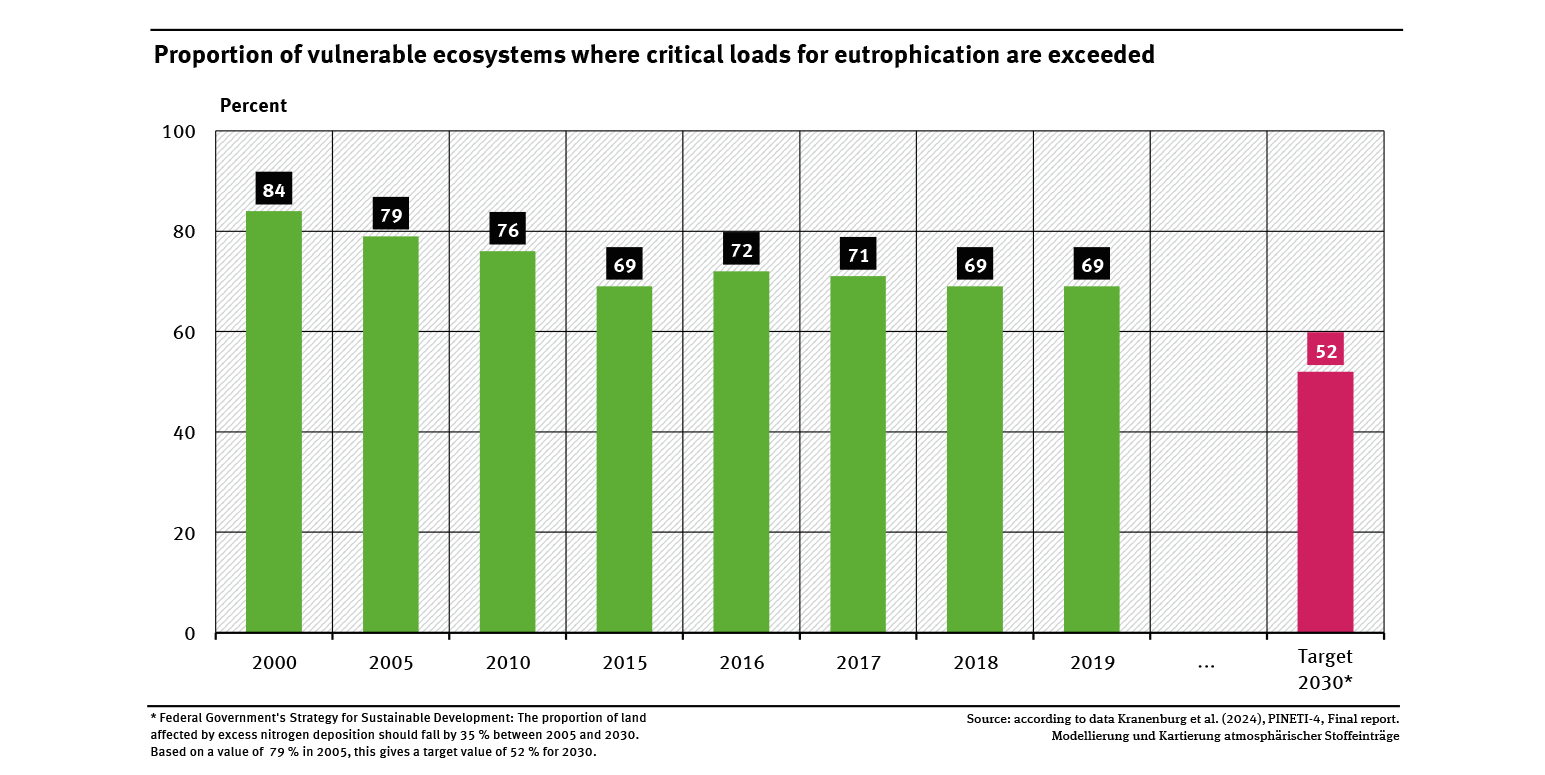
The maximum amount of pollutants that ecosystems can tolerate without being damaged is known as the ‘critical load’. It is a measure of an ecosystem's sensitivity to pollution. Air pollution levels above these critical loads can permanently damage ecosystem structures and functions.
Excess deposition of airborne nitrogen compounds in terrestrial ecosystems can cause nutrient imbalances which may modify the species composition. Organisms that prefer low-nitrogen conditions will be displaced in favour of species that thrive in nitrogen-rich habitats.
Almost half of ferns and flowering plants on Germany’s Red List are threatened by nutrient deposition. Moreover, many plants become more susceptible to frost, drought and pests due to changes in nutrient availability. The indicator focuses on natural ecosystems, especially forests, inland marshes, peat bogs, heathlands and nutrient-poor grasslands.