
How to separate and dispose of waste glass correctly
- Dispose of waste glass by putting them in the glass recycling container.
- Ensure that white, green and brown glass are separated correctly.
- Even better: use reusable containers.
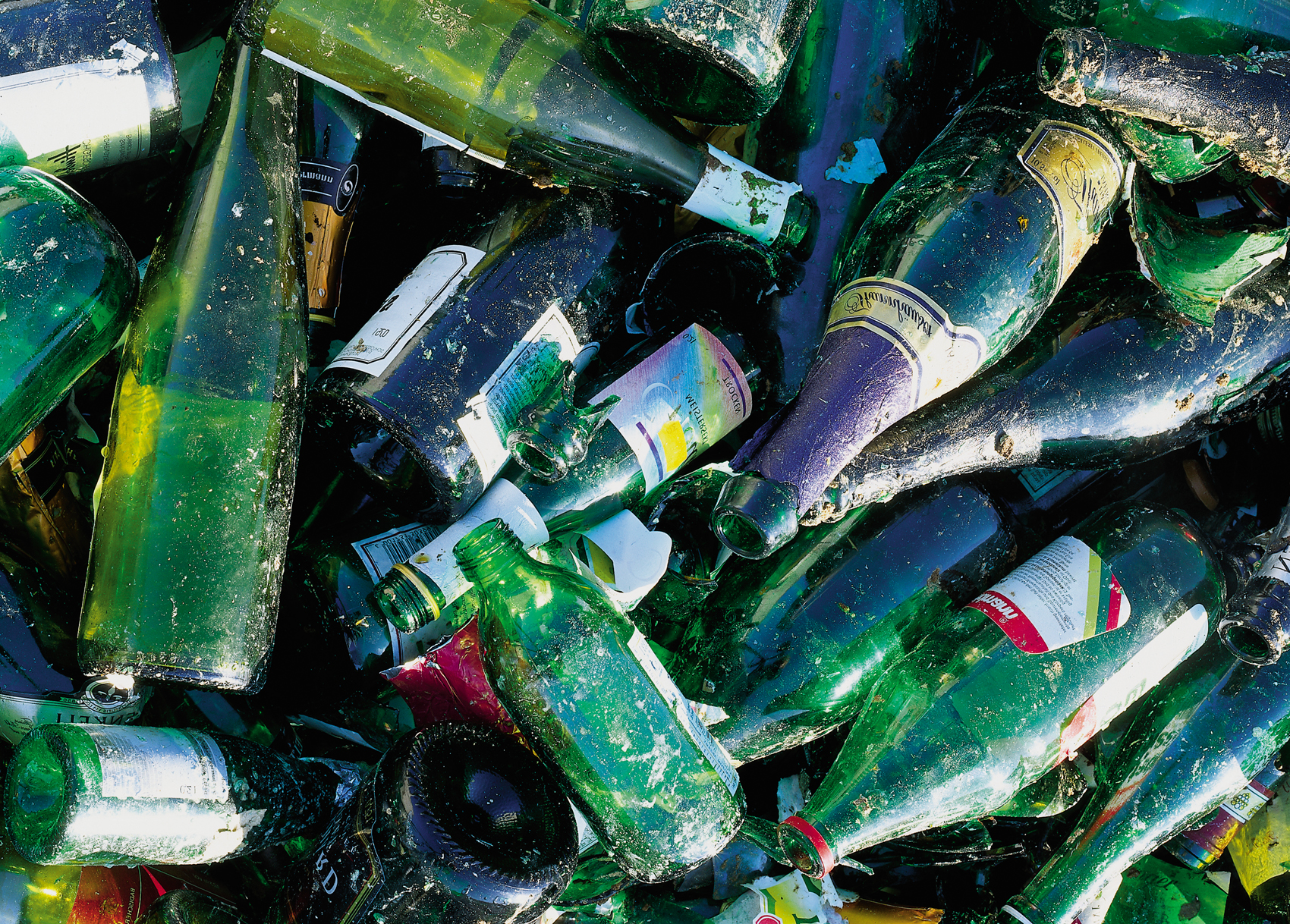
- Dispose of waste glass by putting them in the glass recycling container.
- Ensure that white, green and brown glass are separated correctly.
- Even better: use reusable containers.
Every empty bottle and piece of waste glass placed in the container makes a direct contribution to environmental and climate protection. Keeping waste glass in the recycling loop conserves valuable natural resources and reduces the pollution of air and water. The rule of thumb for production: just 10% waste glass in the melting furnace lowers energy consumption by up to 3%. At the same time, we avoid unnecessary piles of waste: waste glass doesn't end up in landfills, but remains permanently in the loop.
Dispose glass in the recycling bin: In Germany, glass recycling bins are almost always within walking distance of residential areas. To save yourself additional fuel costs, take your waste glass to the container on foot or by bicycle instead of transporting it by car. Removing screw caps also reduces the amount of unusable waste glass. Only so-called container glass (bottles, preserving jars, etc.) belongs in the glass recycling bin. Under no circumstances should porcelain, ceramics, lead crystal glasses, drinking glasses, or heat-resistant glass (e.g. microwave or ovenware) be placed in the glass recycling container. They belong in residual waste, as do window and mirror glass. Light bulbs, including energy-saving and LED bulbs, must be disposed of separately via collection boxes or recycling centres.
Choosing the right colour is important: The more uniform the sorted colours of the collected glass are, the more waste glass can be used in the production of new items. Otherwise, 'impurities' in the colour result in 'intermediate tones' that consumers do not desire. Therefore, make sure you use the disposal hole for the correct colour of glass. If you are unsure (e.g. for white or green glass), use the green glass container.
Reusable – the better option: Although new glass packaging can be made from waste glass, reusable packaging is still the better option than single-use glass packaging. For example, reusable glass bottles (Mehrwegflaschen) can be refilled over 40 times. However, due to their weight, single-use glass packaging has a poorer environmental impact than other single-use packaging, such as cardboard or plastic.
What else you can do:
In principle, glass can be melted down and processed into new products as often as desired. Since waste glass melts at lower temperatures than the raw materials required for glass production, every percentage point of added glass cullet reduces energy consumption by about 0.3%. Waste glass recycling thus reduces the environmental impact associated with the glass melting process (e.g., CO2 emissions) and conserves landfill space for waste. Saving raw materials (such as quartz sand, soda ash, and limestone) also reduces environmental burdens.
Since the start of waste glass collection in the early 1970s, the proportion of waste glass in glass manufacturing has continuously increased. As of January 1, 1996, the Packaging Ordinance stipulated an annual recycling rate of at least 70% for glass, and at least 75% since January 1, 1999. Since January 1, 2019, the Packaging Act has required that 80% of the glass placed on the market must be prepared for reuse or recycled. As of January 1, 2022, this target even rose to 90%. The collection rate rose from 78.8% (1996) to a peak of 91.2% (2004), but then dropped again to 82.5% (2009) (UBA 2012). In 2023, the rate stood at 80.6% (UBA 2026).
In 2025, a total of 6.601 million metric tons (mt) of glass and mineral fibers were produced in Germany. The main product groups included container glass with around 3.704 million mt and flat glass with 1.734 million mt. Container glass is primarily used in the food and beverage retail sector for selling goods (beverages, yogurt, etc.).
Further information can be found at: Glas und Altglas (UBA – data page)
Sources: