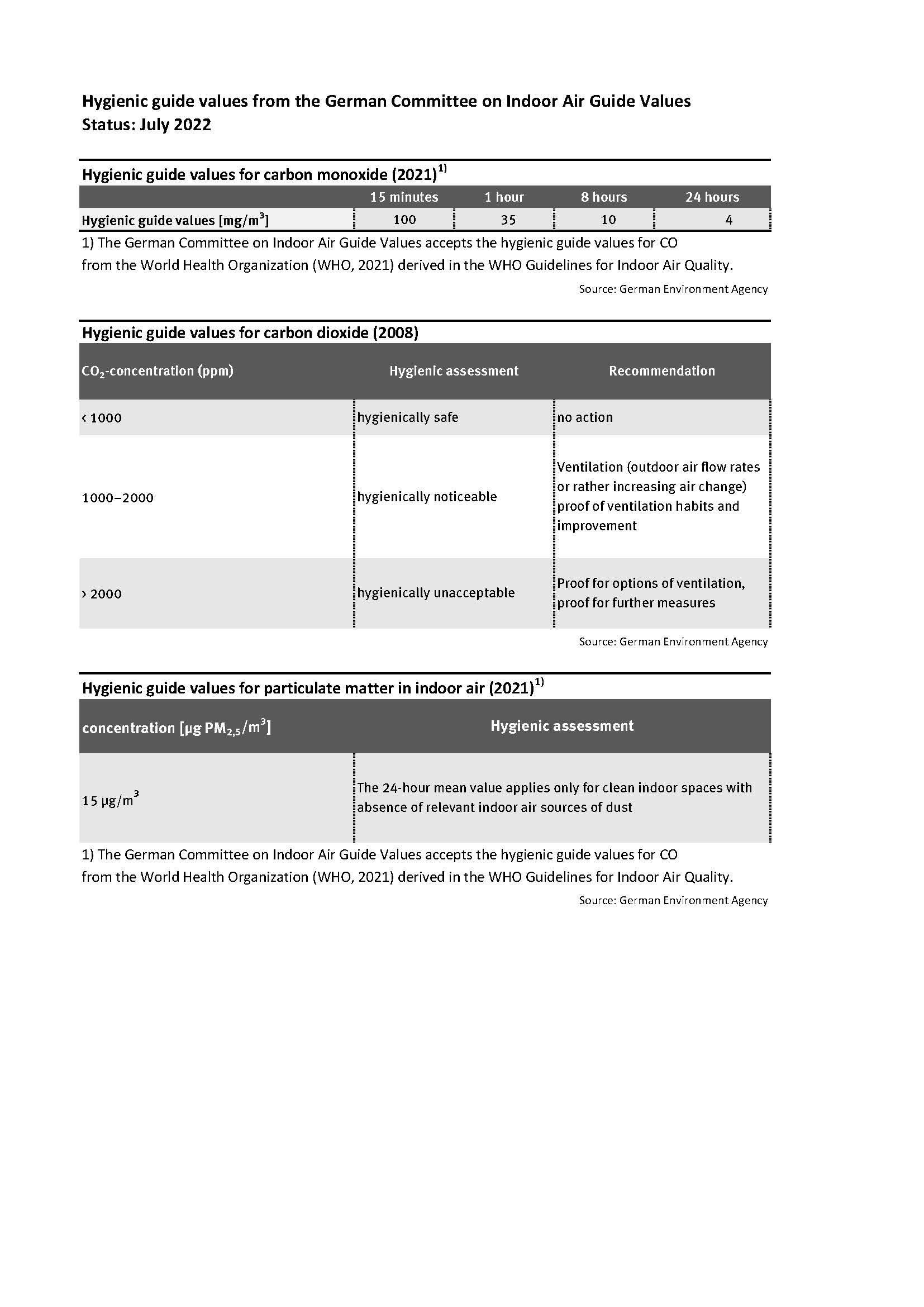
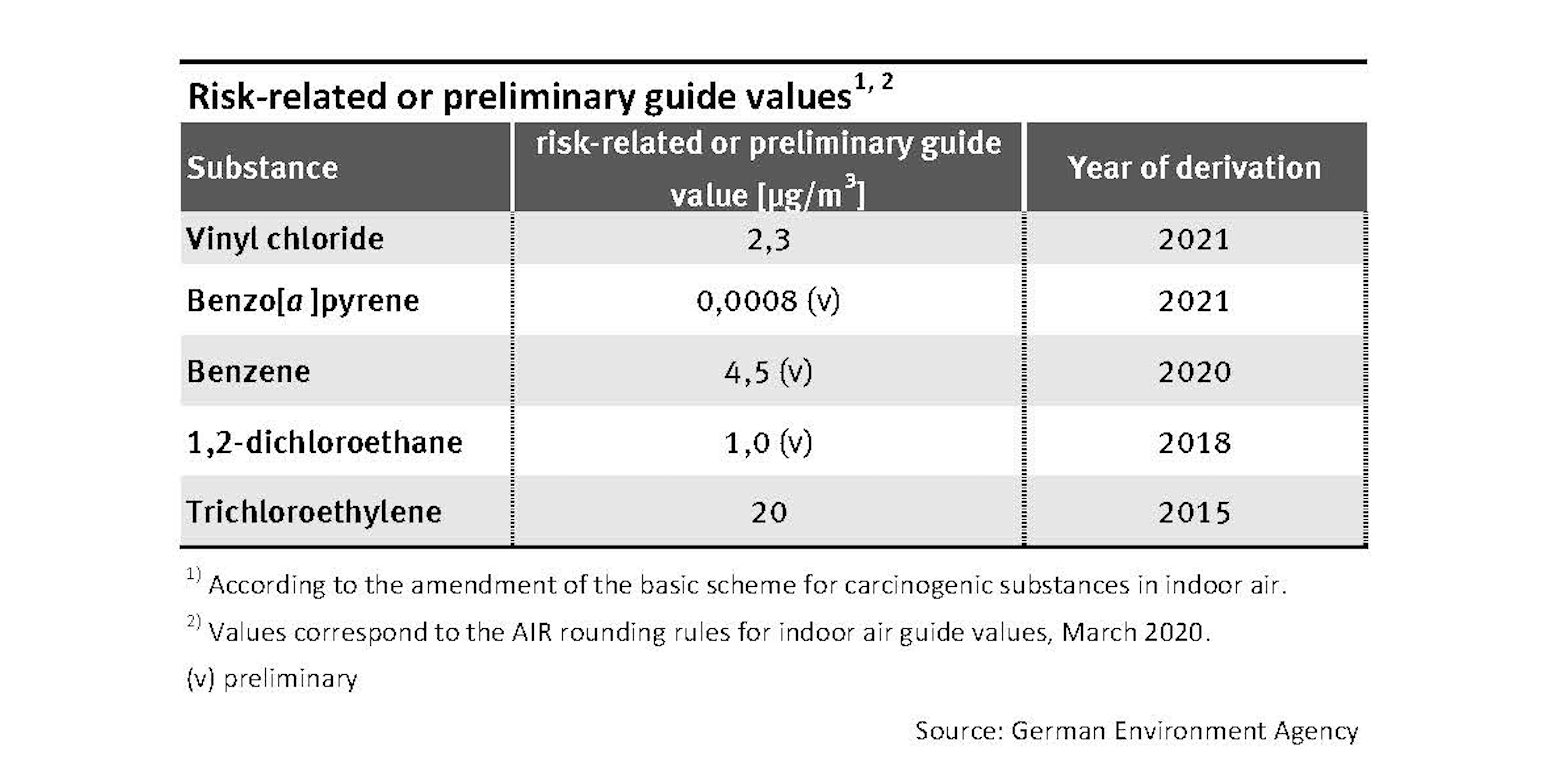
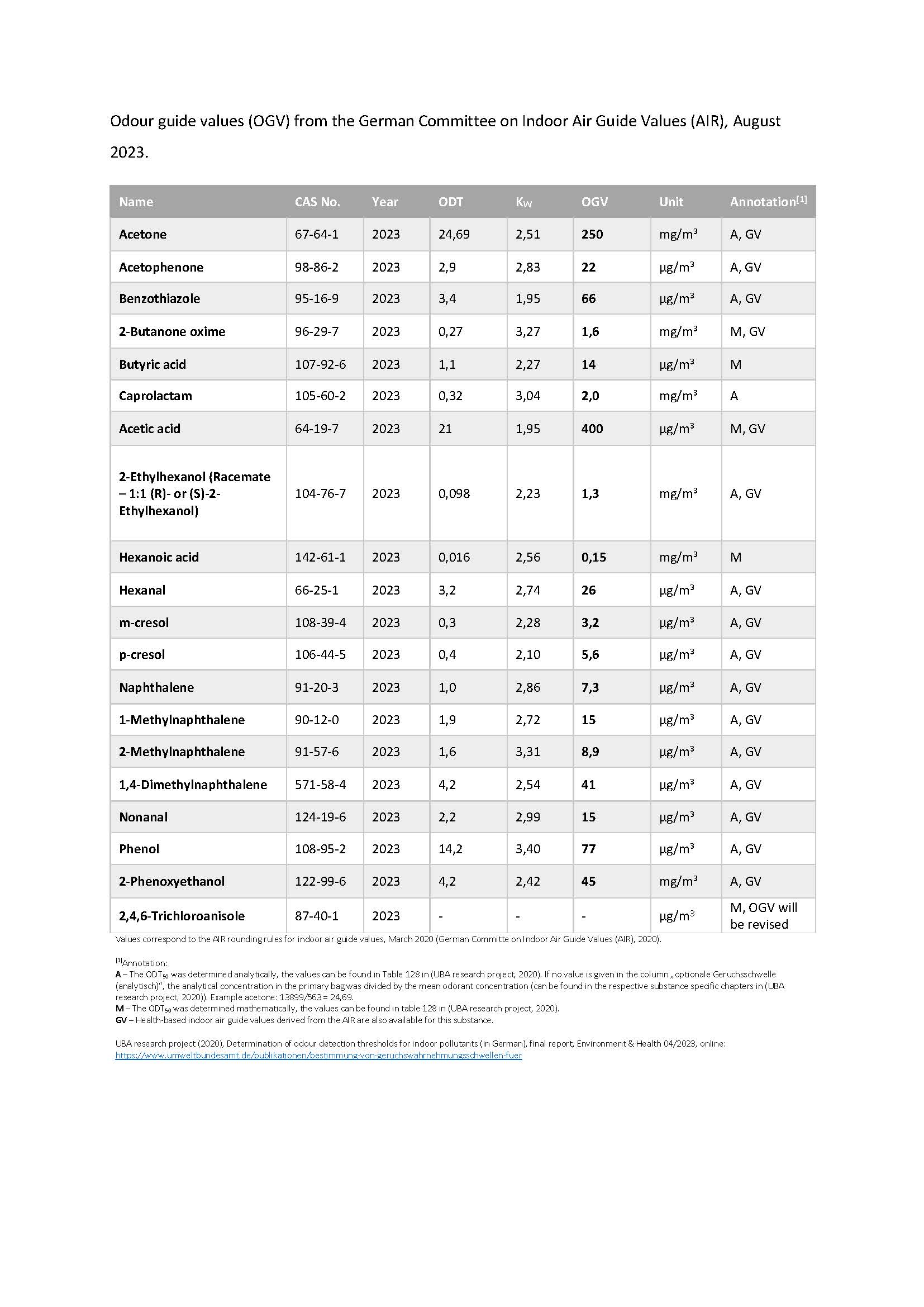
The average person in Central Europe today spends 90 per cent of their time indoors. We breathe anywhere between 10 and 20 m3 of air per day, depending on our age and how active we are. The indoor air we breathe can contain a variety of pollutants that can affect our health. Therefore, it is important to be able to make a health-risk assessment of indoor air quality. Indoor air guide values are derived for this purpose.
The methods applied by the AIR to derive indoor air guide values are published in various principal papers in the Federal Health Gazette (Bundesgesundheitsblatt).
The AIR derives two indoor air guide values for the purpose of health risk assessment:
Indoor air guide value I (precautionary guide value) describes the concentration of a pollutant in indoor air which, according to current knowledge, is not expected to cause any adverse health effects, even in the case of lifelong exposure of sensitive persons.
In the concentration range between RW I and RW II, a direct health hazard is not to be expected. Nevertheless, undesirable exposure must be assumed. For precautionary reasons, measures to minimise the concentrations of the pollutant in indoor air should be taken. Indoor air guide value I can serve as a remediation target value.
Indoor air guide value II (hazard guide value) is an effect-related value, based on current toxicological and epidemiological knowledge of a substance’s effect threshold. It represents the concentration of a pollutant in indoor air at which immediate action is required if it is reached or exceeded. This concentration is particularly likely to affect the health of sensitive persons, including children, especially if they spend long periods of time indoors. Guide value II correlates to the building codes of the federal states in Germany, which stipulate that structures must be designed to prevent hazards due to chemical, physical or biological impacts.
In 2022, the Federal Ministry Republic of Austria for Climate Action, Environment, Energy, Mobility, Innovation and Technology included the indoor air guide values derived from the AIR in their guideline for evaluation indoor air.
AIR Guide values I and II for indoor air pollutants