
Skip to main content Skip to main menu Skip to footer

Building Materials

Buildings cause significant direct and indirect environmental impacts throughout the life cycle, that is, during their construction, use, maintenance, demolition and disposal stages.

In addition to the building materials themselves, these environmental impacts depend on the type of building, its use, transportation and maintenance technologies, recycling rates, etc. Accordingly, value factors for building materials need to be put in perspective to the use and end-of-life stages of the building. For example, a better insulated building may have higher environmental impacts from material use, but lower impacts during the use phase.

At present, due to data limitations it is not possible to recommend average, yet comprehensive value factors for building materials. We can, however, provide illustrative examples for certain life cycle stages and classes of impacts.
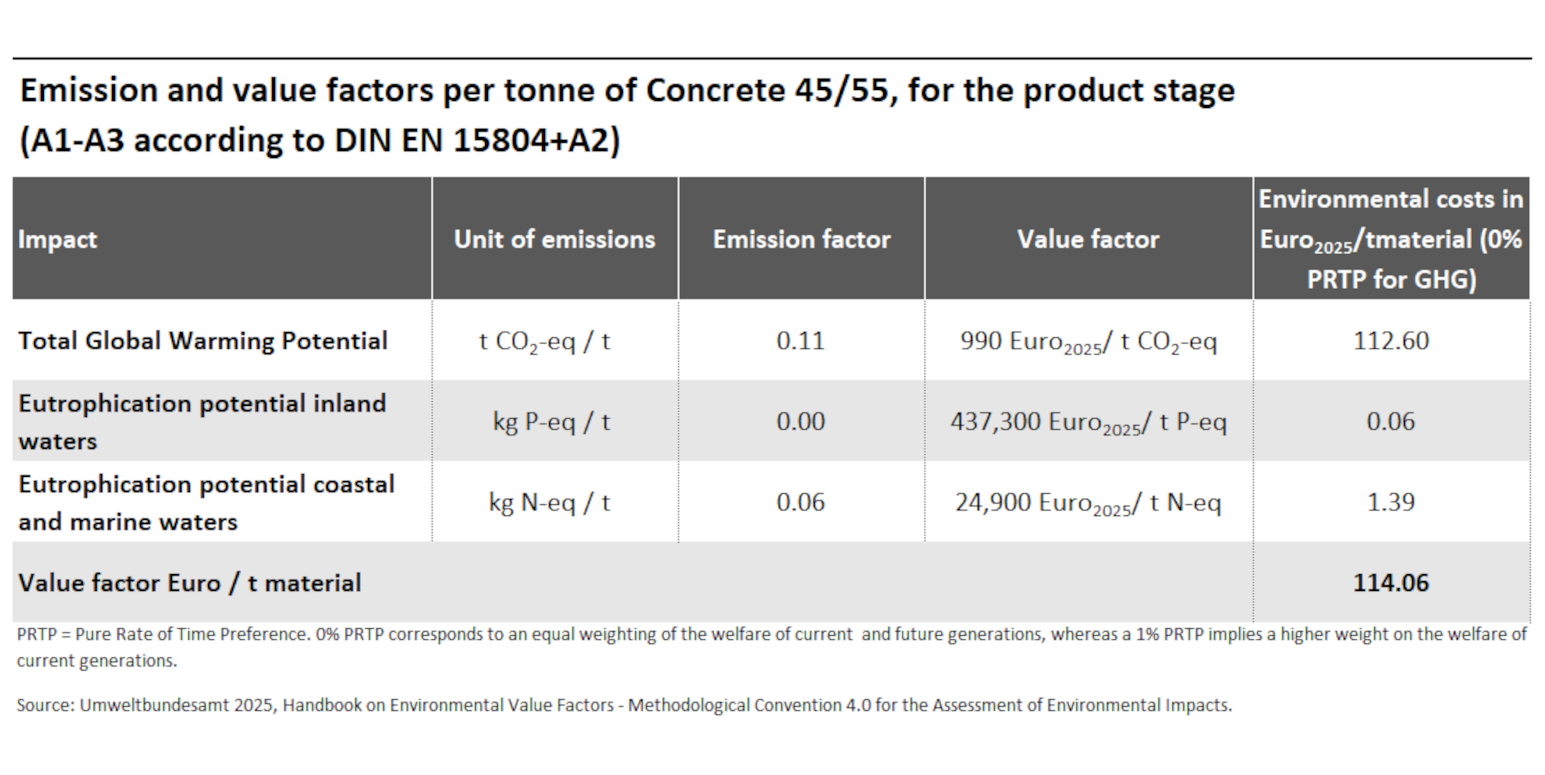
The table illustrates the monetized damages from greenhouse gas emissions and eutrophication related to the building material concrete 45/55. Environmental impacts of concrete 45/55

Environmental impacts of concrete 45/55 related to greenhouse gas emissions and eutrophication amount to 114€ per metric ton.

Source: Umweltbundesamt

Downloads:

More detailed information can be found in Chapter 8 of the Handbook on Environmental Value Factors – Methodological Convention 4.0 for the Assessment of Environmental Impacts.

Back to the home page of the ‘Value factors for the Monetization of Environmental Impacts’ portal

Associated content

Publications

Tags

Short link: https://www.uba.de/n120887en