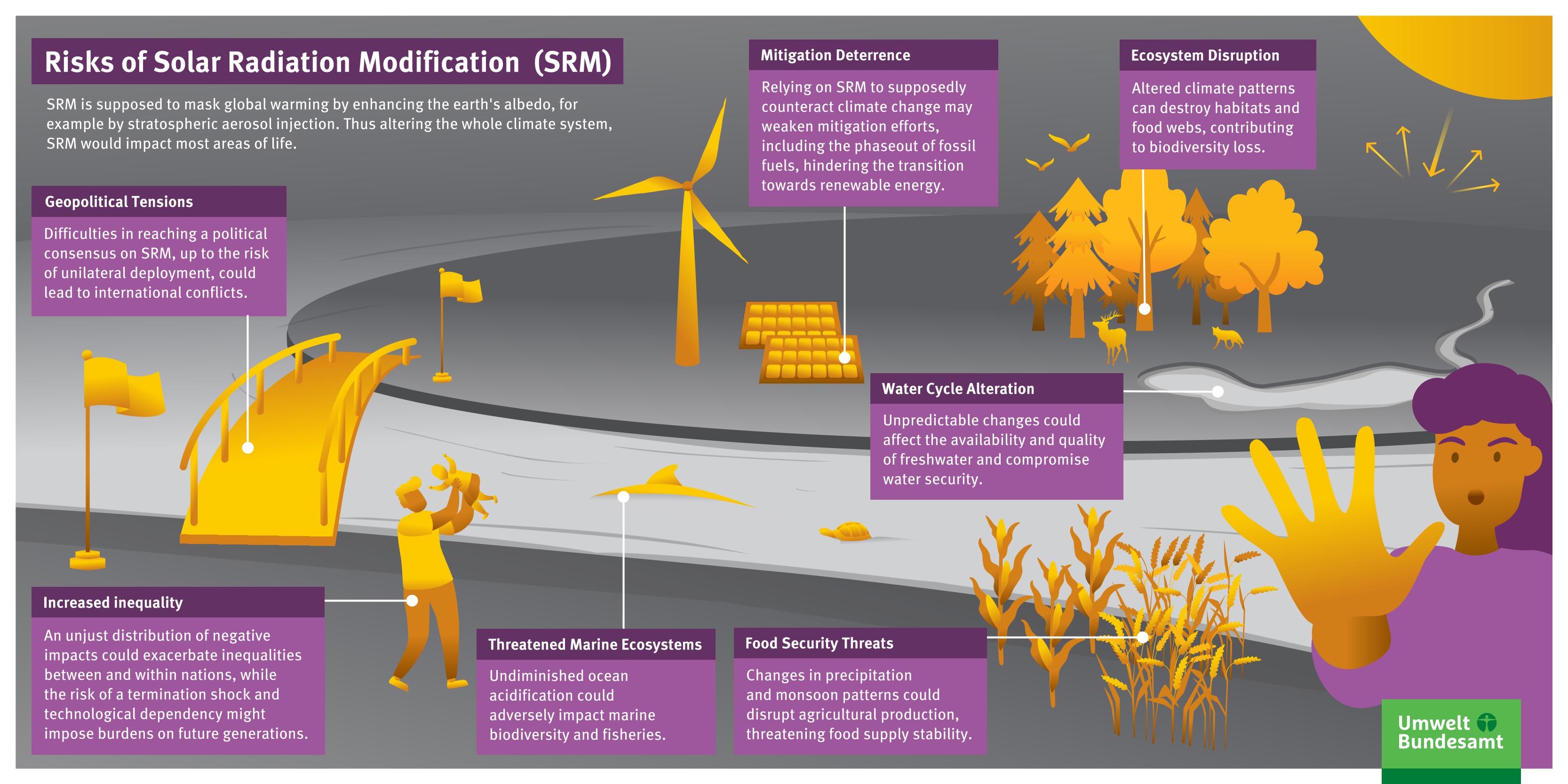
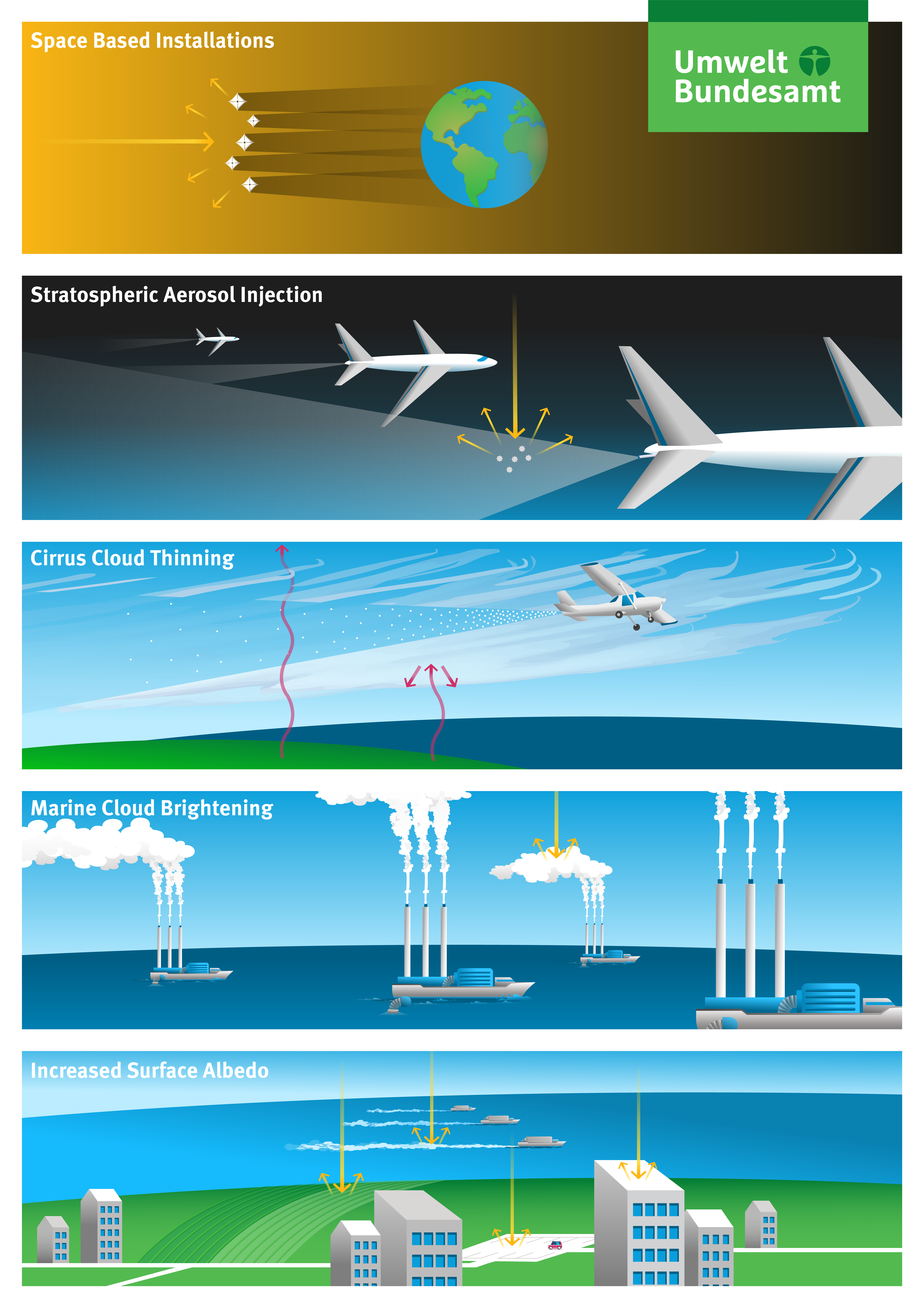
The approaches to influence the radiation budget can be divided into five categories:
Space Based Installations
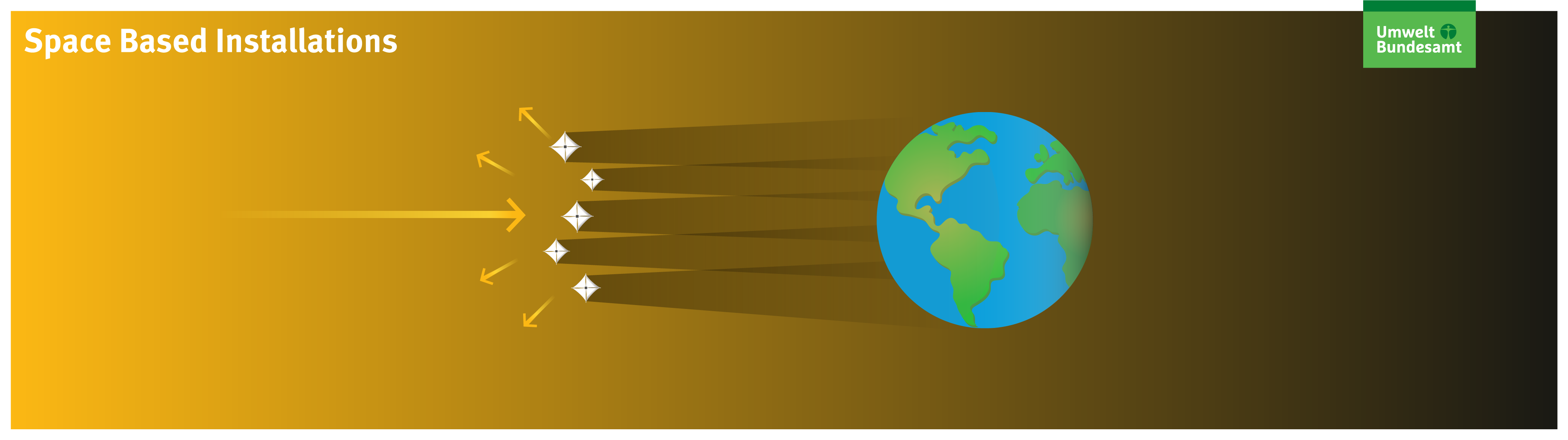
Space mirrors that protect the earth from the sun - What sounds like "science fiction" at first is being seriously discussed, at least by some researchers. The idea is to place a huge solar sail or sunshade at a specific point between the earth and the sun. As this would require hundreds of thousands of rocket launches over several decades, researchers are considering how the resources for such a solar shield could be taken from space itself.
Stratospheric Aersosol Injection (SAI)
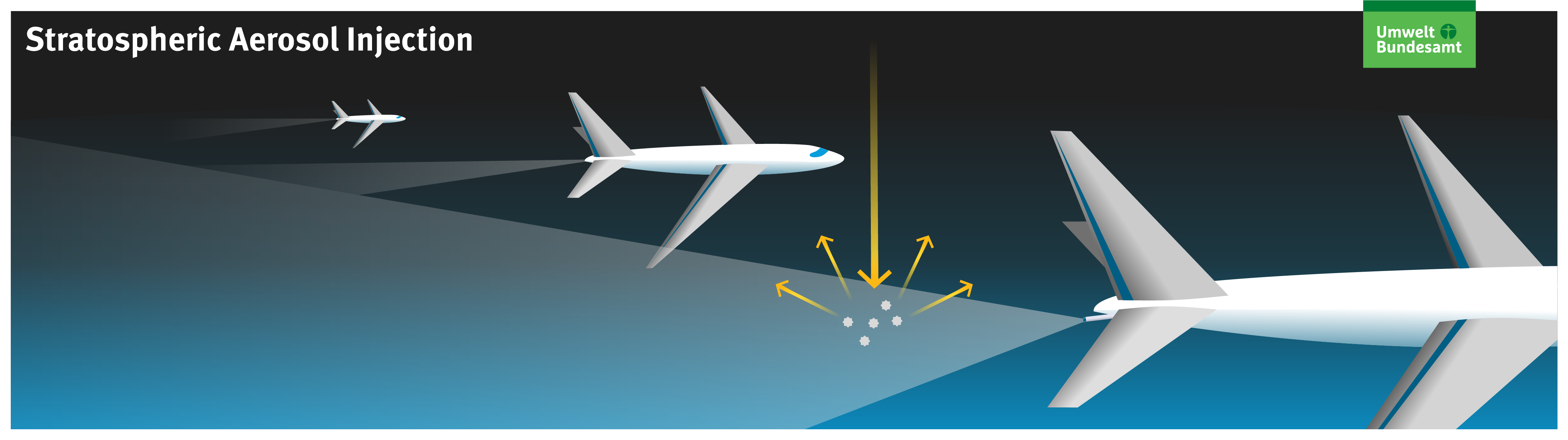
Probably the most widely discussed method is the introduction of substances into the stratosphere using specially designed aircraft*. Based on a large volcanic eruption, the aerosols deployed are intended to reflect the incident sunlight back into space and thus achieve a cooling effect. Due to the rough similarity to volcanic eruptions, the effects of SAI are still best researched. It is clear for example, that the chemical reactions would lead to a warming of the stratosphere and damage the ozone layer (see study "Geo-Engineering", german). This is particularly the case with sulphate aerosols. For this reason, the effects of calcite or diamond dust for example are also calculated in computer models. Larger field experiments with balloons have been prevented by the public in the past. However, there is an American company that regularly releases small balloons with sulphur dioxide and sells certificates for this alleged cooling effect.
Cirrus Cloud Thinning (CCT)
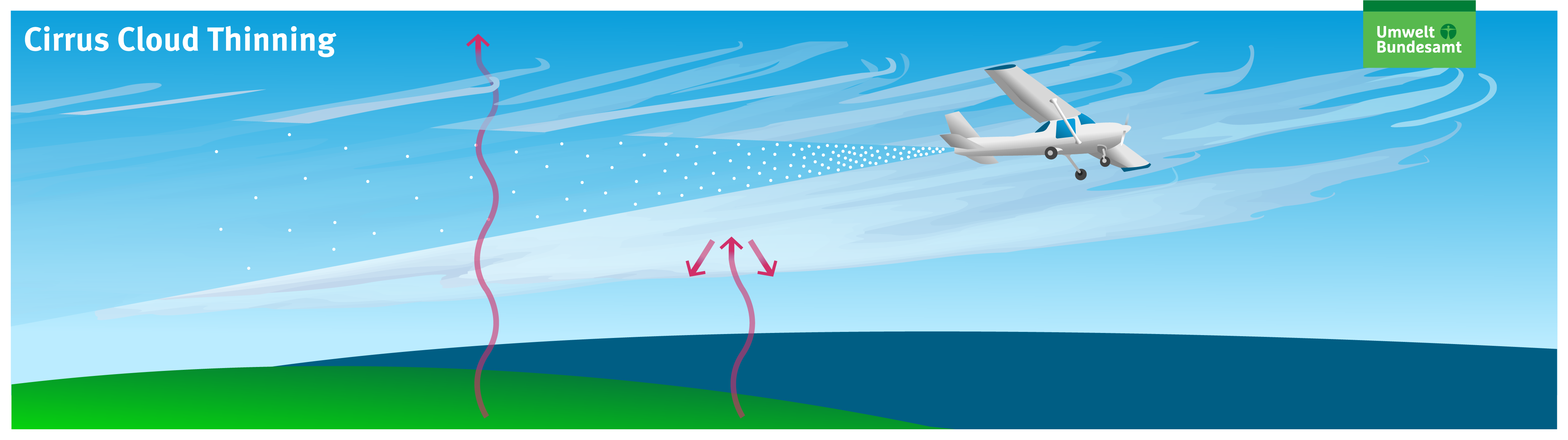
By thinning out high cirrus clouds, more infrared radiation should be able to escape into space instead of reducing the incident solar radiation. Nevertheless, this approach is discussed under the term SRM. By introducing particles as additional crystallization nuclei, several large ice crystals are to be created instead of many smaller ones, so that more heat radiation could escape through the optically thinner clouds. However, there is a risk that it could also have the opposite effect. Overall, there are considerable uncertainties regarding the formation and effect of cirrus clouds. Still, this influence on the radiation budget and its potential effect has been taken into account in a few computer models.
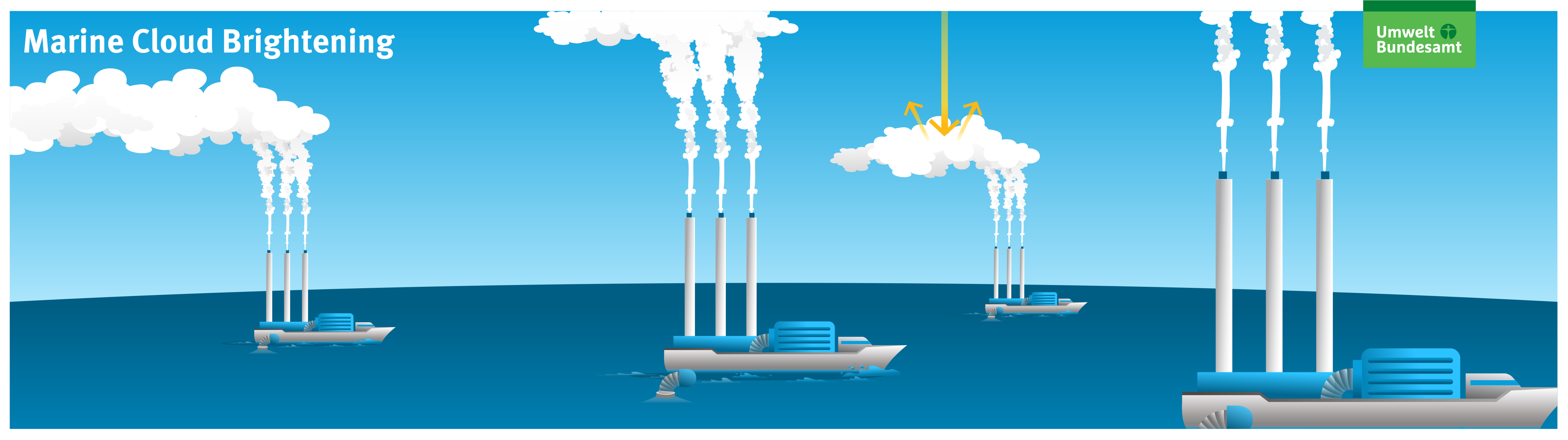
Marine Cloud Brightening (MCB)
The brightening or generation of stratocumulus clouds over the sea is to be achieved by introducing salt particles into the lower atmosphere, for example by spraying seawater from a ship with special vaporizers. Water from the air would then condense on the salt particles from the seawater or other salts and clouds would form. The solar radiation would then be reflected on the light-colored upper surface of the clouds. MCB is already being tested in small-scale field experiments, for example over Australian coral reefs, in order to achieve local cooling effects.
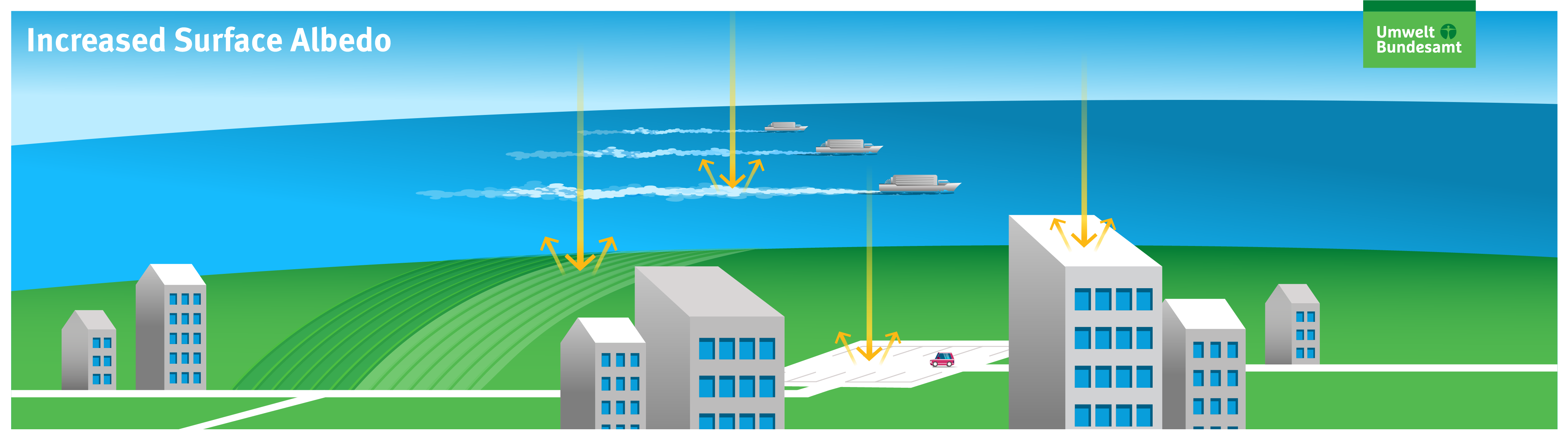
Increased Surface Albedo
Albedo refers to the ratio of reflected to incident solar radiation. Light-colored surfaces (e.g. snow) reflect more radiation and therefore do not heat up as much as dark surfaces (e.g. oceans, asphalt). This property can be used for cooling by painting roofs white, placing glass beads on icy surfaces or setting up reflectors in the desert. So-called "microbubbles" could be used to make the white foam of ships more stable. Genetically modified crops with lighter-colored leaves are also being discussed. As specific as the ideas are, the level of development and the environmental risks are just as varied.