
International treaties on F-gases and CFCs
Montreal Protocol
The Montreal Protocol on Substances that Deplete the Ozone Layer is the most important international instrument for the protection of the ozone layer and the climate (from e.g. chlorofluorocarbons (CFCs) and hydrofluorocarbons (HFC)). The Montreal Protocol was signed by 24 states and the Commission of the European Communities in September 1987, signalling the global phase-out of the production and use of CFCs.
The Protocol has been ratified by 197 parties on 16 September 2009, making the Montreal Protocol the first universally ratified international treaty. The production volume of substances which deplete the ozone layer has been cut by 95 percent since 1987.
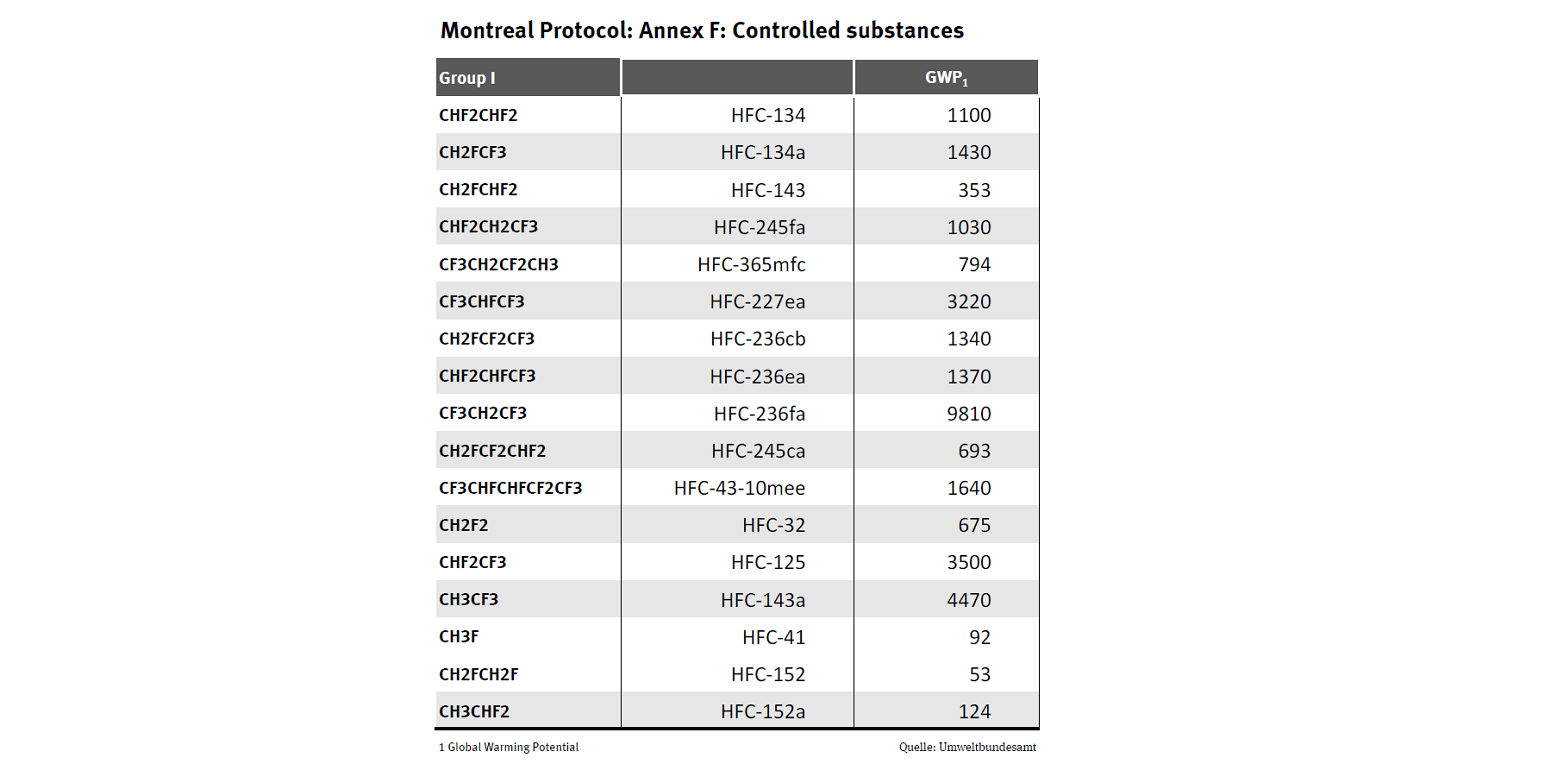
After years of negotiations, the Parties agreed on an HFC phase down scheme on 15 October on Kigali, Rwanda, to effectively cut HFC emissions. The addition of this substance group of climate-damaging HFCs to the Montreal Protocol is based on their major use as substitutes for ozone-depleting substances.
Kyoto Protocol to the Framework Convention on Climate Change
The emission reduction obligations promulgated by the Kyoto Protocol apply both to the classic greenhouse gases carbon dioxide (CO2), methane (CH4) and nitrous oxide (N2O), and to the fluorinated greenhouse gases HFCs, PFCs, SF6 and NF3 (F-gases). However, the Kyoto Protocol contains no measures that are specific to these substances.