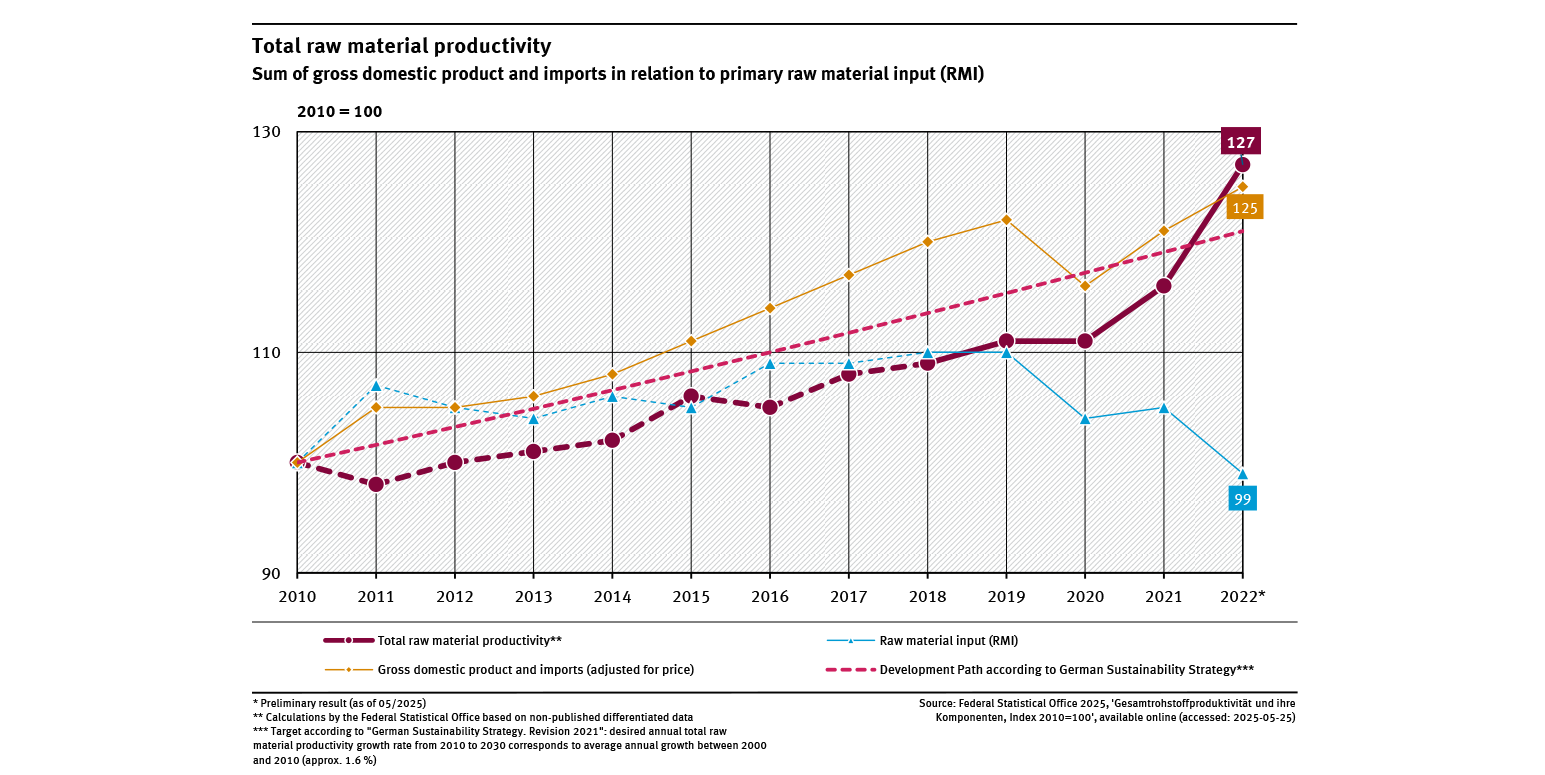
Total raw material productivity in Germany increased by 27% between 2010 and 2022. According to preliminary calculations, a significant increase in total raw material productivity was recorded in 2022. This was due to a significant drop in raw material input (RMI) since 2019. Gross domestic product only fell in 2020, but then started to increase again. It should be noted that 2020 was an exceptional year, as demand and the associated supply chains were affected worldwide due to the COVID-19 pandemic, among other things.
In the new edition of the German Sustainability Strategy of 2016, the German Government has set a new goal for the further growth of raw material productivity: Between 2010 and 2030, the value is expected to increase by an average of roughly 1.6 % per year, which was the average annual increase between 2000 and 2010 (BReg 2016). Growth from 2010 to 2022 exceeded this target corridor for the first time following the notable rise in total raw material productivity in 2022.
In the German Resource Efficiency Programme III (ProgRess III) records a large number of measures for the years from 2020 onwards to increase the productivity of raw materials. As new topics, resource-efficient mobility and the potentials and risks of digitalization for resource efficiency are now being considered in ProgRess III. The German government also developed the National Circular Economy Strategy (NKWS) in 2024, which brings together targets and measures for circular economy and sustainable resource use from all relevant strategies. The indicator “Total Raw Material Productivity” is also included as a central indicator and target in this strategy.