Skip to main content Skip to main menu Skip to footer

Tap water: sustainable, healthy, cheap

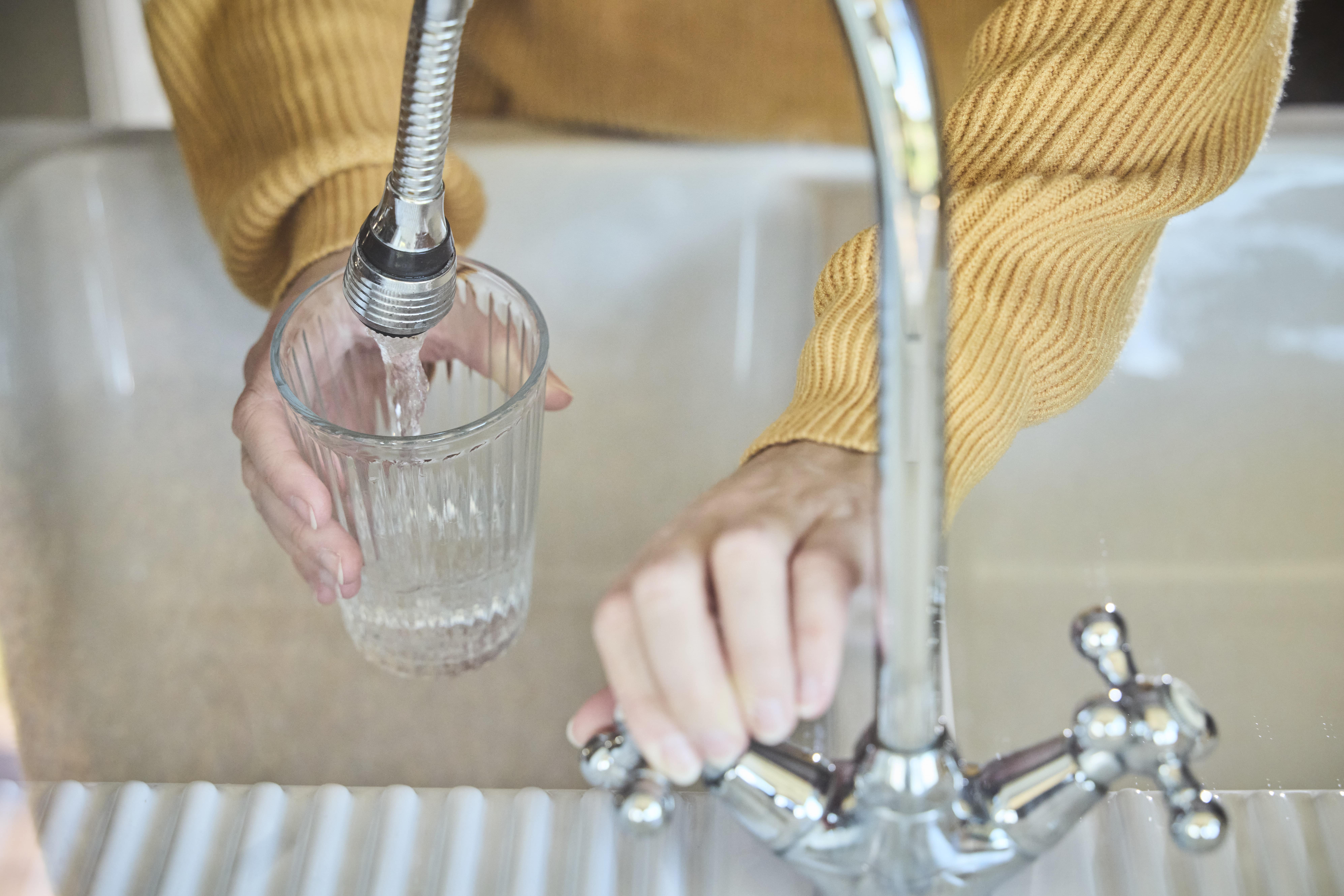
High-angle, close-up shot of hands wearing a yellow sweater, holding a clear ridged glass and filling it with fresh water from a modern chrome kitchen faucet.
The quality of tap water in Germany is very good.
Source: Marc Beckmann / co2online.de

Table of contents

What you can do to use tap water in a climate-friendly way

  • Quench your thirst with tap water: It is the most cost-effective and environmentally friendly beverage.
  • Only allow specialist companies to carry out work on your tap water installation.
  • Use warm water sparingly: This saves both money and energy.
  • Protect our drinking water resources: Protect groundwater and surface water by not disposing of waste or toxins in drains or toilets.
  • Find out if there are still any old lead pipes installed in your home's tap water system. Since 12 January 2026, these must have been replaced or decommissioned.

Know how

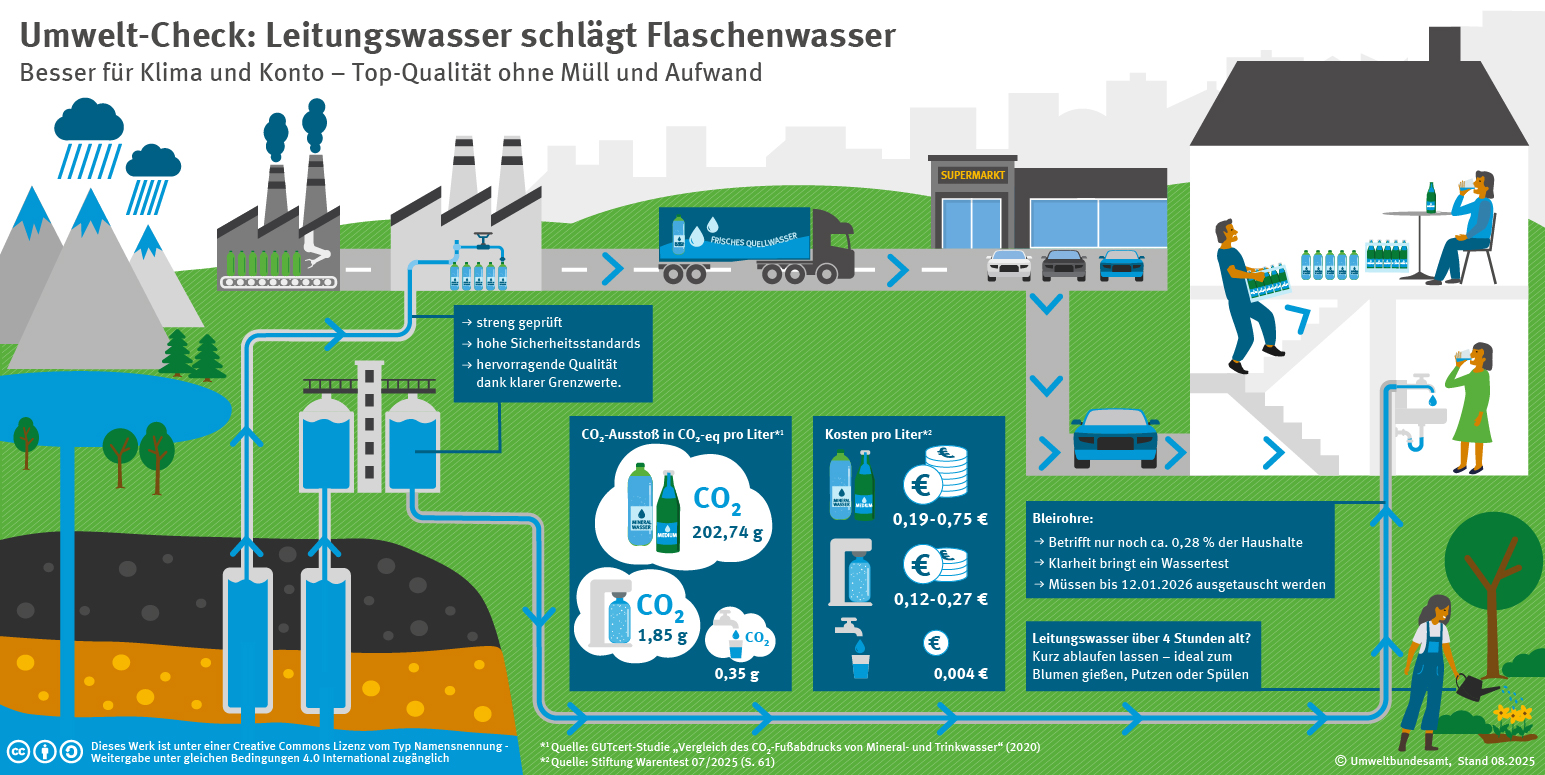
Drinking water in Germany is of a consistently high quality and is one of the most strictly controlled foodstuffs. Drinking tap water generates less than one per cent of the environmental impact of bottled mineral water.

Drinking tap water: Whether sparkling or still, fresh drinking water from the tap in Germany can be consumed without hesitation in almost all cases. This is because the quality of drinking water in Germany is very high. This applies to large centralised systems as well as – with very few exceptions – to smaller water supply facilities. Please note: Tap water that has been "stagnant" (standing) in the pipes for more than four hours should not be used for preparing food and beverages. Let stagnant water run off until it is noticeably cooler to the touch (the "finger test").

Quality check: Your water supplier is obliged to provide you with up-to-date information about the quality of your drinking water (e.g., via analysis data on the internet). However, the water supplier is not responsible for the "last mile" of the water pipes; this is the responsibility of the homeowner. These last few meters are crucial, especially regarding contamination by lead or microbes (e.g., Legionella). Please refer to our tips on lead in drinking water (Blei im Trinkwasser) and hot water (Warmwasser). 

Professional installation: Protect the drinking water within your home from contamination by only having work on the installation carried out by specialist companies. Your water supplier maintains a "list of registered installation companies" for this purpose. These specialists only use pipes and fittings bearing the test mark of an accredited certifier. Further information can be found under Trinkwasser verteilen.

Low cost: Drinking water is extremely cheap compared to other beverages. For just one cent, you get about 5 litres of tap water. Per person and day, this costs around 60 cents for over 100 litres of drinking water (including sewage charges), covering food preparation and all other domestic uses.

Save energy: Warm water must be heated separately. On average, 10% of a household's energy costs are spent on heating water. Using warm water sparingly saves money and reduces CO2 emissions.

Do not pollute water unnecessarily: Unused or expired medicines, paint residues, and other water-hazardous chemicals do not belong in the drain. You can find out the best way to dispose of these in your area by consulting the interactive waste disposal map (Entsorgungslandkarte). Odour-producing waste such as nappies or sanitary towels should be disposed of in the residual waste bin. This prevents blockages and reduces the burden on sewage treatment plants.

What else you can do:

  • Repair dripping taps: Individual drops can add up to over 1,000 litres over the year. Especially with warm water pipes, this leads to avoidable costs.
  • Use stagnant water to water your plants.

Background

Environmental situation: In Germany, strict compliance with the Drinking Water Ordinance (TrinkwV) guarantees that drinking water is safe for human health, free from avoidable contaminants, and can be consumed in perfect condition straight from the tap. More than 99% of the measured values meet or significantly exceed the quality requirements.

Legal situation: The new version of the TrinkwV from 23 June 2023 implements new requirements of the EU Drinking Water Directive. This ensures that our drinking water remains safe to use. The directive requires EU Member States to submit an annual dataset on monitoring, exceedances, and incidents. In Germany, the Federal Ministry of Health (BMG) and the Federal Environment Agency (UBA) are responsible for this.

  • Lead: Since December 2013, the limit value for lead has been 0.01 mg/L and will be lowered to 0.005 mg/L on 13 January 2028. Even now, this limit can only be reliably met in installations without lead pipes. Despite this, lead pipes are still found in some old buildings. Landlords are required to provide information and were obliged to replace or decommission known lead pipes by 12 January 2026. Lead is a nervous system and blood toxin that accumulates in the body. Pregnant women, infants, and young children are particularly at risk.
    If the limit for lead is exceeded, the pipes must be removed. Until then, the water should not be consumed. External use (personal hygiene) remains possible. Using filters to remove lead is not recommended.
  • Nitrate: Since 1999, exceedances of the nitrate limit (50 mg/L) have become significantly rarer. While the exceedance rate was 1.1% in 1999, it fell to 0.08% in 2007 and has fluctuated between 0.01% and 0.04% since 2017. Exceeding the limit is therefore a rare exception.

Associated content

Links

Publications

Related contents

Related publications

Tags

Short link: https://www.uba.de/n32796en