
Newsletter from 12.12.2025 | Last changed: 12.12.2025
Search
1489 - 1500 of 1835
-
-
KomPass: Area of action climate impact from 06.01.2023 | Last changed: 07.01.2026
Climate Impacts: Field of Action Biological Diversity
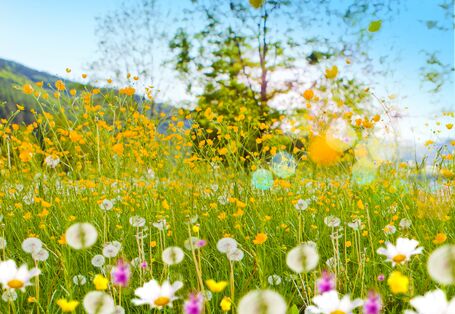 … A large number of bird species in Europe breed on average 6 to 14 days earlier than 30 years ago. As a result, breeding starts earlier. An earlier start of egg laying … A large number of bird species in Europe breed on average 6 to 14 days earlier than 30 years ago. As a result, breeding starts earlier. An earlier start of egg laying …
 -
Press release 45/2022 from 14.10.2022 | Last changed: 14.10.2022
E-Waste Day: a plea for proper disposal of electrical and electronic equipment
 … the 3 million tonne mark since 2021, rising from roughly 2 million tonnes in 2017. However, consumers are increasingly taking advantage of the opportunities to …
 -
Press release 10/2015 from 17.03.2015 | Last changed: 23.01.2017
New "Blue Angel" for data centers
 … a gradual reduction of the amounts of HFCs used, this will only enter into force in 2017. However, the requirements of the revised Blue Angel already require …
 -
News from 27.07.2022 | Last changed: 04.10.2022
International TES Academy kicks off at UBA
 … of the war in Ukraine on the sustainability transformation. In the first event on 30 May 2022 (“A disruption of the sustainability transformation? Sustainability … world to contribute to the achievement of the Sustainability Goals of Agenda 2030 (SDGs) – both at home and as supporters of and in demonstration of solidarity …
 -
Press release 11/2021 from 23.03.2021 | Last changed: 11.05.2021
Call for entries for German Award for Nature Writing 2021
 … must be accompanied by the following: A prose text (story, beginning of a novel) of 30-50 standard pages, or 10 poems, or an essay of at least standard pages in length …
 -
Press release 13/2019 from 21.05.2019 | Last changed: 27.05.2019
A coffee date with the Blue Angel
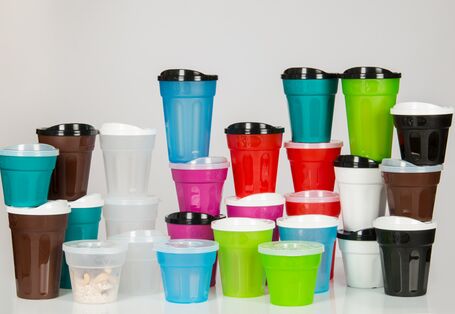 … at participating supermarkets. FairCup's RVM partner is already established at 30,000 locations and tests are being run in select supermarkets in Göttingen and …
 -
News from 17.01.2018 | Last changed: 23.01.2018
European Strategy for Plastics: Good approach, but too unclear
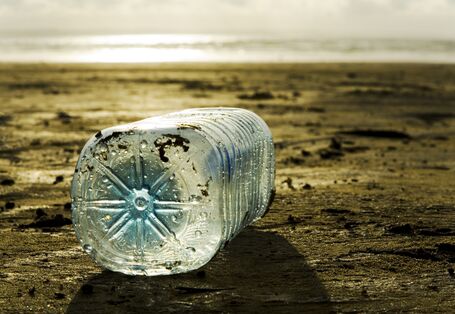 … of this litter is incinerated for energy re-covery or even landfilled. Only about 30% of it is recycled in the EU. Another problem is that every year, up to 500.000 … appreciate the Commission’s goal that less plastics end up in the environment by 2030 – whether it will become reality strongly depends on the actual implementation of …
 -
News from 31.07.2024 | Last changed: 31.07.2024
Renaturalised bodies of water can reduce greenhouse gas emissions
 … methane production. The negative impact of methane on the climate is almost 30 times greater than that of carbon dioxide (IPCC 2021). Solutions In order to … to the new Restoration Law, freshwater ecosystems must also be renaturalised by 2030. Associated content Links Water directive (2015-2021) Restoration platform Water …
 -
Press release 17 from 28.04.2015 | Last changed: 23.01.2017
Too much noise: One in every eight children shows signs of impaired hearing
 … 20 decibels (dB). 2.4% of the children experienced a hearing loss of as high as 30 dB in at least one of the test frequencies. During the 2003-2006 survey period …
 -
Press release 28/2021 from 14.06.2021 | Last changed: 18.06.2021
New study shows risks of climate change in Germany
 … the effects here at home: the number of hot days with maximum temperatures above 30°C has almost tripled and winter precipitation has increased by 27 percent. What … Germany examined over 100 climate change impacts and their interactions, and around 30 of them were found to require very urgent action. These include deadly heat …
 -
KomPass: Area of action adaptation from 06.01.2023 | Last changed: 18.12.2025
Adaptation: Field of Action Tourism
 … nordic walking and strolling . Hiking in very hot weather (e. g. temperatures above 30°C) should generally be avoided for health reasons. Otherwise, as an adaptation … nordic walking and strolling . Hiking in very hot weather (e. g. temperatures above 30°C) should generally be avoided for health reasons. Otherwise, as an adaptation …


