
Change in the length of the vegetation period and phenology
Phenology describes annually recurring processes in the life cycle of plants and animals. In plants, this includes leaf sprouting, flowering or fruitification, foliage discolouration and leaf fall or, in animals, their migrations. A large part of these processes is dependent on temperature and photoperiod (i.e. day length). An increase in temperature due to climate change can cause a temporal shift in these development and activity phases of plants and animals. Therefor phenological data are very good indicators of the effect of climate change. Phenological changes can have both positive and negative consequences for plants, animals and humans.
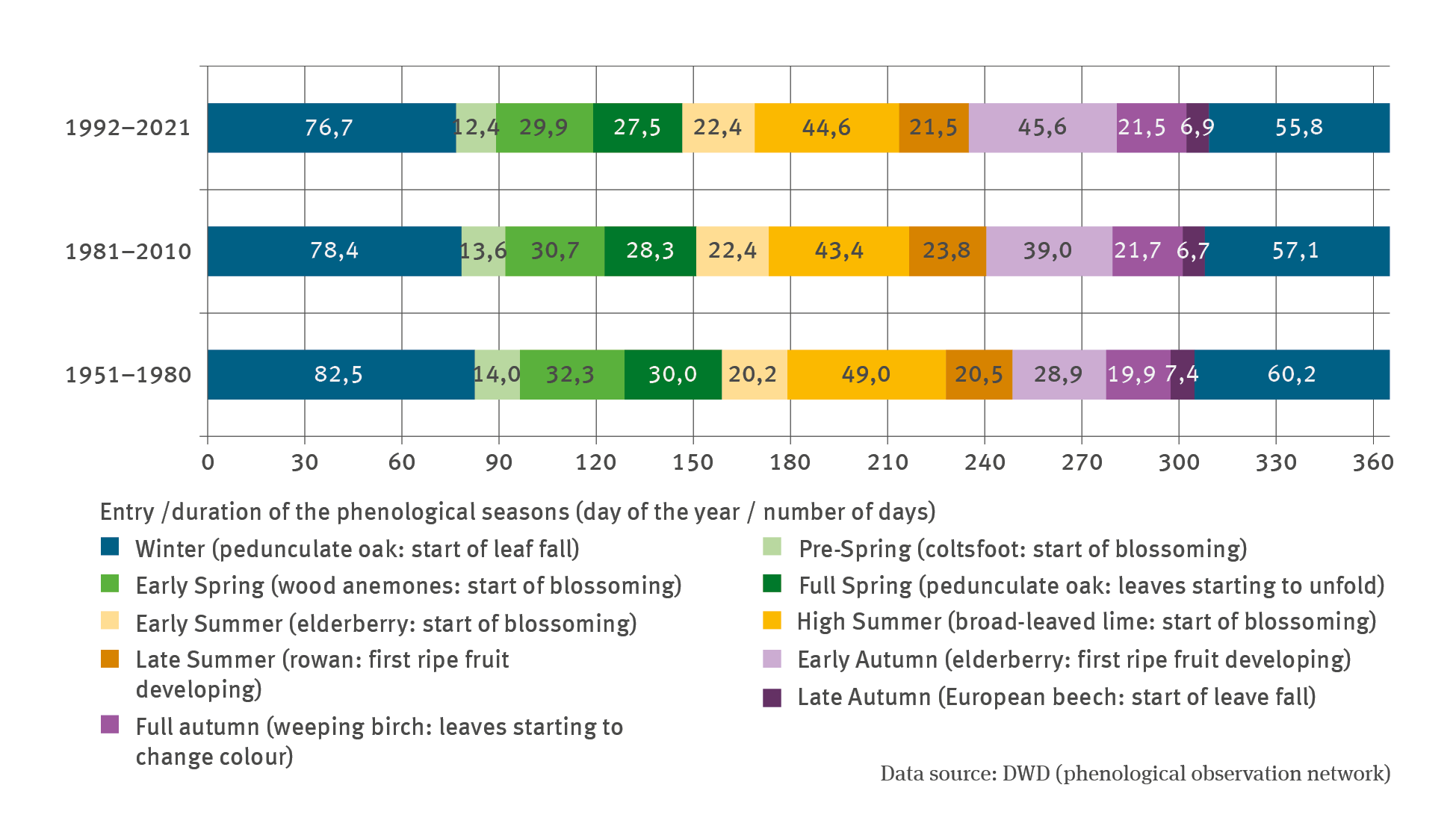
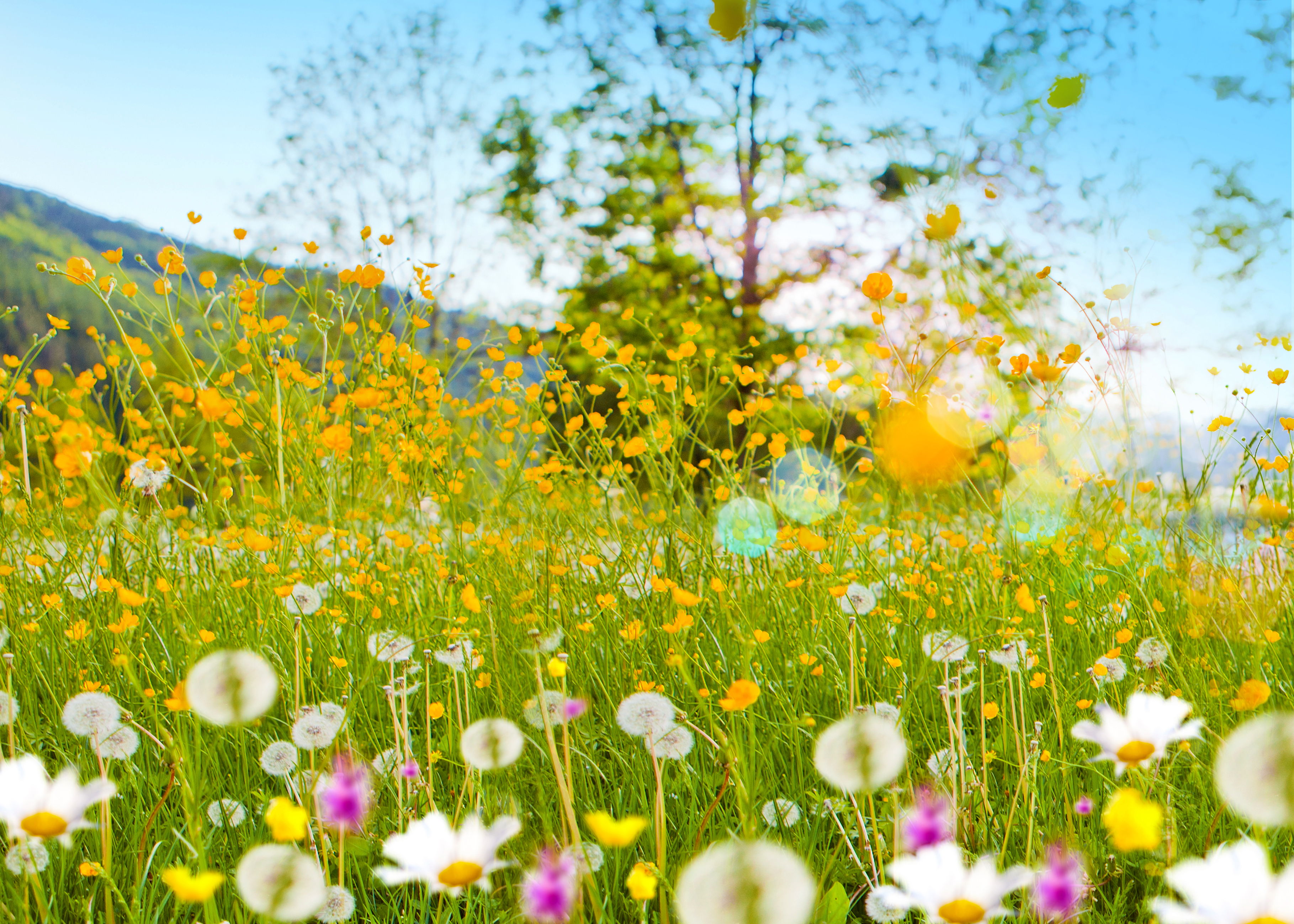
Phenological changes in plant life: The most visible and immediate response to climate change are phenological changes in the annual cycle. In spring, earlier leaf sprouting has been observed almost everywhere in Germany in recent decades. Changes in the seasonal development phases show for the snowdrop, which marks the beginning of early spring, that it flowers three days earlier per decade on average. The same applies to the apple flower, which indicates the beginning of full spring. For Germany, an advance of the beginning of the growing season was measured in the years 1983 to 2012 compared to the period from 1951 to 1980 to an average of about eight days. The vegetation period, i.e. the time of the year in which plants grow, flower and fruit, increased in Germany by around two weeks on average since 1961.
Indicator from the DAS monitoring: Phenological changes in wild plant species
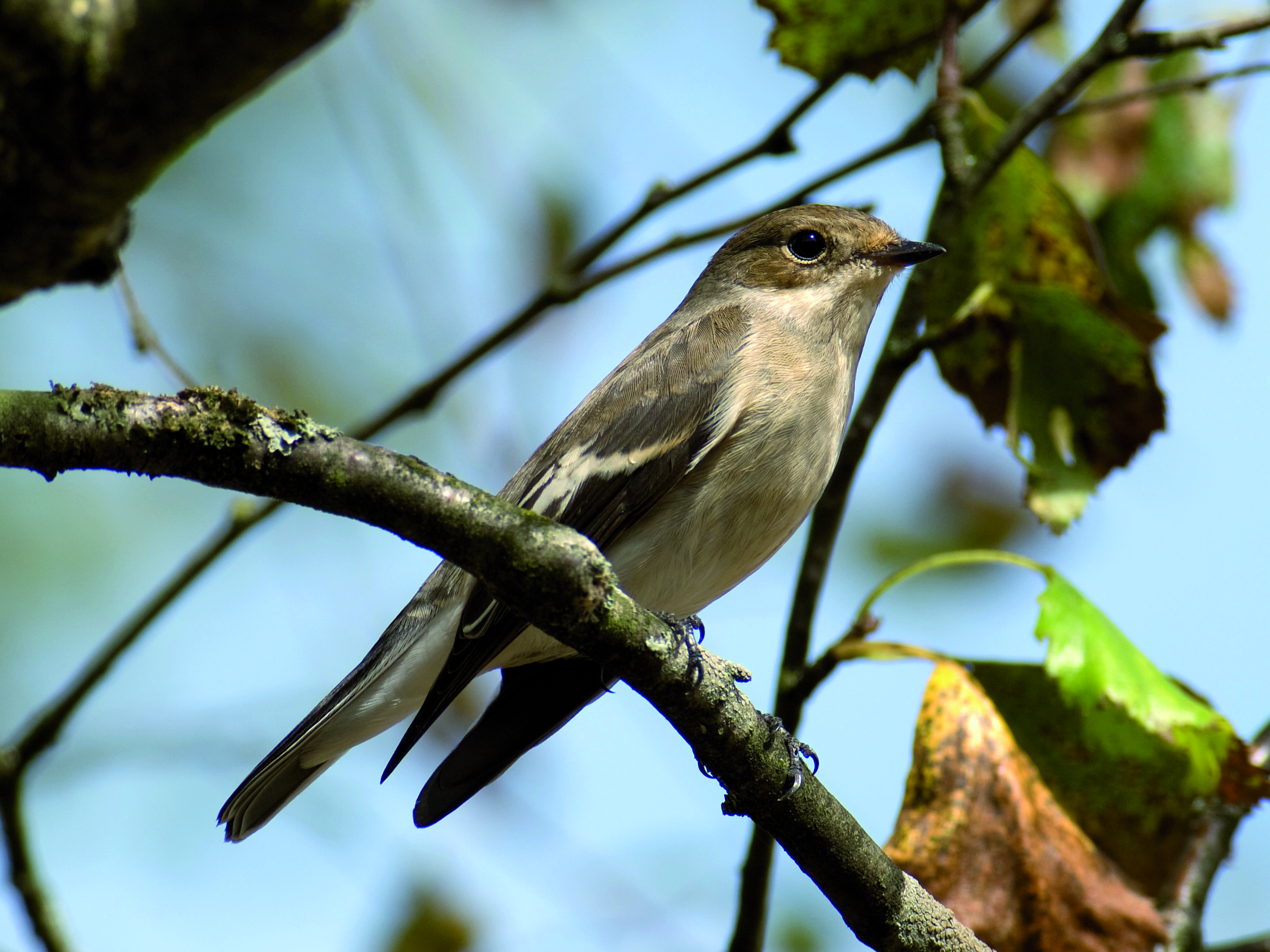
Phenological changes in animal life: Phenological changes are also evident in animal life, especially in birds, which react very sensitive to changing climatic conditions. Global warming can cause changes in their occurrence, dispersal, migration behaviour, habitat selection and foraging. For migratory birds, warming potentially leads to an earlier return in spring and a delayed departure in autumn. A large number of bird species in Europe breed on average 6 to 14 days earlier than 30 years ago. As a result, breeding starts earlier. An earlier start of egg laying and breeding has been documented for the long-distance European pied flycatcher (Ficedula hypoleuca), which in the Netherlands has moved its breeding start forward by ten days within 20 years. As a result of shorter winters, certain bird species react with increased breeding success.
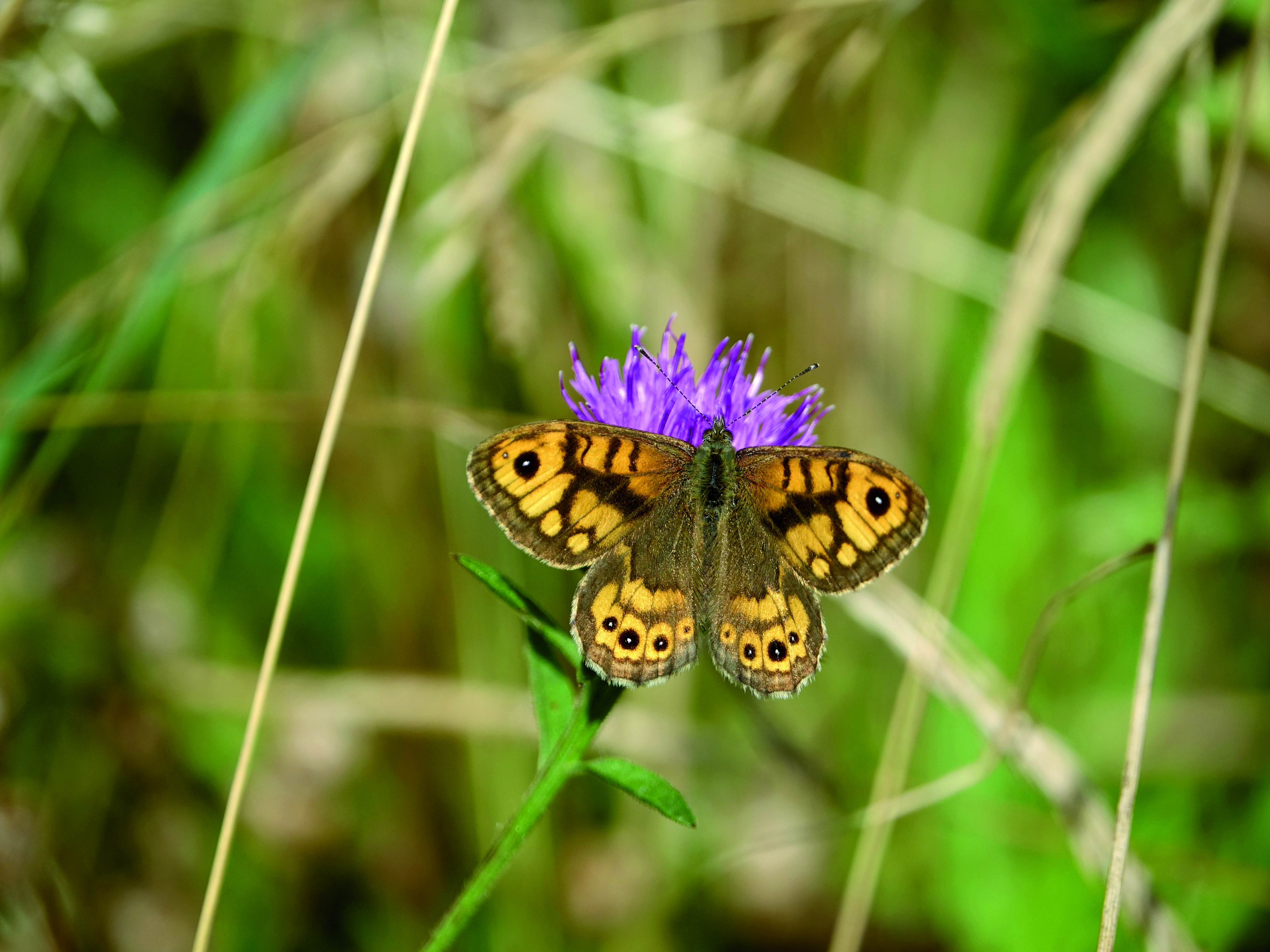
In recent decades, migratory bird species in our latitudes have been observed to migrate home earlier, to migrate away later, to shorten their migration routes and to overwinter more frequently in the breeding area. In the North Sea region, migratory birds have arrived 0.5-2.8 days earlier since 1960. Swallows (Hirundinidae) now return on average ten days earlier from warmer areas, starlings (Sturnus vulgaris), cranes (Grus grus) and skylarks (Alauda arvensis) are also returning earlier. Data records in southern Germany since 1970 show an average delay of 3.4 days in the departure of short-distance migrants due to the later start of autumn. The increasingly mild temperatures in this country influence the behaviour of short-distance migrants, which normally spend the winter in the warmer regions of Europe. One example is the blackcap (Sylvia atricapilla) which has "developed" a new migration route. It no longer winters in southern France or Spain, but increasingly heads for countries such as southern England, where the increasingly mild climate makes successful wintering possible. Some bird species, such as the Northern lapwing (Vanellus vanellus), song thrush (Turdus philomelos), starling (Sturnus vulgaris) and redstart (Phoenicurus ochruros) are reacting even more fiercely. Until a few decades ago, they were considered classic migratory birds, but they are increasingly spending the winter in Central Europe. The migratory behaviour of long-distance migrants has changed much more slowly so far because it is genetically predetermined. For some of these species it is difficult to find breeding sites and food after their return from the south. In addition, long-distance migrants are increasingly being squeezed by climate change, as they depend on intact conditions in several places around the world: breeding sites in their wintering grounds and resting sites along the bird migration route. Many long-distance migrants, such as the pied flycatcher (Ficedula hypoleuca), may lack energy if they do not find suitable biotopes along the way. Other examples from the animal life concern the first observation of butterflies or the spawning of various amphibian species, e. g. European tree frog (Hyla arborea), which are now observed earlier in many places.
Phenological changes have consequences for the interaction of plants and animals. Different speeds of phenological changes in individual links of the food chain increase the risk of a temporal decoupling of important interactions between organisms, for example with regard to the supply and demand of food. For birds, this phenomenon of temporal or spatial non-coincidence of interspecific relationships can be observed. The breeding season of many bird species is closely linked to the seasonal maximum of available food. A change in migration time can lead to desynchronisation with the food supply and thus cause food shortages. An example of this is the pied flycatcher (Ficedula hypoleuca), who winters south of the Sahara and returns to Germany at the end of April. It needs soft butterfly caterpillars to feed its young. However, they have already pupated, when the young birds need them for food. As a result, the bird's brood is weaker and more bird chicks starve to death in the nest. Similarly, the breeding success of the golden plover (Pluvialis apricaria) depends on the time when crane flies, the birds' prey insect, hatch. It is expected that by the end of this century there may be asynchrony between the birds' first egg laying and the appearance of crane flies.
Indicator from monitoring on DAS: Community temperature index for bird species