
Risk management - the water safety plan (WSP) approach of WHO
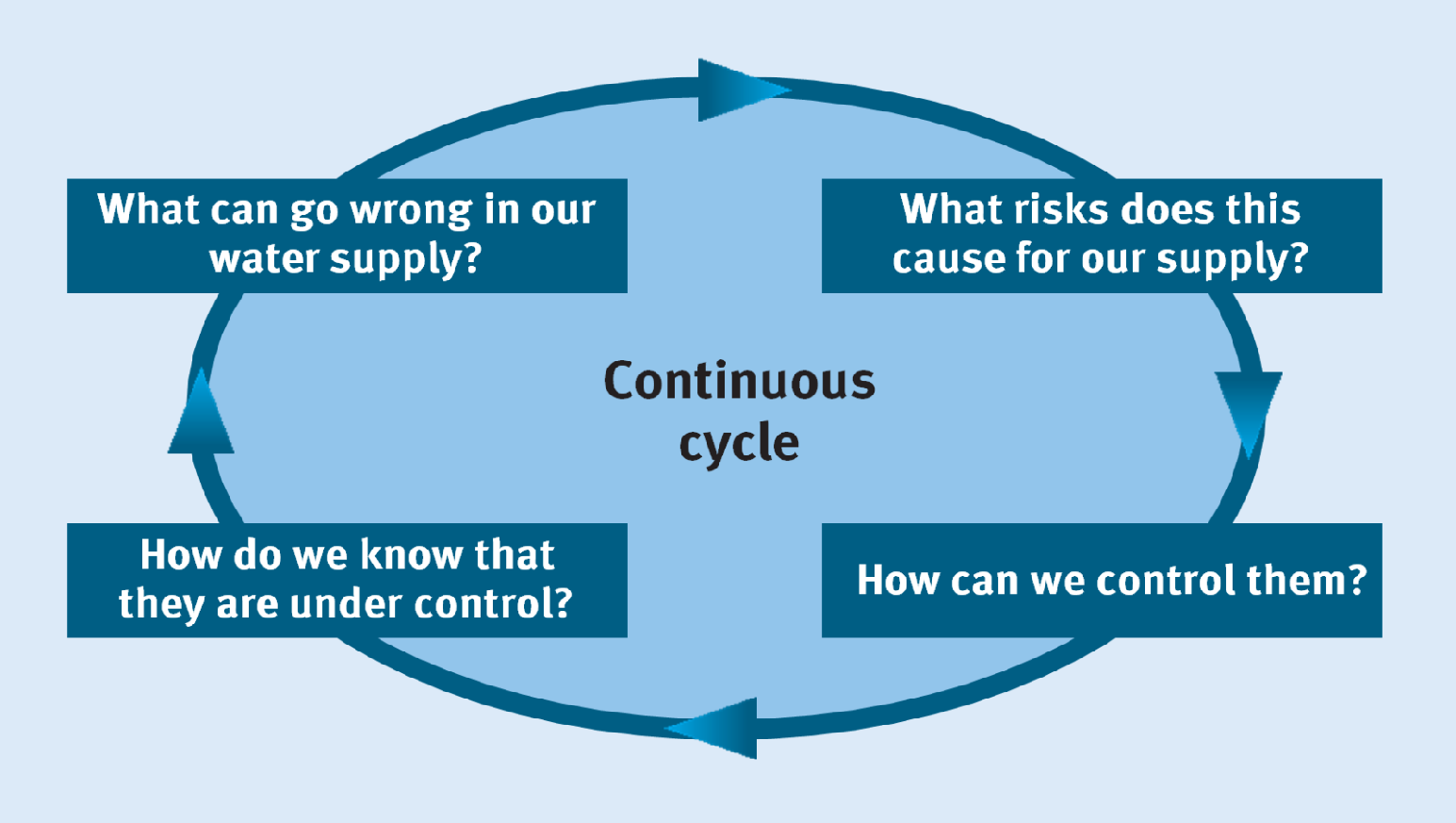
With the 2003 edition of the Guidelines for Drinking-water Quality, GDWQ, the WHO recommended a comprehensive risk assessment and risk management approach for the first time, termed Water Safety Plans. With this approach, risks to human health can be systematically identified, assessed and controlled in all processes from catchment to consumer.
WSP is a preventive management system tailored towards water supplies. This approach can be universally applied, irrespective of the type of raw water source used, the size or the complexity of the water supply.
For practical implementation of the WSP-approach, WHO has developed a number of tools, including for example a manual for large water supplies as well as a manual and a field guide for implementation in small community water supplies.
At the European level, the WSP-approach was first taken up through the DIN-EN 15975-2 in 2013. UBA, together with the Water Technology Centre (TZW), developed a manual for implementation of the WSP approach in small-scale water supplies in Germany. The manual complements the DIN-EN 15975-2 with practical explanations, recommendations, examples and supporting tools. The revised Drinking Water Ordinance (TrinkwV) and the new Ordinance on drinking water catchment areas (TrinkwEGV), both of 2023, established legal requirements for risk management, both in catchment areas for abstraction points of water intended for human consumption, as well as in water supply systems, in Germany.
Developing a risk management can help to identify and remediate weaknesses of the system. The process substantially improves the understanding of the specific water supply system and thus strengthens due diligence and organizational confidence of the water supplying entity. Applying risk management also improves the knowledge of the locally relevant technical rules and their application, and it provides a technically sound basis for decisions on improvements. Risk management also improve communication between stakeholders within the water supply, as well as with external stakeholders, particularly competent authorities.