Soil: the mainstay of our food supply
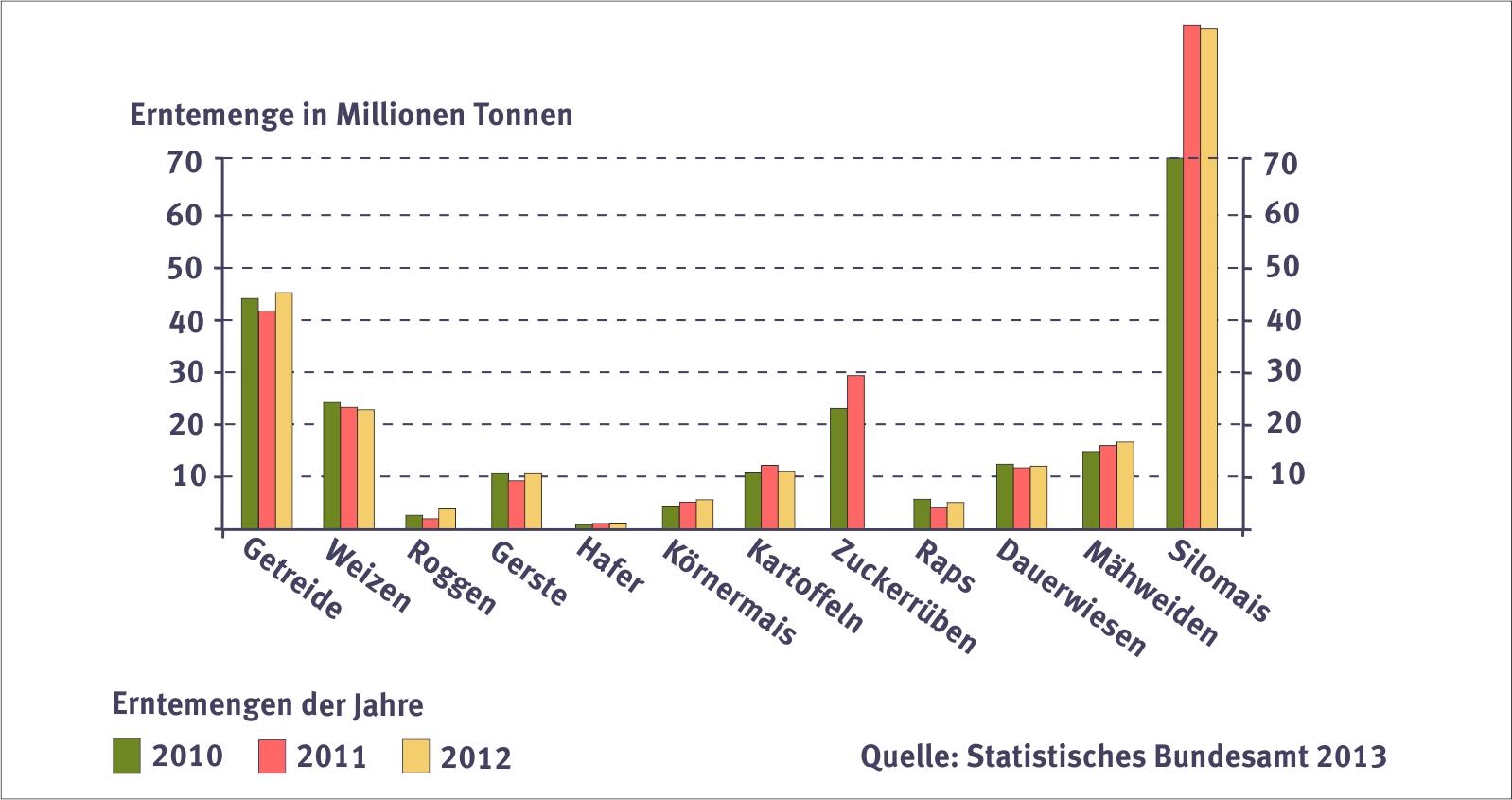
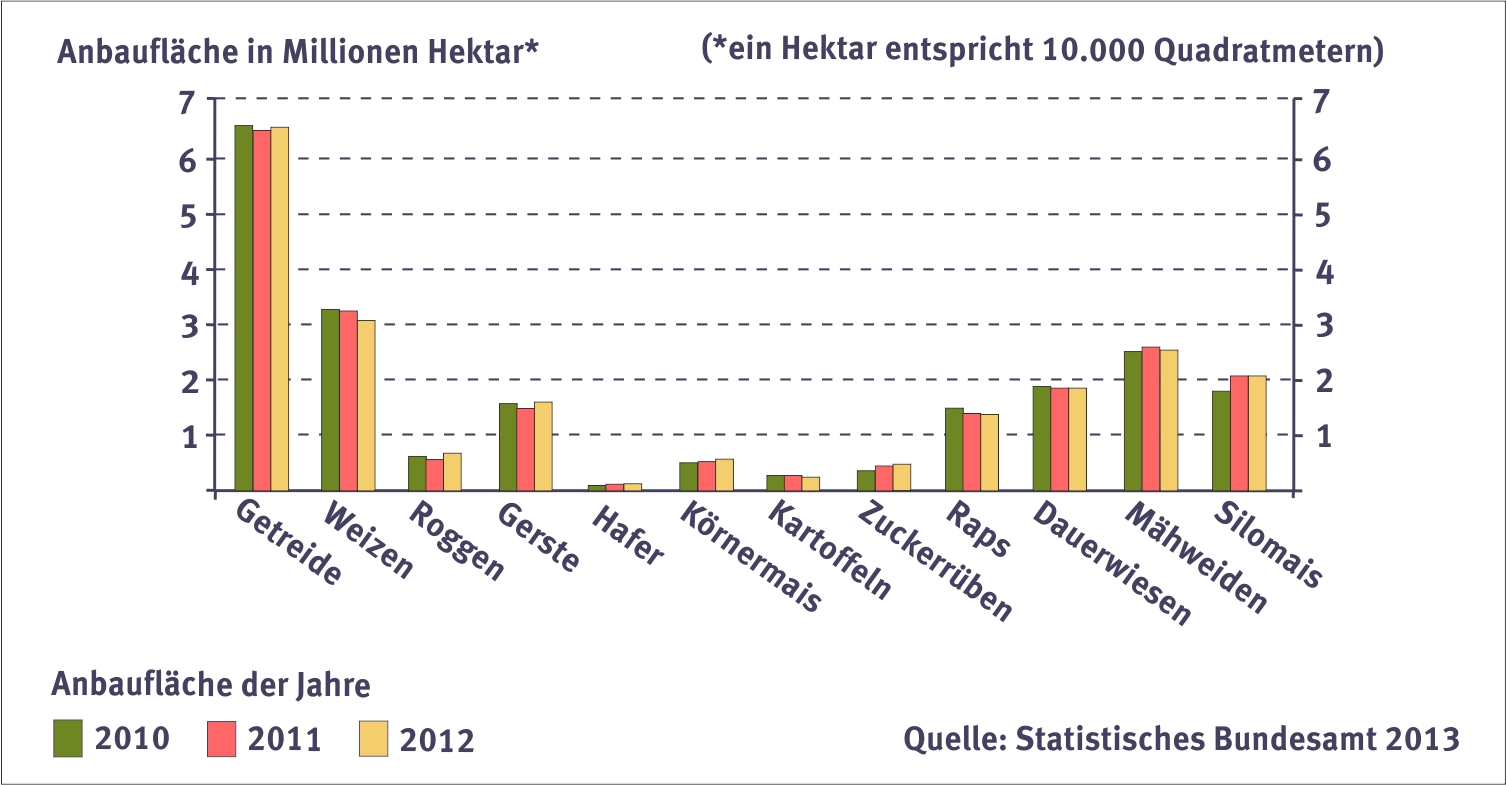
Although those of us who live in affluent Western countries take an ample supply of healthy food for granted, the availability of this food depends on the availability of uncompromised soils. Around half of Germany’s surface area is used as farmland, i.e. for crop cultivation, direct consumption and animal fattening. German farmers produce an average of more than 40 million tons of grain and ten million tons of potatoes annually. In recent years, increasing amounts of farmland have been used for energy plant cultivation that is in competition in Germany and elsewhere with crop plant cultivation.
Arable land is mainly found in places where the earth is inherently very fertile. Less fertile soils are found in forests or in meadows and pastures. Settlements and towns have traditionally sprung up in proximity to fertile land and desirable farmland, and rural areas still bear signs of this evolution today. Nonetheless, socioeconomic change has brought about changes in the use of and value attributed to arable land. Nowadays urban sprawl is a ubiquitous phenomenon entailing the use of arable land for purposes other than farming.
Soil fertility is determined by climate, as well as humus content, grain size and soil structure – which, in conjunction with tillage and cultivation yield growth conditions of varying quality for a given soil. In today’s agricultural sector, these growth conditions are artificially enhanced in order to increase crop yields. But these practices modify natural soil properties in ways that are not always beneficial, in that soil can in the long run lose its natural fertility for any of the following reasons: nutrient input resulting from the use of mineral fertilizers; mechanical tillage; pesticide use; and in some locations, the fact that the practice of tripartite crop rotation has been abandoned. It is for this reason that Germany’s Soil Protection Act (Gesetz zum Schutz der Böden) places such great emphasis on the precautionary principle.
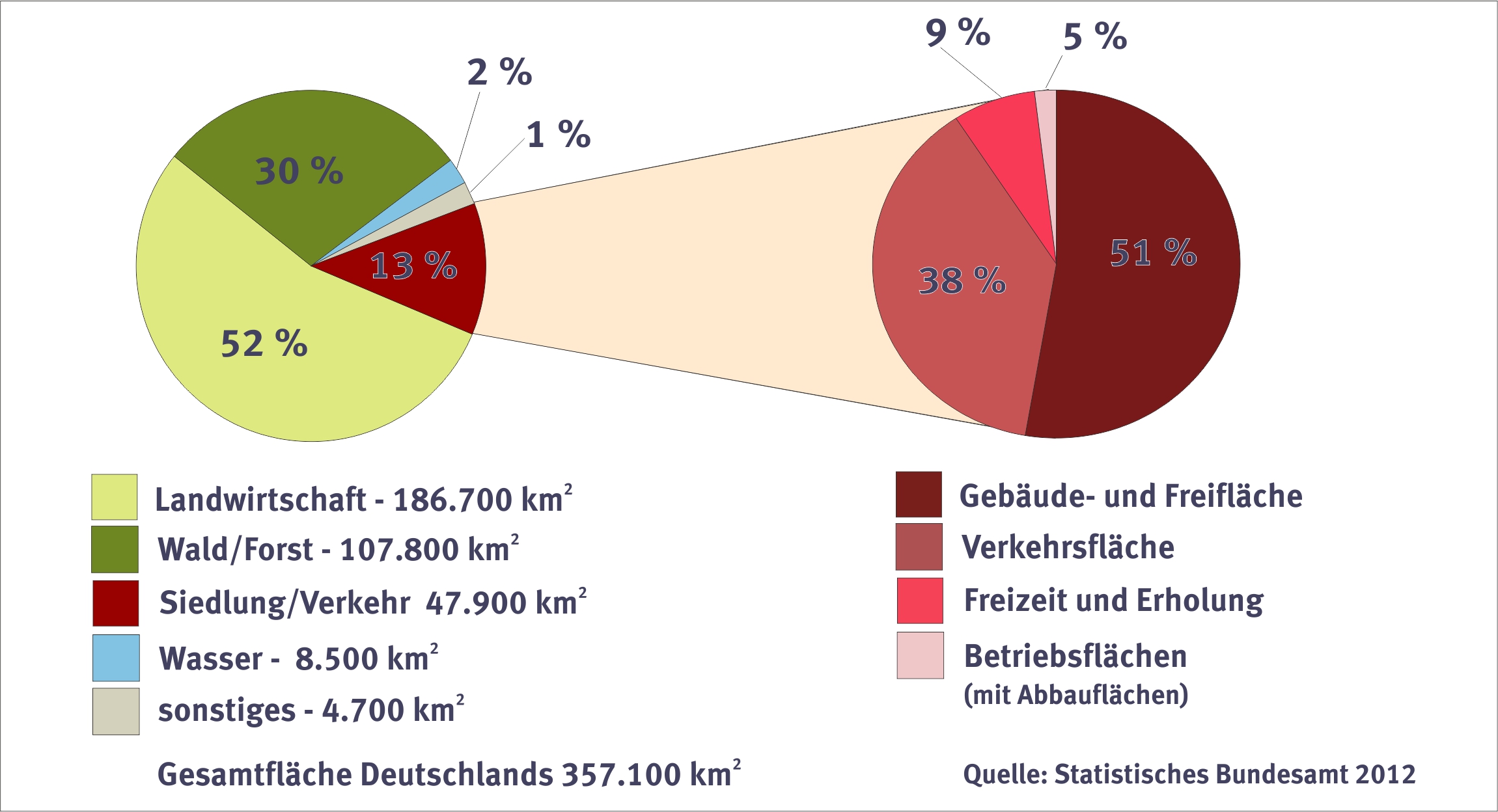
Data for 2011