Chemicals can enter waters through industrial or municipal effluent dishttps://www.umweltbundesamt.de/en/service/glossar/lcharges, erosion or air. Exceedances of the environmental quality standard (EQS) indicate that chemicals are occurring in concentrations which are harmful to biota or may limit their use (e.g. consumption of mussels). On account of their persistent properties some chemicals, their production, use and release is subject to international regulation under the Stockholm Convention. For a more detailed assessment of these substances see Persistent Organic Pollutants (POP). The production, import and placing on the market of further chemicals is regulated by the European Chemicals Regulation (REACH).
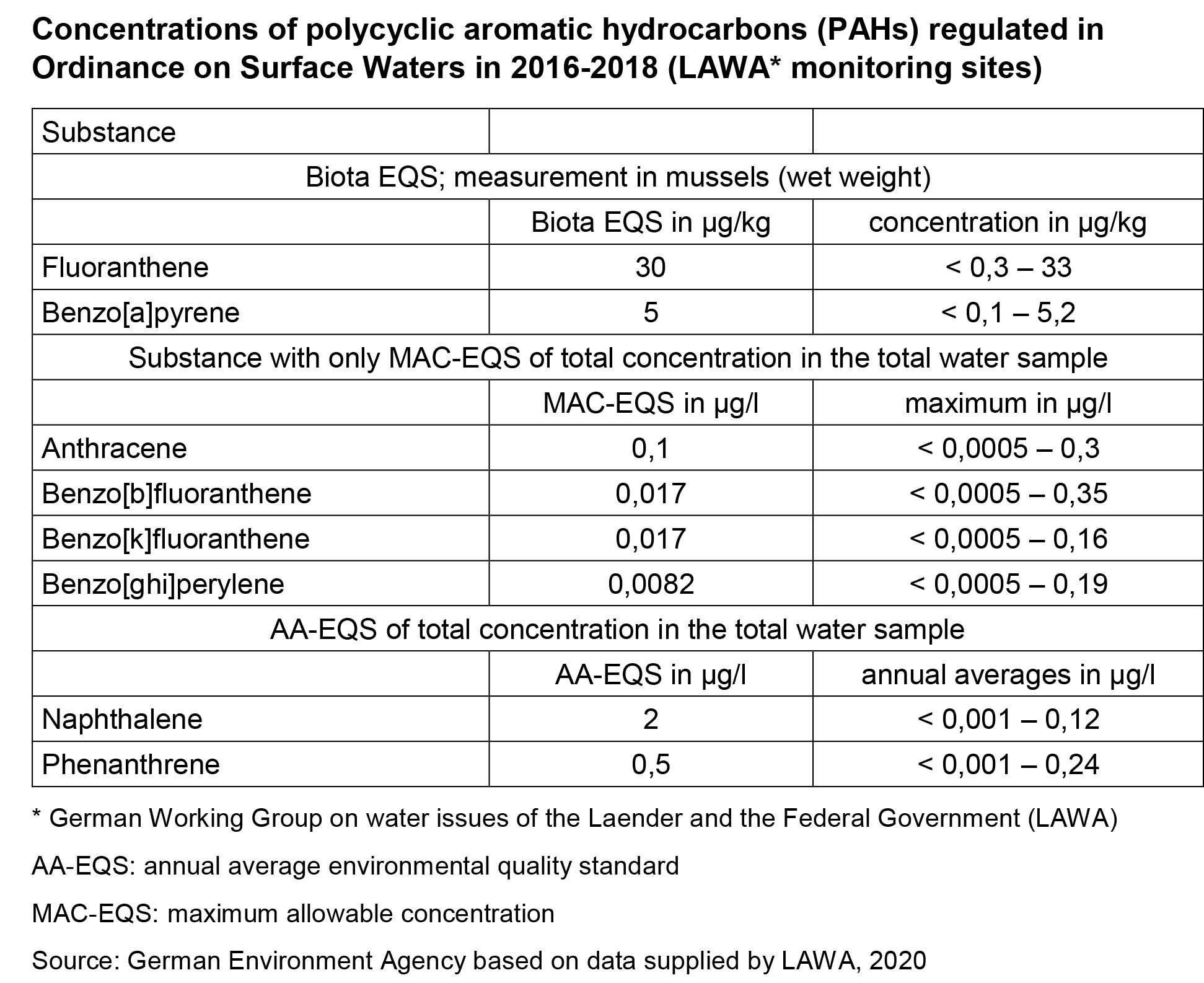
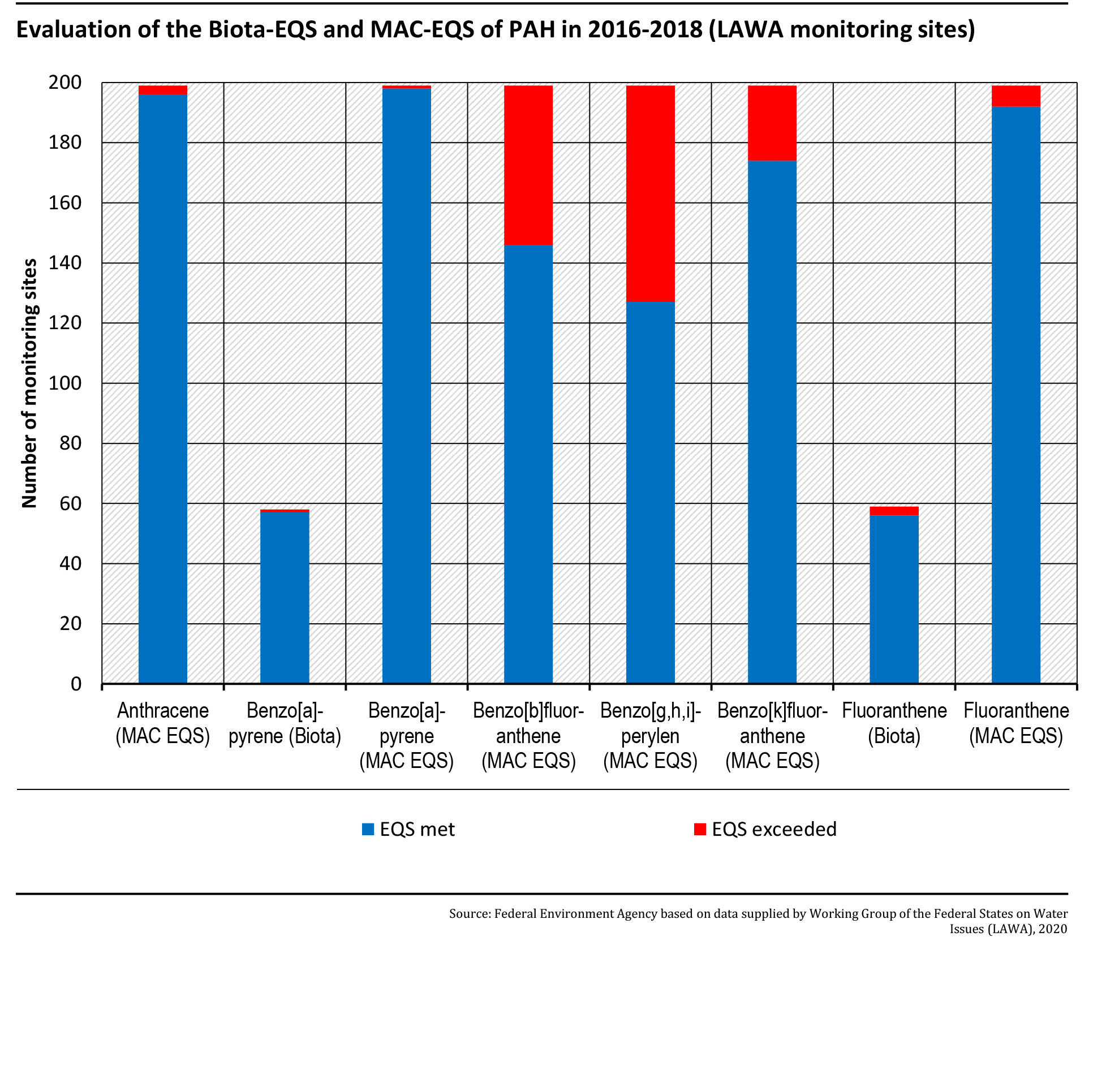
For the period 2016-2018, the monitoring network of the German Working Group on water issues of the Federal States and the Federal Government (LAWA) recorded concentrations above those of the EQS for the polycyclic aromatic hydrocarbons (PAHs) anthracene, fluoranthene, benzo[a]pyrene, benzo[b]fluoranthene, benzo[k]fluoranthene and benzo[ghi]perylene, which are among the 27 chemicals regulated in the Ordinance on Surface Waters. PAHs are carcinogenic, can be mutagenic, and have reprotoxic properties. They are very persistent in the environment and bioaccumulate. PAHs are formed during combustion processes and are contained in many products and composite materials made of materials used in coal and petroleum processing. These properties are why several PAHs are regulated under REACH and are subject to far-reaching restrictions on their use.
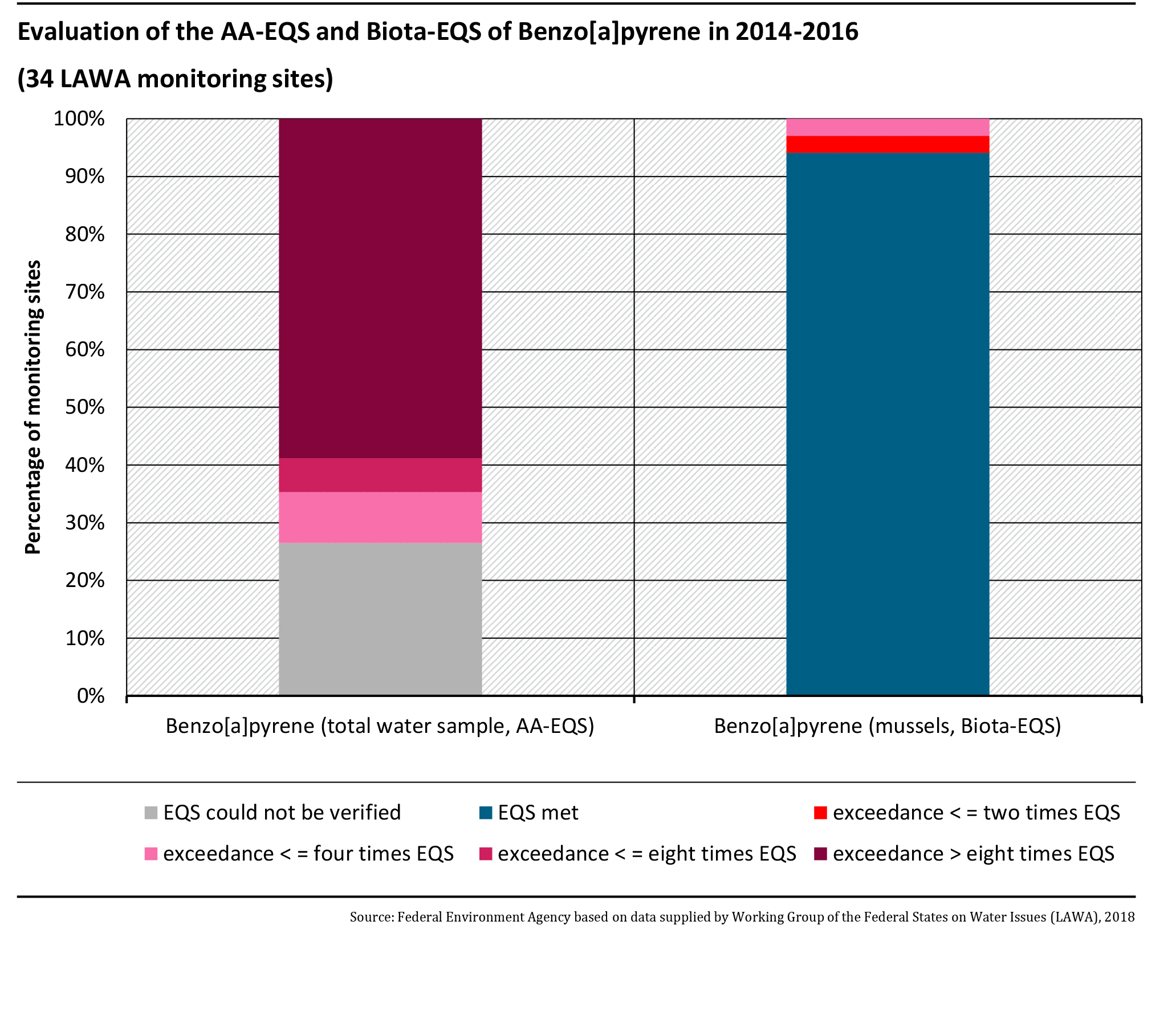
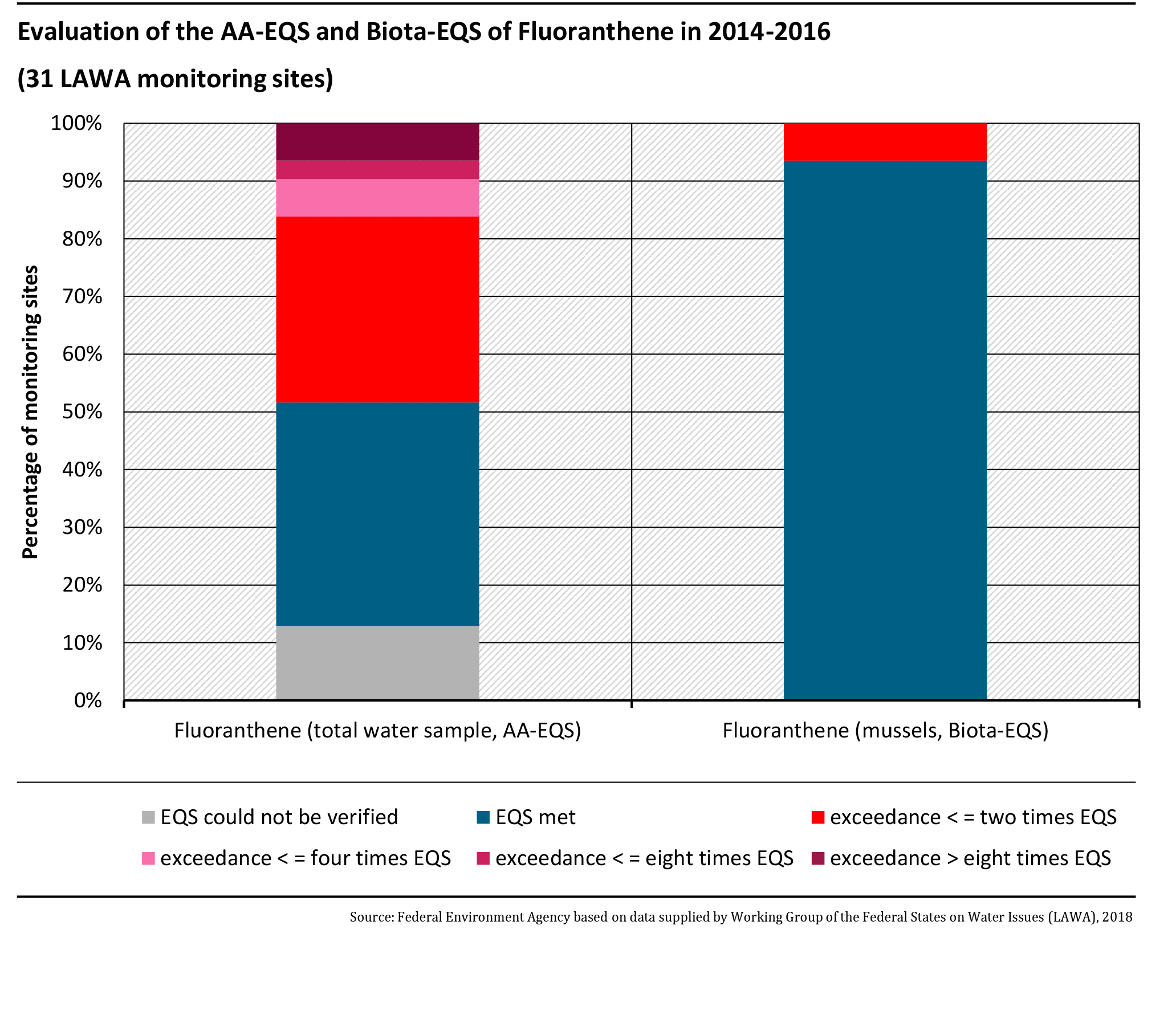
The Ordinance on Surface Waters regulates nine of the PAH-16. There is compliance with the EQS for phenanthrene and naphthalene at all LAWA monitoring sites in the period 2016-2018. Concentrations of fluoranthene und benzo[a]pyrene are assessed based on their concentration in mussels (biota EQS) as well as their concentrations in the total water phase (maximum allowable concentration (MAC-EQS)). Exceedances of both these substances occurred as they relate to the biota EQS and the MAC-EQS. Measured for anthracene sometimes and for benzo[b]fluoranthene, benzo[k]fluoranthene and benzo[ghi]perylene often exceeded the MAC-EQS.