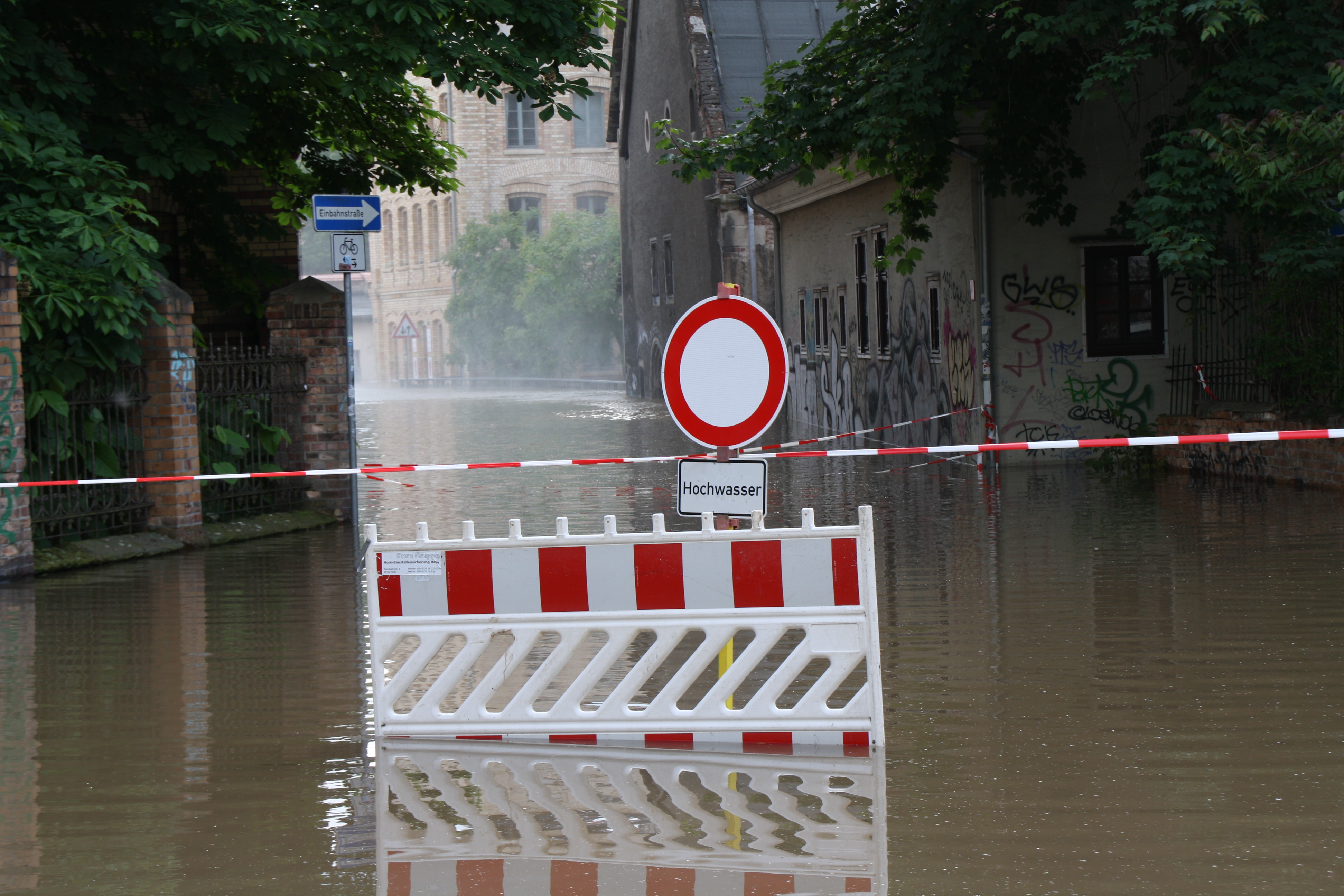
In addition to inland surface water floods, flood risk management also covers coastal floods and floods from groundwater. It consists of the following three core elements, which are revised in a six-year cycle. This involves a review of how far the implementation of measures has progressed and whether new findings, for example adaptions to climate change, make it necessary to adjust flood risk management and planned measures:
(1) Flood risk assessment and designation of risk areas (§ 73 WHG).
Risk areas are defined as those areas in which adverse consequences of flood events for certain protected assets can occur. To assess flood risk areas, the damage potential of flood events on human health, the environment, cultural heritage, economic activities and material assets is considered in more detail (Schütte, 2021) and related to the statistical probability of occurrence (annuality).
- Floodplains (§ 76 WHG):
In addition to the designation of risk areas, the Federal Water Act regulates the designation of so-called floodplains, which has long been an instrument of flood management (Schütte, 2021). According to § 76 WHG, floodplains are areas between surface waters and dykes or high banks and other areas that are flooded or flowed through during floods of a surface water. At a minimum, floodplains are defined as areas where a flood event is statistically expected to occur once every 100 years. Flood damage can therefore also occur outside the defined floodplains, for example in the case of a flood event that statistically occurs only once in 200 years.
In floodplains, special flood protection regulations apply to buildings. For example, municipalities are no longer allowed to designate new construction areas in floodplains. This "ban on new construction" is a key element in dealing effectively with flood risks. This counteracts a further increase in damage potential. At the same time, less damage to flood-prone areas means a lower flood risk.
(2) Preparation of flood hazard and risk maps (§ 74 WHG)
Flood hazard and risk maps contain detailed information on the areal extent, water depth of flood events (visualization of the hazard posed by a flood) and their possible adverse consequences (visualization of the risk posed by a flood). Risk maps include, for example, information on the number of inhabitants potentially affected, the type of economic activity in the potentially affected area, and industrial facilities (Figure 2).
Here, the maps are prepared for flood events with three different probabilities of occurrence: (1) high probability - expected recurrence interval every 10 to 25 years, (2) medium probability - expected recurrence interval at least once in 100 years, (3) low probability - expected recurrence interval at least once in 200 years. By using these hazard and risk maps, citizens can identify existing hazards and risks from floods in their region.
(3) Preparation of flood risk management plans (§ 75 WHG)
Based on flood hazard and risk maps, risk management plans are prepared for each river basin district. They are intended to reduce adverse consequences of floods. For this purpose, the management plans contain all objectives in the risk areas and all measures that are necessary to achieve these objectives (prevention, protection, precaution). If measures are implemented along rivers, they are not allowed to increase the risk of flooding for other countries in the same catchment area.