Skip to main content Skip to main menu Skip to footer

Marine Geoengineering — Opportunities & Risks

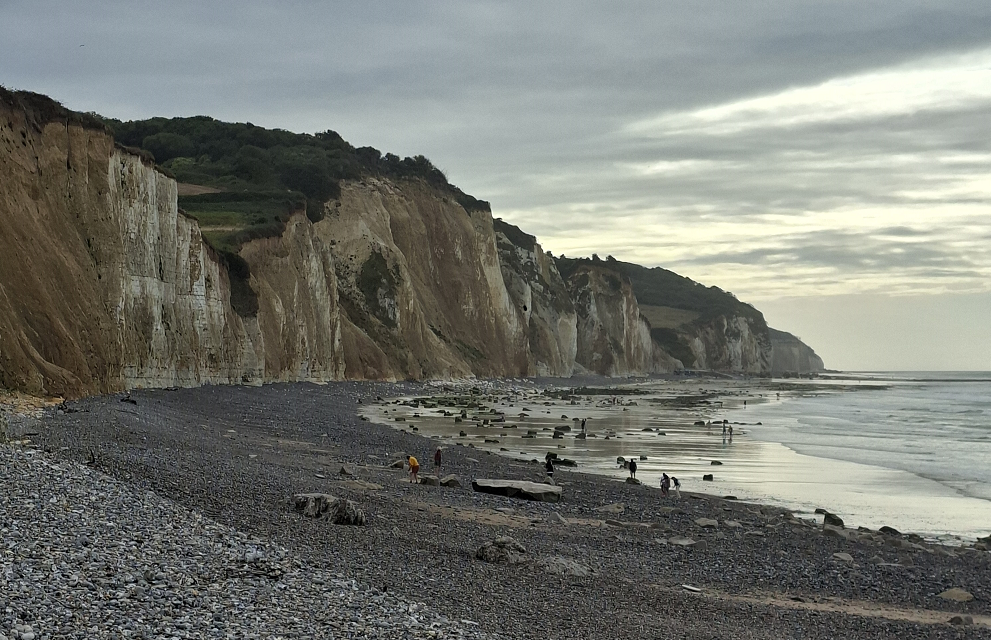
The photo shows the weathered chalk cliffs along the coast and the sea at low tide on a slightly rainy, cloudy day. This natural process serves as a model for methods such as ocean alkalinity enhancement and weathering to remove CO2 from the atmosphere.
Weathered chalk cliffs at the coast off Pourville-Sur-Mer (Normandy, France)
Source: U. Döring / UBA

Marine geoengineering techniques are intended to help mitigate climate change. In doing so, they have profound impacts on marine ecosystems. Marine geoengineering offers potential benefits for the climate, but it also raises significant environmental risk and governance issues.

Table of contents

1. What are marine geoengineering techniques?

Marine geoengineering refers to the deliberate intervention in the marine environment to manipulate natural processes, which may have adverse effects on the environment or human health, particularly when these effects have a wider impact, are long-lasting, or severe. Marine geoengineering (mGE) encompasses two groups of methods. First, there are methods designed to actively remove carbon dioxide (CO2) from the atmosphere and store it long-term (known as Carbon Dioxide Removal, CDR; in the marine context, mCDR). The goal of mCDR techniques is not to reduce future CO2 emissions but to remove and store CO2 that has already been released. Secondly, marine geoengineering also includes approaches aimed at influencing the Earth’s radiation balance (Solar Radiation Management; SRM). Both are intended to help limit global temperature rise.

The ocean plays a special role in this context. As the largest natural CO₂ sink, the ocean has already absorbed about 25% of total anthropogenic CO₂ emissions. Marine carbon dioxide removal (mCDR) approaches seek to harness this capacity in a targeted manner by technically mimicking or enhancing biological or chemical processes in the ocean. Examples range from adding nutrients (ocean fertilization) to pumping nutrient-rich deep water to the ocean surface (artificial upwelling) to increasing alkalinity (raising the alkalinity of seawater by adding minerals). A detailed description of the individual methods is provided under “2. What are the different marine geoengineering techniques?”.
 

Differentiation from Nature-based Solutions

Marine geoengineering techniques have to be distinguished from Nature-based Solutions (NbS). Nature-based Solutions include measures that protect, sustainably manage, or restore natural or modified ecosystems. Nature-based Solutions can make an important contribution to carbon removal while also supporting marine conservation and protection goals, as well as the United Nations Sustainable Development Goals (SDGs). Like other climate protection measures, Nature-based Solutions require appropriate framework conditions and oversight to ensure their sustainable implementation.

Differentiation from Carbon Capture and Storage (CCS) 

Carbon capture and storage (CCS) and marine geoengineering both aim, in certain cases, to reduce the CO₂ concentration in the atmosphere in the long term, but differ in their approaches.

Carbon capture and storage (CCS) is a technology for capturing carbon dioxide (CO₂) and storing it underground. It can help reduce CO₂ emissions from residual fossil fuel emissions into the atmosphere or store CO₂ removed from the atmosphere - indirectly through biomass or directly through certain processes. The CO₂ to be captured can therefore come from various sources, such as industrial facilities, energy production from biomass, waste-to-energy plants, or even directly from the atmosphere. Despite technical advances, there are ongoing discussions regarding the long-term effectiveness, stability, and capacity of geological storage formations, potential environmental risks, and public acceptance of large-scale carbon capture and storage (CCS) projects (storing over 1 million metric tons of CO2 per year). In Germany, plans are currently underway to inject CO₂ into suitable storage structures beneath the seafloor of the North Sea and store it there permanently.

Marine geoengineering techniques, on the other hand, actively intervene in natural oceanic processes to enhance the ocean’s carbon uptake. Like CCS, in which CO₂ is derived from biomass or has been captured directly from the atmosphere using specific processes, mCDR methods aim to reduce the CO₂ content in the atmosphere in the long term. Most of these methods are still in the research stage and raise extensive environmental, technical, and legal questions.

2. What are the different marine geoengineering techniques?

The following marine geoengineering techniques are known:

Note: More details on these methods, their potential risks, and their potential for climate mitigation are also described in the respective fact sheets.
 

2.1 Carbon Dioxide Removal (mCDR)- methods

Sinking of biomass
Plants remove CO2 through photosynthesis from the atmosphere and store it in their biomass. This biomass can be produced on land (e.g., crop or wood processing waste) or in the ocean, for example through the cultivation of microalgae, the farming of macroalgae, or the collection of brown algae (Sargassum). Prior to sinking, the biomass is bundled and weighted to transport it to greater ocean depths, where the CO2 it contains is intended to be stored over long periods of time.

Assessment: Based on current scientific knowledge, sinking of biomass is not a suitable marine geoengineering technique. The additional input of biomass can promote eutrophication. Furthermore, biomass is a valuable resource and its sinking contradicts sustainability goals.
 

Ocean Fertilisation (OF)
Ocean fertilization involves the targeted addition of nutrients such as iron, nitrogen, or phosphorus to the ocean to stimulate the growth of phytoplankton. These microalgae take up CO2 through photosynthesis and sequester it in their biomass. When they die, it is assumed that a portion of the biomass sinks to greater ocean depths, where the carbon is stored long-term.

Assessment: Currently, research on this method is permitted under the London Protocol (see point 6). However, based on current knowledge, ocean fertilization is not a suitable marine geoengineering technique. Both its climate effectiveness and its long-term ecological consequences remain not sufficiently understood, so research into this method should not be prioritized for funding.
 

Artifical Upwelling
Artificial upwelling approaches are based on natural upwelling zones in the ocean. Using technical pumping systems, nutrient-rich deep-water is transported to layers near the ocean surface to stimulate the growth of phytoplankton. The microalgae sequester CO₂ in their biomass through photosynthesis, which is intended to be stored long-term as the biomass sinks to greater depths. Unlike ocean fertilization, no external nutrients are introduced in this process.

Assessment: Based on current scientific knowledge artificial upwelling is not a suitable marine carbon removal technique. In order to have a meaningful impact on the climate, the process would need to be operated continuously and on a large scale; if interrupted, the sequestered CO₂ and heat would rapidly return to ocean surface layers and then be released back into the atmosphere.
 

Ocean Alkalinity Enhancement (OAE)
Ocean Alkalinity Enhancement (OAE) involves deliberately increasing the alkalinity of seawater to enhance the ocean’s natural absorption of CO2 and counteract ocean acidification. The goal is to accelerate the natural, very slow process of mineral weathering, through which alkaline substances enter the ocean. To this end, various methods are being tested, such as the addition of finely ground mineral powder or dissolved alkaline materials. These can be applied on beaches, in shallow coastal waters, on the seafloor, or on the sea surface. The added substances promote the conversion of dissolved CO₂ into stable bicarbonate and carbonate compounds, enabling the ocean to absorb additional CO₂ from the atmosphere. However, it may take weeks or even months for the air and water to reach equilibrium - if at all.

Assessment: Ocean Alkalinity Enhancement generally has potential, as the underlying chemical processes are well understood. At the same time, there are risks to marine ecosystems, particularly when using ground mineral powder. For all Ocean Alkalinity Enhancement methods, robust field measurements are required to assess their actual climate effectiveness and ecological impacts.
 

Electrochemical Direct Ocean Capture (eDOC)
Electrochemical Direct Ocean Capture splits seawater through an electrical process into two streams with different pH values - one acidic and one basic. CO2 is removed from the seawater during this process. Before being discharged back into the ocean, the acidic and basic streams are either recombined, or only the basic solution is discharged into the ocean, which ultimately corresponds to the process of ocean alkalinity enhancement. By introducing CO₂-poor water, the ocean is expected to be able to reabsorb CO₂ from the air.

Assessment: eDOC has potential as a marine geoengineering technique, provided that the CO₂ separated from the seawater is stored long-term (e.g., through carbon capture and storage (CCS)) or converted into solid carbonates. However, comprehensive studies on environmental impact (e.g., the intake of large volumes of water, materials used) and on the potential scalability of the method are still lacking.
 

2.2 Solar Radiation Modification (SRM)- methods

The second category of marine geoengineering includes various methods for influencing the Earth’s radiation balance - known as solar radiation management. Marine methods in this context include the dispersal of reflective particles and marine cloud brightening. Both methods aim to reflect sunlight back into space, either through the use of particles or by making the cloud surfaces brighter.

Assessment: Based on current scientific knowledge, SRM poses significant risks to food security, water availability, and the environment. More information on this topic can be found in the UBA brochure on Solar Radiation Modification (SRM, 2025).

The German Environment Agency and the German Government reject the use and technical development of Solar Radiation Modification (see here the German Government’s response 580/2023).

3. Opportunities: Contribution to Climate Mitigation

Marine geoengineering techniques potentially could, under certain conditions, make an additional contribution to limiting the rise of global temperatures by removing CO2 in the long-term from the atmosphere. This would not only slow the rate of global warming but also help mitigate climate-related impacts such as sea-level rise, ocean warming, ocean acidification, extreme weather events, and changes in marine ecosystems.

Depending on the method, atmospheric carbon is sequestered and stored in the ocean and its carbon cycle for years to centuries, which has the potential to reduce the existing CO2 surplus. Whether the sequestered carbon actually remains in the ocean in the long term is often unclear. For mCDR techniques that are based on plankton proliferation, there is a risk that the previously sequestered carbon will be rapidly released again or that greenhouse gases such as methane or nitrous oxide will be released (e.g. through biological degradation processes or predation in the food chain). In the case of ocean alkalinity enhancement, ecological side effects and the high energy requirements of individual methods have to be critically evaluated. Additionally, mCDR techniques, such as artificial upwelling, would only be effective if operated continuously. For all methods, the CO₂ generated along the process chains (material extraction, transport, injection, monitoring) must be taken into account and factored into the climate benefits.

4. Risks and Challenges

In addition to opportunities, marine geoengineering involves risks and challenges: 
a)    Ecological side effects   
Technical interventions such as ocean fertilization, ocean alkalinity enhancement, or artificial upwelling can alter nutrient cycles, biodiversity, and the chemical composition of the ocean. Changes in plankton composition can disrupt marine food webs and increase the occurrence of toxic algal blooms. In addition, heavy metals or other pollutants can be mobilized and accumulate in the food chain, posing risks to marine organisms and humans.

b)    Unpredictable Long-Term Effects
Many marine geoengineering methods are still in the research stage and are based primarily on model assumptions. Their long-term effects on ocean processes, ecosystems, and the climate have not yet been sufficiently studied. mCDR techniques such as artificial upwelling or ocean alkalinity enhancement can alter ocean currents, pH levels, and carbon cycles. Addition of biomass or increased plankton growth also pose risks of oxygen depletion and damage to benthic communities - contrary to existing marine conservation goals.

c)    Global Distribution Effects
mCDR techniques conducted in one marine region can have impacts on distant regions. Changes in nutrient fluxes and currents can lead to so-called “nutrient-robbing” effects. As a result, other marine regions are deprived of nutrients. This can adversely affect food chains, fish stocks, and regional CO₂ absorption potential.

d)    Technical and Legal Uncertainties
Many mCDr techniques are still in the research or pilot stage. Approval, control, and monitoring procedures are complex and require both national and international coordination and cooperation.

5. Economic Interests and the Marketing of Carbon Credits

The commercial use of marine geoengineering methods also offers the opportunity to develop a business model. Essentially, this is based on the sale of carbon credits generated by large-scale marine geoengineering (mGE) projects to companies that can improve or even offset their carbon footprint. Since the Paris Agreement, numerous companies have been making greater efforts to achieve carbon neutrality.

Carbon credits are increasingly being offered for mGE projects, particularly by small start-ups. Even though commercial marine geoengineering projects are generally prohibited in Germany’s exclusive economic zone, on German ships, or when loading materials in German ports, their marketing on the voluntary carbon market is not subjected to government oversight and is therefore susceptible to an overvaluation of carbon removals. The expanding market for carbon credits is creating increasing incentives for private start-ups to commercialize marine geoengineering activities. This marketing of carbon credits is taking place even though the effectiveness and environmental sustainability of such methods have not yet been scientifically proven. An analysis by the German Environment Agency shows that there is a great need for reliable monitoring, transparent reporting, and independent verification. In addition, effective national and international regulation, as well as better integration into scientific processes, are required.

Several information platforms are available to help contextualize the activities of marine carbon dioxide removal (mCDR) start-ups and research projects:

  • Geo-Engineering Monitor (https://map.Geo-Engineeringmonitor.org/) Geo-Engineering Monitor aims to provide an up-to-date database containing information on scientific projects, field trials and commercial applications, and all currently active start-ups and companies in the field of geoengineering (both marine and terrestrial). Geo-Engineering Monitor is a project of the ETC Group, Biofuelwatch, and the Heinrich Böll Foundation.
  • NOAA (https://oceanacidification.noaa.gov/carbon-dioxide-removal/) Overview of marine geoengineering methods and ongoing international research projects.
  • Ocean Visions (https://oceanvisions.org/) is a platform designed to raise the profile of and connect marine carbon removal (mCDR) start-ups.

7. Scientific Research & Technological Development

Scientific Research and technological development play a central role in scientifically understanding marine CDR techniques, assessing their effectiveness, evaluating their safety, and enabling their application in a manner that is consistent with other uses and the protection of people and the marine environment. In Germany, the Federal Ministry of Research, Technology, and Space (BMFTR) funds the German Alliance for Marine Research (“Deutsche Allianz Meeresforschung”; DAM) research mission “Marine carbon sinks as a path to decarbonization.” The CDRmare research mission examines the various marine carbon removal techniques and their impacts on the marine environment, the Earth system, and society through a range of projects, while also investigating suitable approaches for monitoring and accounting for marine carbon sequestration.

8. UBA-Position on marine geoengineering (mGE)

  • Emissions reduction first: Rapidly reducing greenhouse gas emissions and protecting natural carbon sinks remain the central and most reliably effective climate protection measures.
  • Marine geoengineering (mGE)/ marine carbon dioxide removal (mCDR) methods only as supplementary measures: CO₂ removal is no substitute for emissions reductions; based on current scientific knowledge, the sustainably available mGE potential is severely limited. In 2024, approximately 2 gigatons (Gt) of CO₂ were removed globally, primarily through (re)forestation, but only 0.1% (0.0013 Gt CO₂) through biotechnological or technical carbon removal methods.
  • Strict regulation: Research and testing of marine carbon dioxide removal (mCDR) techniques have to be clearly regulated and must not automatically transition into commercial application. The German Environment Agency supports the regulatory approach of the London Protocol on marine carbon dioxide removal methods. In Germany, under the High Seas Disposal Act (HSEG) and the Water Resources Act (WHG), only marine geoengineering research projects are permitted. Commercial projects are prohibited.
  • No recognition of certifications: The German Environment Agency has not yet seen sufficient evidence for the climate effectiveness of marine geoengineering techniques and therefore rejects the marketing of carbon credits from such projects, even on the voluntary carbon market. Under the High Seas Disposal Act (HSEG), it is not permitted to gain economic benefit from research projects. Accordingly, such projects are not eligible for approval. 
  • Protection of People and the Environment: Marine carbon dioxide removal (mCDR) projects have to fulfil high environmental and social standards and safeguard the rights of local and indigenous communities.

International framework & precautionary approach: Large-scale deployment requires binding international rules on climate effectiveness, monitoring, liability, and safety; marine carbon dioxide removal (mCDR) methods may only be used if their climate benefits are proven and risks are minimized.

Associated content

Links

Publications

Tags

Short link: https://www.uba.de/n308595en