
There are often substitutes for PFAS in medicine
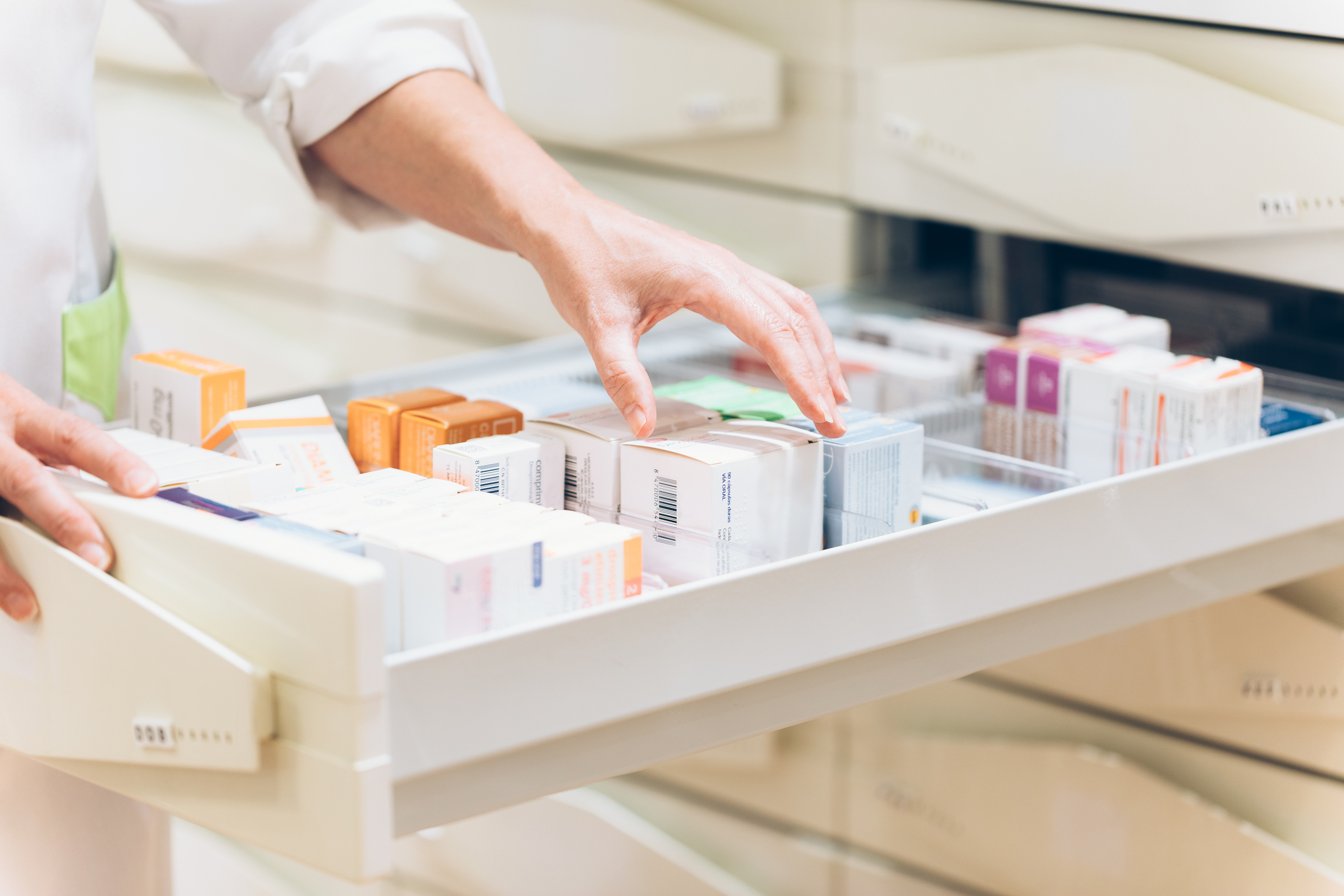
Certain medicines contain per- and polyfluoroalkyl substances, known as PFAS, which are increasingly harmful to the environment due to their persistence. A new study commissioned by the German Environment Agency shows that many PFAS-based active ingredients used in medicines can be replaced by alternative active ingredients. When appropriate, doctors will therefore be able to give preference to prescribing PFAS-free medicines in future.
A large proportion of the PFAS-based active pharmaceutical ingredients used in human and veterinary medicine could, in the long term, be replaced by PFAS-free alternatives. This is the conclusion of an expert report commissioned by UBA and carried out by the University of Freiburg.
The study shows that for 87 per cent of the identified human medicines and 65 per cent of veterinary medicines containing PFAS, active pharmaceutical substitutes free from PFAS properties already exist for the same applications. The study examined 111 active pharmaceutical ingredients for human medicines and 28 for veterinary medicines that are classified as PFAS according to the OECD guidlines. Furthermore, the researchers were able to demonstrate that PFAS-free alternatives are already in development for almost all of the remaining active pharmaceutical ingredients for human use.
“The study results clearly show that environmental protection and medical care need not be at odds with one another," said UBA President Dirk Messner. "The pharmaceutical industry already has enormous leverage here, starting from the drug development stage, to significantly reduce the release of persistent chemicals such as PFAS into our waterways and soil in the future.”
Michael Müller, Professor at the Institute of Pharmaceutical Sciences at the University of Freiburg added: “The fact that PFAS-free alternatives already exist for almost all applications is a clear indication that per- or polyfluorination is not strictly necessary from a pharmacological point of view.”
The expert report also provides fundamental insights for pharmaceutical research: in the case of the active pharmaceutical ingredients examined, which have a known mechanism of action, the PFAS content is not responsible for the intended medical effect. Per- and polyfluorination is used in pharmacology to improve the stability and distribution of active ingredients in the body.
However, it is precisely these properties that mean, in nature, these substances are difficult or impossible to degrade and, once excreted by humans, place a burden on ecosystems. Here, they may accumulate in living organisms and break down into problematic, persistent transformation products such as trifluoroacetic acid (TFA). TFA does not degrade in the environment, is carried by the water cycle and is considered to be toxic to reproduction. According to the report, over 80 per cent of the PFAS active ingredients examined have the potential to break down into TFA.
There is no immediate risk to patients from medicines containing PFAS, as these are thoroughly tested for potential risks to human health before they are authorised.
Doctors can use the new findings to prioritise prescribing PFAS-free medicines – particularly when initiating treatment for new patients – provided this is appropriate from a therapeutic perspective. To facilitate the search for PFAS-free alternatives, the UBA is incorporating the new data into the Environmental Medicines Index, which is currently under development – a simple traffic-light system designed to assist doctors and pharmacists in finding more environmentally friendly medicines.
For pharmaceutical companies engaged in research, the publication provides a clear impetus to take the environmental impacts of per- and polyfluorinated substances into account at an early stage of drug development.
The findings are also relevant in the context of European PFAS regulation: the European Chemicals Agency (ECHA) is currently planning the final scientific assessment of an EU-wide proposal to restrict PFAS. Based on this assessment, which is due by the end of 2026, the European Commission is expected to present a corresponding draft legislation in 2027.
To date, active pharmaceutical ingredients have been exempt from the planned restriction because they are considered essential. The expert report now suggests that more environmentally friendly alternatives to active ingredients are available in many areas and that environmental properties should be given greater consideration in the development of new medicines.