Pollutant emissions into surface waters - necessary information for policy makers
Information on substance emissions into surface waters is basically needed for planning measures, e.g. for implementing the EU Water Framework Directive and the EU Marine Strategy Framework Directive. Furthermore, this information is necessary to reduce substance emissions into marine waters efficiently according to the international agreements for the protection of the Baltic and North Seas (HELCOM - Helsinki Commission, OSPAR - Oslo-Paris Commission).
According to the EU Water Framework Directive (WFD, 2000/60/EC), a good ecological and chemical status for all water bodies had to be achieved by 2015. Germany has fallen well short of this target for most rivers (see "Ökologischer Zustand der Fließgewässer" and "Chemischer Zustand der Fließgewässer"). In order to still achieve the ambitious targets by the end of the next management cycle (2027), nutrient and pollutant emissions have to be reduced further.
Marine waters are the sinks for many substances transported in rivers. To protect the marine environment, the EU has established targets for nutrients and some pollutants according to the Marine Strategy Framework Directive (MSFD, 2008/56/EC) Germany has committed to reducing riverine inputs further. This requires an integrated analysis of all upstream waters and its polluters, which is not possible with monitoring data alone.
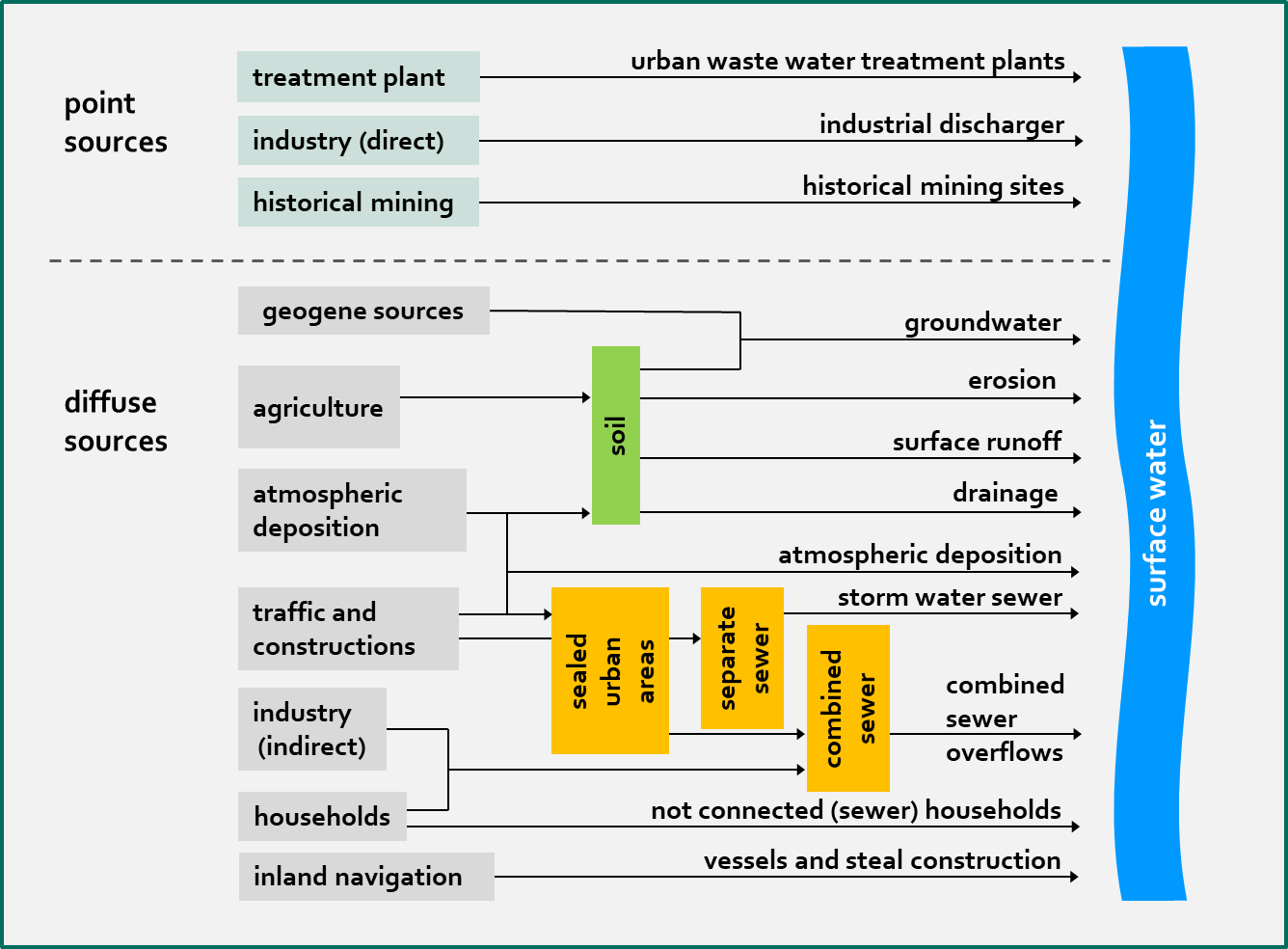
In order to initiate effective measures to achieve the goals of WFD, MSFD, HELCOM and OSPAR the sources of the substances, their use, their transport pathways and finally the emission into surface waters needs to be known.