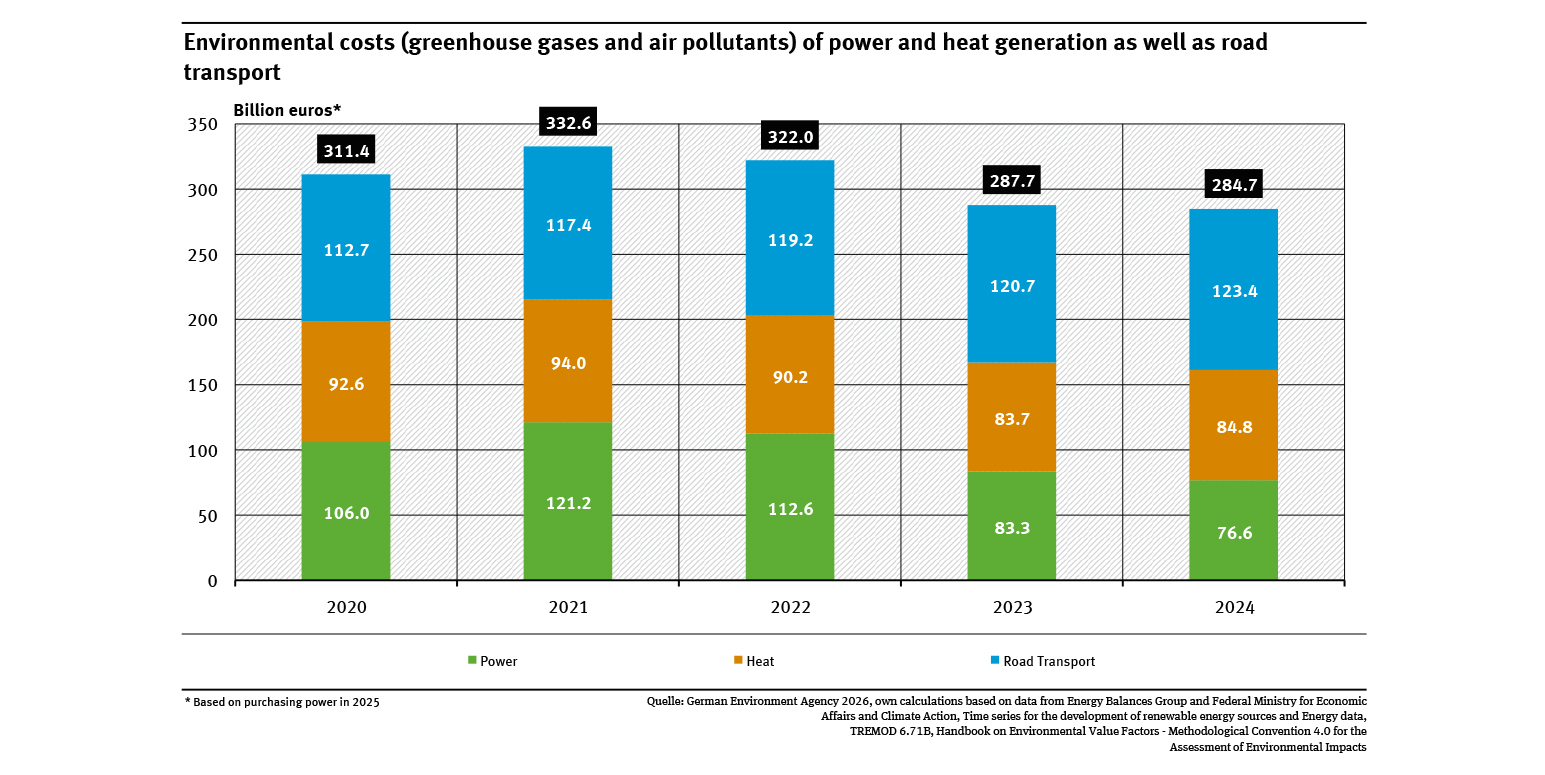
The use and conversion of energy resources for electricity and heat generation as well as for road transport place a burden on the environment through the emission of greenhouse gases and air pollutants, e.g. particulate matter and nitrogen oxides. These pollutants lead toincreases in morbidity, damages to buildings and monuments (facade pollution), put pressure on ecosystems (cf. 'Population exposure to particulate matter pollution' and ‘Agricultural nitrogen surplus’) and contribute to climate change. The consequences of climate change, such as an increase in heavy rainfall, thunderstorms or floods, threaten human lives and cause major damage.
These impacts are also associated with economic costs amounting to billions of euros, for example, expenses for the restoration of storm damage. Even fifteen years after the publication of the "Stern Review," economist Nicholas Stern reiterates that the costs of inaction far exceed the costs of climate protection and once again calls for decisive action in the fight against climate change (Stern 2006 and Stern 2021).