
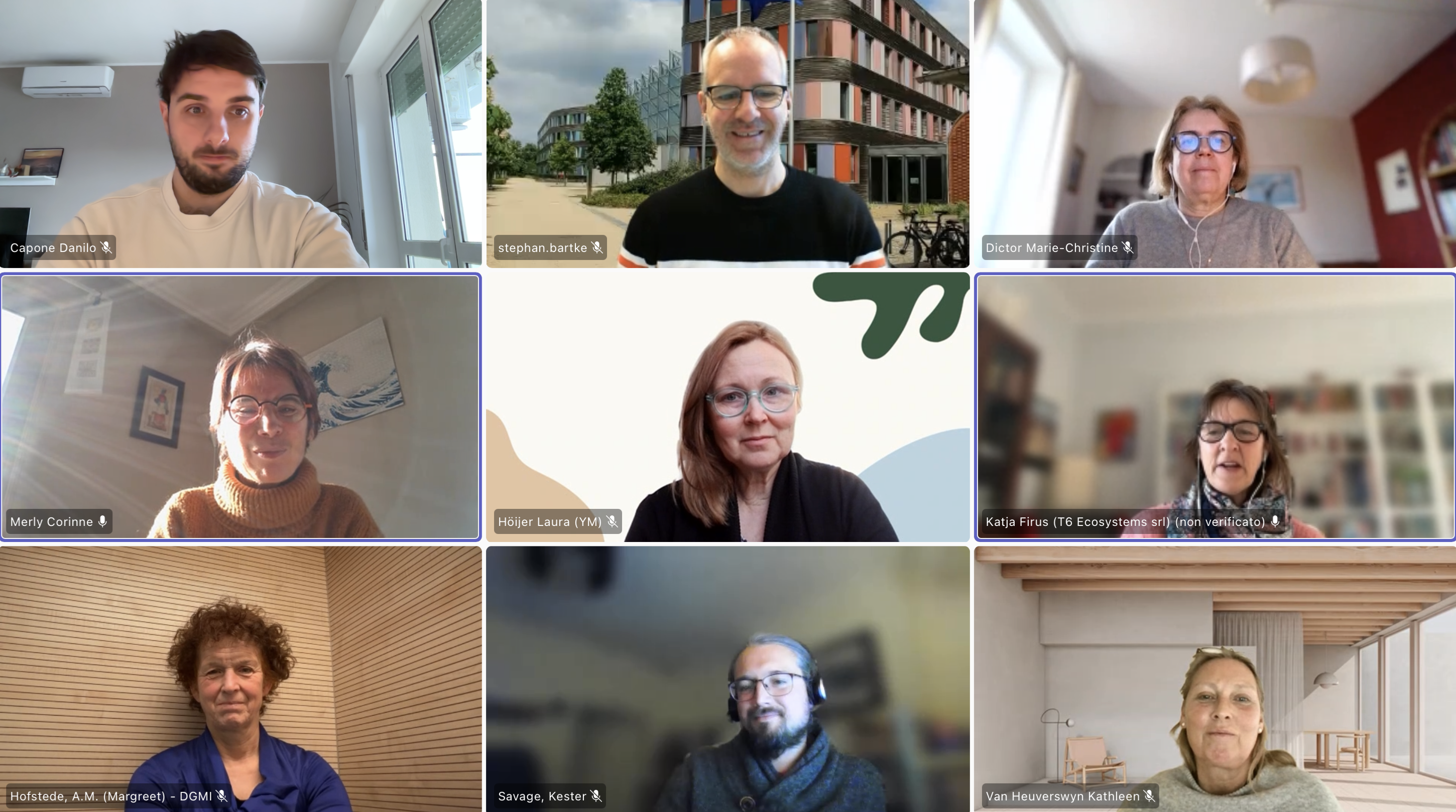
The co-design process of CASRI’s Strategic Research and Innovation Agenda (SRIA) continued with an online workshop held on 29 January 2026, following the November online survey and the online workshop organised on 2 December 2025, continuing feeding directly the co-creation of the SRIA.
Building on the outcomes of the previous workshop - focused on translating the topics identified in CASRI’s report “Selected topics for the matchmaking process for environmental and sustainability research and innovation” into research and innovation (R&I) topics, discussions aimed to deepen topic relevance and prepare the ground for the upcoming in presence meeting next April in Paris.
The workshop gathered around 25 participants from CASRI partners, Environmental Protection Agencies (EPAs) representatives and stakeholder organisations, ensuring continuity of participation and supporting dialogue among national contact points, agencies and programme managers.
Setting the discussion framework
Discussions were structured around a set of CASRI topics identified through previous prioritisation work. They were presented as a common reference, reflecting the effort to ensure coherence between national perspectives and transnational CASRI objectives. Key areas included innovation for resilient and circular production systems, the effectiveness of climate policy, social vulnerabilities of multi-scaled climate adaptation, inclusive science-policy-practice interfaces, biodiversity monitoring, and capacities for advanced data generation and responsible utilisation.
Plenary discussions: relevance, added value and comparison with existing initiatives
The core of the workshop consisted of an open plenary discussion, moderated by Corinne Merly and Marie-Christine Dictor (both BRGM), focusing on the pre-selected topics, prioritised through the survey. Participants were invited to explain why these topics are of interest, how they align with their individual or perceived national priorities, and what makes them specific compared to existing European and international R&I initiatives.
The plenary reassured a deep need for systemic, actionable and transversal approaches. In particular, participants underlined that the effectiveness of climate policy requires strong modelling capacities and long-term perspectives, while addressing social vulnerabilities and just transition considerations is essential to ensure policy relevance and societal acceptance across scales. The discussion on the inclusive science-policy-practice interface emphasised the importance of strengthening the role of trusted intermediaries such as EPAs and better aligning scientific knowledge with policy needs and societal expectations. Reflections on biodiversity monitoring and advanced data generation also pointed to challenges related to coordination, harmonisation of practices and the responsible use of data and technologies.
A recurring element was the question of added value: where and how CASRI topics can complement existing initiatives, foster synergy and support convergence among countries and organisations.
Feeding into the preparation of the Paris workshop
The outcomes of the 29 January discussions will feed directly into the further development of the SRIA and the design of the in-person CASRI workshop in Paris (7-8 April 2026), hosted by the French Ministry of Ecological Transition. This next step will focus on a limited number of topics, with the aim of progressing towards the SRIA pre-implementation, involving interested organisations, R&I managers, funders and policy actors.
Through this stepwise and discussion-driven process, CASRI continues to refine priorities and strengthen shared understanding in support of a co-owned Strategic Research and Innovation Agenda.