
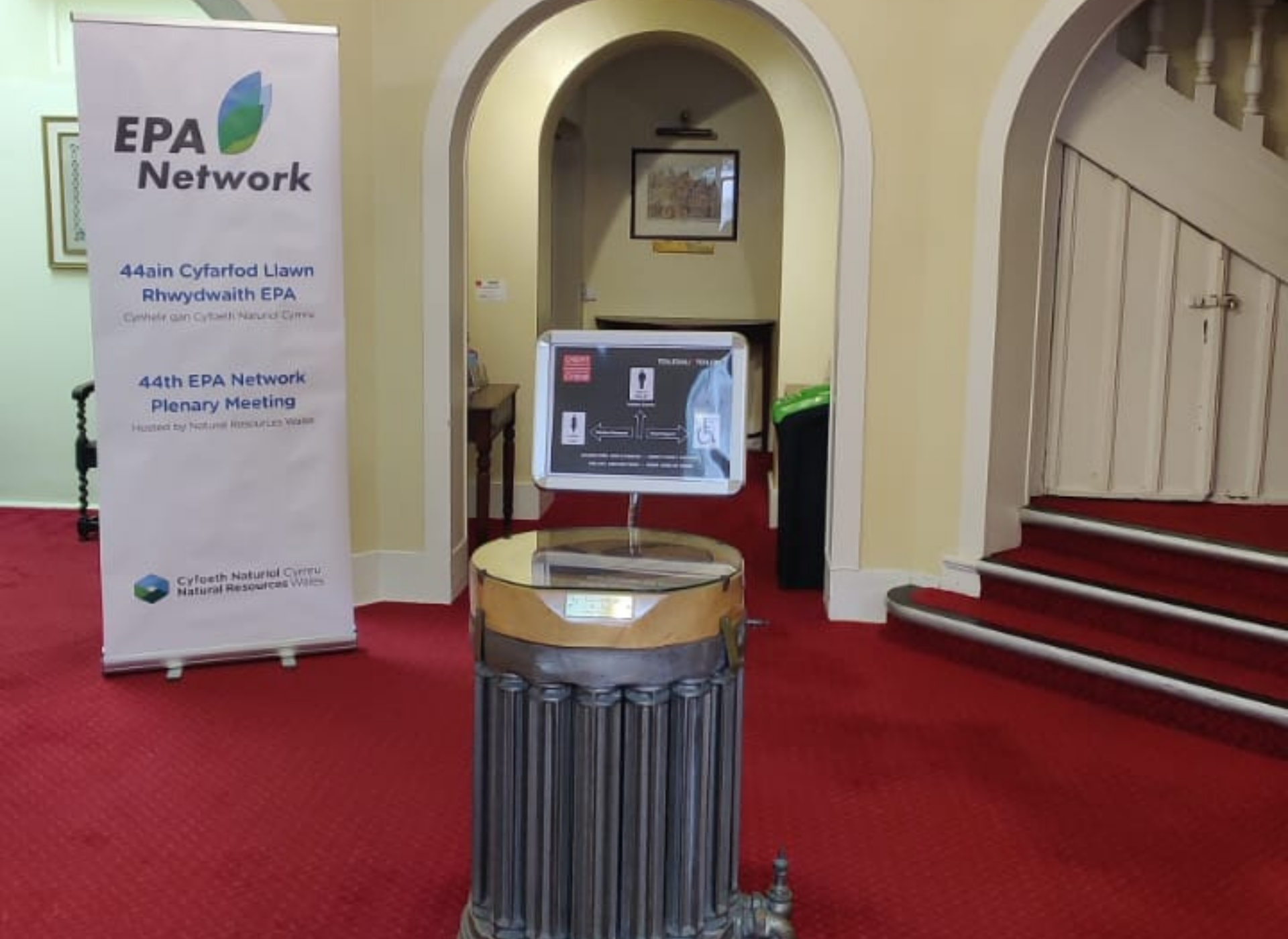
Environmental Protection Agencies (EPAs) across Europe met in Cardiff in October 2025 to discuss how environmental and sustainability research evidence can best support the European Union’s future research and innovation priorities. The discussion takes place at a crucial moment: the European Competitiveness Fund (ECF) – including Europe’s largest research and innovation programme, Horizon Europe (FP10, 2028–2034) – is currently being shaped by the European Commission and Member States.
The session, commenced under the EPA Network’s Interest Group on Sustainability Research and Solutions (IG EPAS), brought together representatives from national EPAs, the European Environment Agency, and the EU-funded CASRI project. The IG EPAS meeting was hosted by Leena Ylä-Mononen, Executive Director of the European Environment Agency (EEA), and Gareth O’Shea, Executive Director of Operations at Natural Resources Wales (NRW). NRW also hosted the annual EPA Network meeting in Cardiff back-to-back with the IG EPAS session, bringing together agency leaders from across Europe.
CASRI – Collaborative Action on Systemic, Actionable and Transversal Sustainability Research and Innovation – is co-funded by Horizon Europe (2024–2026) and coordinated by IG EPAS members in 14 countries. It aims to strengthen collaboration between research and implementation actors and to identify shared sustainability research needs across Europe. To date, more than 600 research and innovation needs have been collected and analysed through desk studies, expert interviews and national workshops, forming a strong evidence base for dialogue with organisations in the European Research Area.
The Cardiff workshop built on this evidence, linking CASRI findings with perspectives from European EPAs. Participants discussed how environmental agencies can contribute to the European Competitiveness Fund, including the forthcoming 10th Framework Programme (FP10). They reflected on how EPAs’ operational expertise and environmental intelligence can help deliver Europe’s twin goals of competitiveness and sustainability – and how both depend on strong science-policy interfaces.
Rather than defining new results, the meeting focused on reflecting and prioritising the draft recommendations and practical cases developed under IG EPAS. Participants examined where EPAs can add the greatest value to European research and innovation, identifying links between the CASRI evidence base and the policy “windows of opportunity” under FP10.
Key discussion areas included:
- Systemic and data foundations for transformation, including open and interoperable environmental data;
- People and society, with emphasis on participation, behavioural change and citizen engagement;
- Governance and resilience, including adaptive, efficient and digitally enabled regulation;
- Circular and resilient production systems and climate-proof infrastructure as concrete examples of collaboration fields.
The workshop reaffirmed that competitiveness, simplification, and security are not in conflict with sustainability – they depend on it. EPAs can provide testbeds, regulatory experience, and data infrastructures that make research results actionable in policy and practice.
Next steps: participants agreed to prepare a joint communication from the EPA Network to the European Commission, summarising the shared messages from the discussion and the CASRI evidence base. The draft will be reviewed within the Network over the coming weeks, with finalisation expected by the end of 2025. The communication will invite DG RTD and other relevant Commission services to a renewed high-level exchange on how to make sustainability research more actionable and better connected to policy implementation.
CASRI and IG EPAS continue to facilitate this collaboration, connecting environmental knowledge producers and implementers across Europe – helping ensure that the ECF builds not only a more competitive Europe, but also a cleaner, healthier and more resilient one.