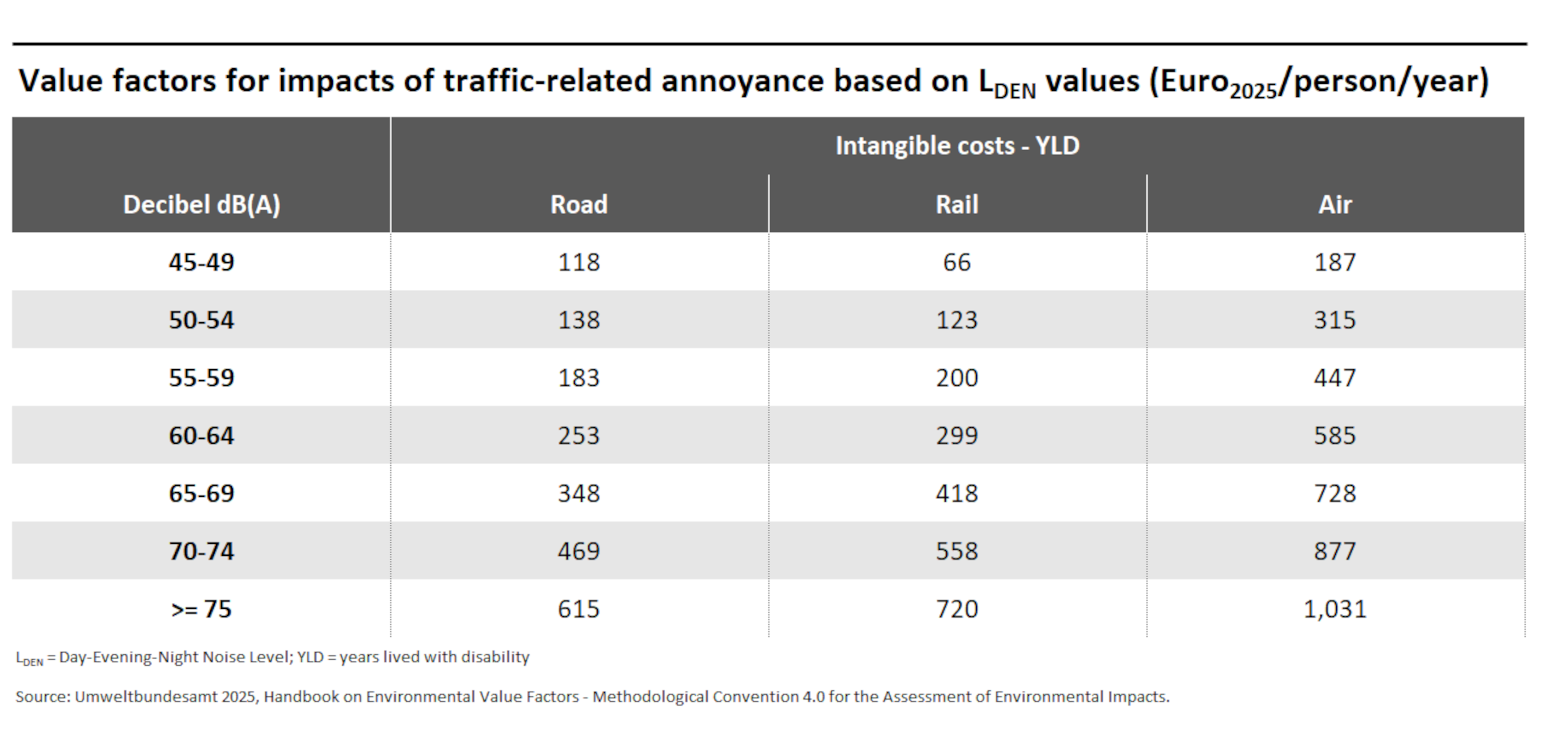
Value factors per Vehicle Kilometer
The table below provides exemplary value factors per vehicle kilometer for an average of all roads (i.e. motorways, rural and urban roads), assuming an equal weighting of the welfare of current and future generations (0 percent pure rate of time preference). The value factors are computed by linking emission factors for the various vehicle categories and life cycle phases with the value factors for greenhouse gas and air pollutant emissions. The asterisks (***) in the column for noise indicate that traffic noise has significant impacts on the environment, human health and well-being. However, based on currently available data, these impacts cannot be broken down by vehicle, person or tonne kilometers.
Value factors for further vehicle categories and road types can be found in Chapter 5 of the Handbook on Environmental Value Factors – Methodological Convention 4.0 for the Assessment of Environmental Impacts.
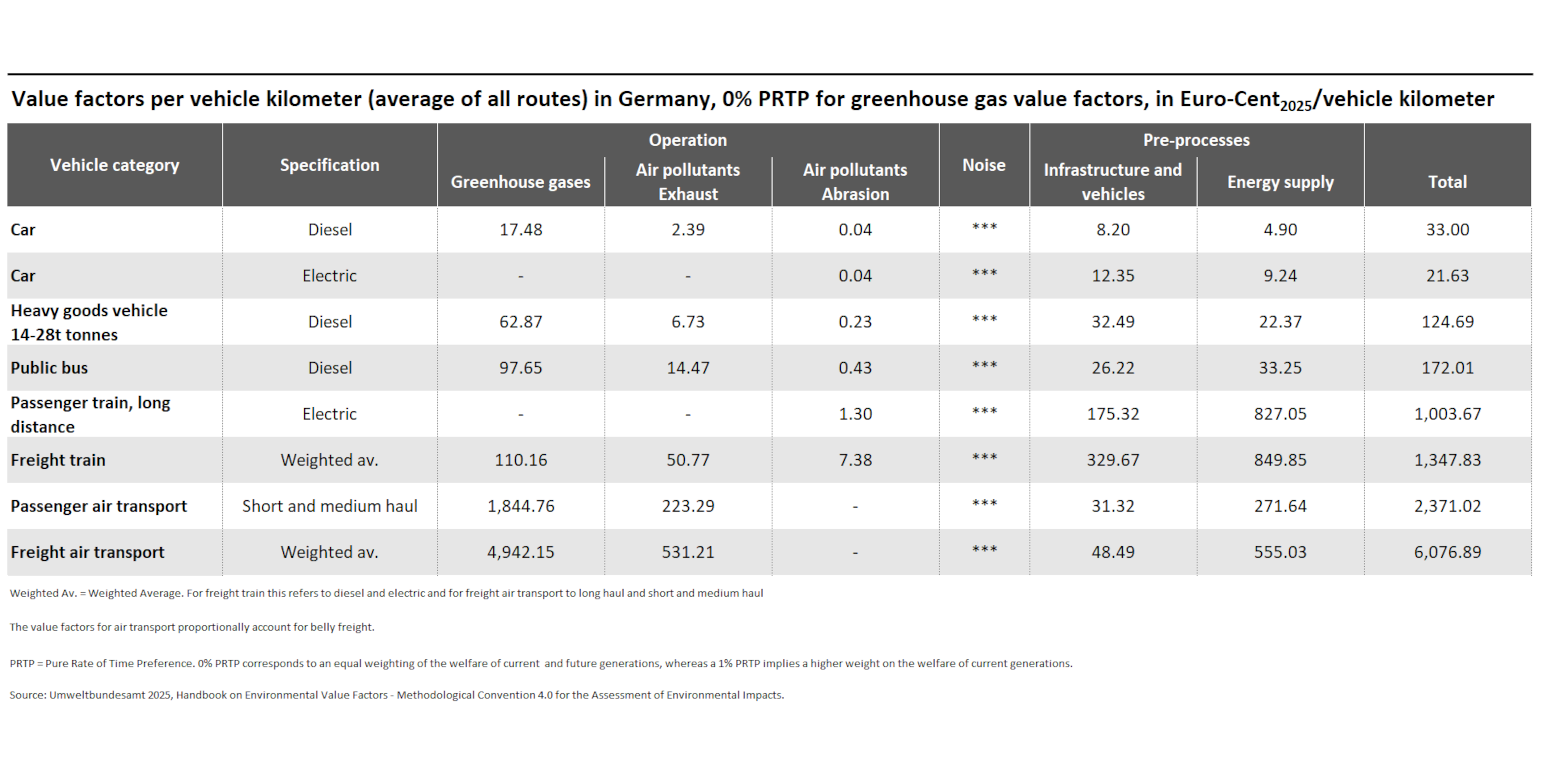
The greenhouse gas and air pollution related environmental impacts of an average Diesel car amount to 33 €-cent per vehicle kilometer.