Welcome to the new issue of ‘The Latest from UBA’!
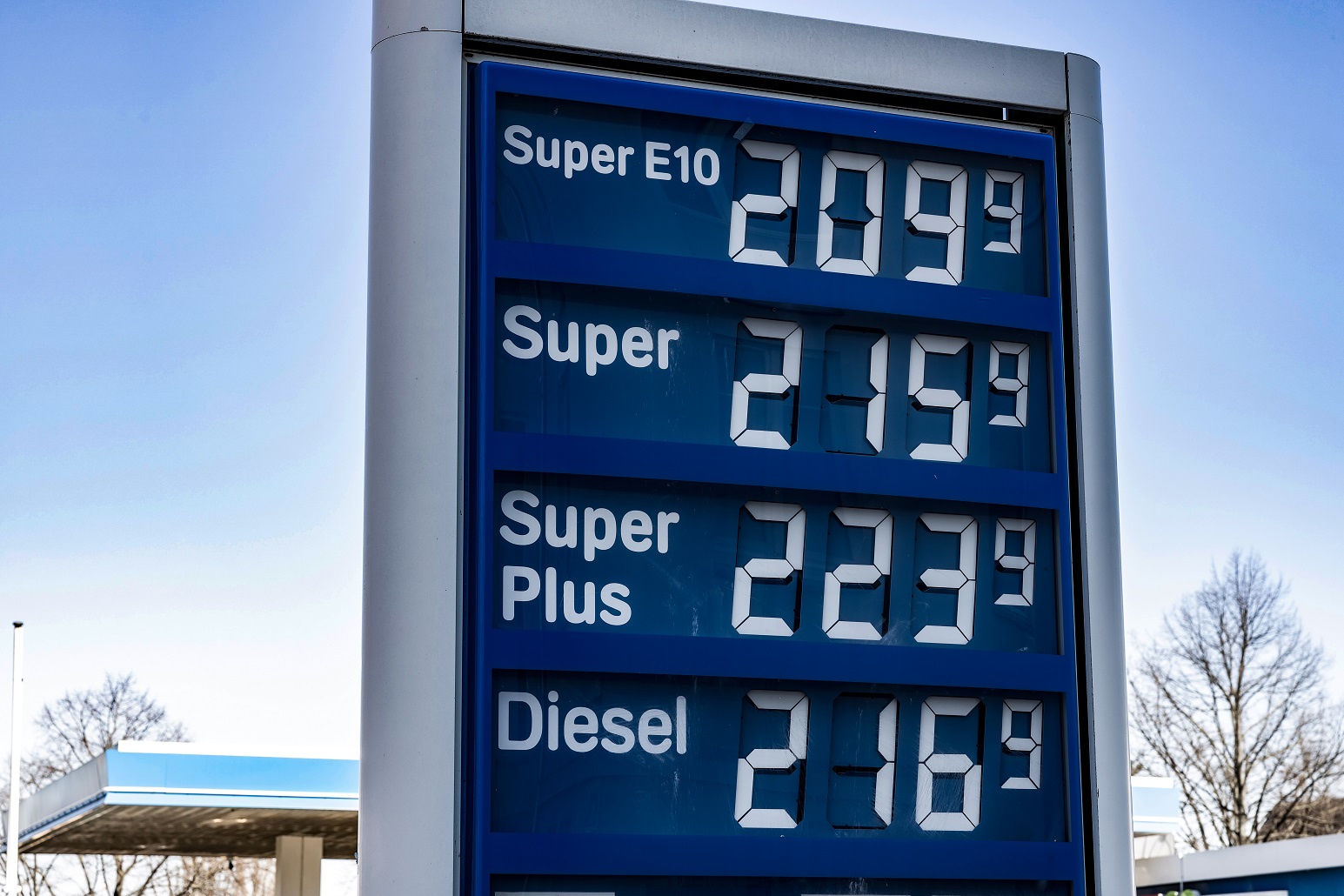
High fuel prices at petrol stations this year, high gas bills in 2022 – Germany is repeatedly hit by energy crises. The reason is the high dependence on fossil fuels, which have to be imported from abroad. As soon as wars and crises around the world cause supply shortages or disrupt supply chains, price shocks or even shortages occur. In this newsletter, we take a look at the interconnections and possible solutions.
We are also pleased to present, among other things, our study on the localisation of emissions of particularly harmful fluorinated greenhouse gases, our research strategy on advanced materials, and our Horizon Scanning report, which examines nine emerging issues that could become relevant for environmental policy, environmental research and administration in the coming years.
We hope you find it an interesting read
Your UBA Press and Public Relations team
Energy saving and phasing out fossil fuels protect against energy crises
Germany’s dependence on fossil fuel imports repeatedly leads to price shocks.
Source: Fhm / Moment / Getty Images
As long as Germany remains heavily dependent on fossil fuel imports for its economy, heating and transport, price shocks and shortages will continue to threaten in the event of wars and crises, as was recently the case during the conflicts in Ukraine and the Middle East. The solution: a more economical use of energy, a shift to efficient applications and a transition to renewable energies produced directly in Germany. Once built, wind power, photovoltaic and solar thermal systems operate without fuel and are therefore independent of imports of natural gas, coal or uranium. Heat pumps provide heating and electric cars run on electricity produced in Germany, independent of oil imports. And together, they reduce emissions of climate-damaging greenhouse gases and air pollutants harmful to health.
Germany’s dependence on imports remains high – particularly in transport. Germany must import 98 per cent of the mineral oil used for petrol, diesel or kerosene from abroad (primarily from non-European countries). A greater shift of transport from road to rail and the electrification of road transport can not only switch the energy supply to electricity produced from renewable sources in Germany, but also save a great deal of energy: per kilowatt-hour of energy, rail can transport almost 14 times more tonne-kilometres of freight than lorries. And in road passenger transport, the range of electric vehicles per kilowatt-hour of energy is more than three times that of vehicles with petrol or diesel engines.
To make private households, businesses and Germany as a whole more resilient to crises, politicians and the business sector must take action, but every individual can also do their bit. We have put together five quick tips for you that will help you save not only energy and raw materials, but also as much as 500 euros or more per person per year.
A study commissioned by the German Environment Agency (UBA) shows that atmospheric measurements can be used to determine and localise emissions of particularly climate-damaging gases such as sulphur hexafluoride.
The report assesses nuclear energy’s role in the transformation to net-zero greenhouse gas emissions by 2050. It contrasts top-down net-zero pathways from five integrated assessment models with a comprehensive bottom-up review of national programmes, including newcomer countries, and benchmarks these against the COP28/29 pledge to triple nuclear capacity. It further analyses system requirements in…
National Inventory Report for the German Greenhouse Gas Inventory 1990-2024
As a Party to the United Nations Framework on Climate Change (UNFCCC), since 1994 Germany has been obliged to prepare, publish and regularly update national emission inventories of greenhouse gases. Pursuant to Decision 24/CP.19, all Parties listed in ANNEX I of the UNFCCC are required to prepare and submit annual National Inventory Reports (NID) containing detailed and complete information on…
The European Union Emissions Trading System (EU ETS 1) and the United Kingdom Emissions Trading System (UK ETS) are cornerstones of the respective jurisdiction’s climate mitigation policy. Yet, 19 May 2025 marked a turning point in the history of both ETSs: When UK and EU leaders met for their first joint summit since Brexit, they agreed a Common Understanding that includes the intention to link…
Options for their inclusion in the EU ETS 1 and Carbon Border Adjustment Mechanism (CBAM)
This study by analyses the relevance, regulation, and potential pricing of emissions along the natural gas supply chain within the EU climate policy framework, without making definitive policy recommendations. In addition to combustion emissions, supply-chain emissions of CO₂ and methane can increase the climate footprint of natural gas by up to 35%. While emissions within the EEA are partly…
Carbon Border Adjustment Mechanism (CBAM): Advice on the design and implementation of the monitoring, reporting and verification mechanism
The report examines the challenges and methodologies for verifying the origin and emissions of imported goods under the EU’s Carbon Border Adjustment Mechanism (CBAM). The study identifies suitable documentation, evaluates verification challenges for complex goods, and proposes possible solutions to establish proof of origin for EU imports and to address verification challenges for complex goods…
An option to prevent possible waste diversion from municipal waste incineration?
This exploratory study assesses whether the potential integration of landfills into the EU-ETS 1 could be a viable strategy to prevent waste streams from being diverted from municipal waste incineration (MWI) to landfills. Such a diversion could result from the potential and currently discussed inclusion of MWI in the EU-ETS 1, leading to additional methane emissions. To this end, the study…
Overview of the exhaust gas cleaning system technology
This fact sheet outlines the different scrubber technologies and describes their environmental impacts. These exhaust gas cleaning systems are used on seagoing vessels to comply with sulphur limits and to continue operating on more cost-effective, high-sulphur fuel oils. The fact sheet examines in depth the environmental impact of discharge water when discharged into the sea. It further describes…
Elements for the development of the Handbook of Emission Factors for Road Transport (HBEFA), Version 5.1
As part of the development of the Handbook of Emission Factors for Road Transport (HBEFA), this report details three of the key work packages carried out for HBEFA 5.1:
Update of the aging functions for the deterioration of exhaust aftertreatment systems and temperature influences.
Development ofEuro 7 emission models, derived from the latest Euro 6/VI emission models and their adaptation to the…
Future civil supersonic aircraft (low-boom aircraft) are intended to produce significantly quieter sonic booms. The effects of these novel sonic booms on humans, especially on sleep, are still unclear. In one study, 37 people were examined in a sleep laboratory. The results show that sleep was more disturbed in the low-boom condition, annoyance was higher, and self-rated sleep quality was worse…
Revision of climate and environmental coefficients in the Performance Regulation necessary
For the EU Multiannual Financial Framework 2028–34, the system of intervention areas (IA) with their climate and environmental coefficients is central to financing environmental and climate-related measures. The Commission’s proposal is analyzed for selected IA, and policy options are outlined. The analysis shows that the COM proposal overestimates positive environmental impacts by assigning…
Based on an Analysis of the Usability of the Taxonomy Criteria
The European Union has introduced the EU Taxonomy and the European Sustainability Reporting Standards (ESRS) as key regulatory frameworks to enhance transparency and direct capital flows towards environmentally responsible investments. This report explores the interconnections between these two frameworks, identifies implementation challenges, and analyzes synergies that companies can leverage to…
Analysis of compatibility and exemplary proposals for amendments for climate change mitigation and Sustainable Use and Protection of Water
The EU taxonomy and the Sustainable Finance Disclosure Regulation (SFDR) are central instruments in the EU Sustainable Finance Framework. Both aim at redirecting financial flows towards sustainable investments while both face critique in terms of coherence and usability.This report presents suggestions to leverage synergies between the SFDR and the Taxonomy by enhancing the usability of the Do No…
PCDD/Fs and dioxin-like PCBs (dl-PCBs) are persistent organic pollutants regulated under the EU POP Regulation. Due to their similar toxicological properties, both groups are subject to common, stricter limit values introduced in 2019. This report provides German data on their occurrence in ash from small-scale and biomass combustion plants. Results show that bottom ash is generally low in…
This technical documentation is an annex to the final report „Überarbeitung des Luftqualitätsindex des Umweltbundesamtes nach der Herausgabe der Luftqualitätsleitlinien der WHO 2021", which is written in German. This present documentation explains the methodological derivation of the risk-based air quality index. A risk-based index integrates the risk of health effects from pollutants into the…
Agri-food Emissions Trading Scheme and Mandatory Climate Standard
This report compares three downstream policy options to reduce greenhouse gas emissions in the EU agrifood sector, all of which require regulated entities to cut farm-level emissions embedded in the products they handle or sell. It evaluates their design, efficiency, costs, and carbon leakage risks, highlighting key trade-offs. Retailer-level systems cover more emissions but are complex and costly…
Climate Change
48
Sustainability / Strategies / International matters
Results of the third Horizon Scanning cycle for the Environment Department published
The Horizon Scanning report presents nine emerging issues that could become relevant for environmental policy, environmental research and administration in the coming years. The 2022–2023 cycle aimed to identify new developments with high environmental relevance at an early stage and to provide knowledge for anticipatory environmental policymaking.
The emerging issues are: Lab-grown Future…
brochure / flyer
144
Imprint
Umweltbundesamt Präsidialbereich / Presse- und Öffentlichkeitsarbeit, Internet; Pressesprecher Wörlitzer Platz 1 06844 Dessau-Roßlau E-Mail: buergerservice@uba.de