
Investments in moors and forests can help mitigate climate change
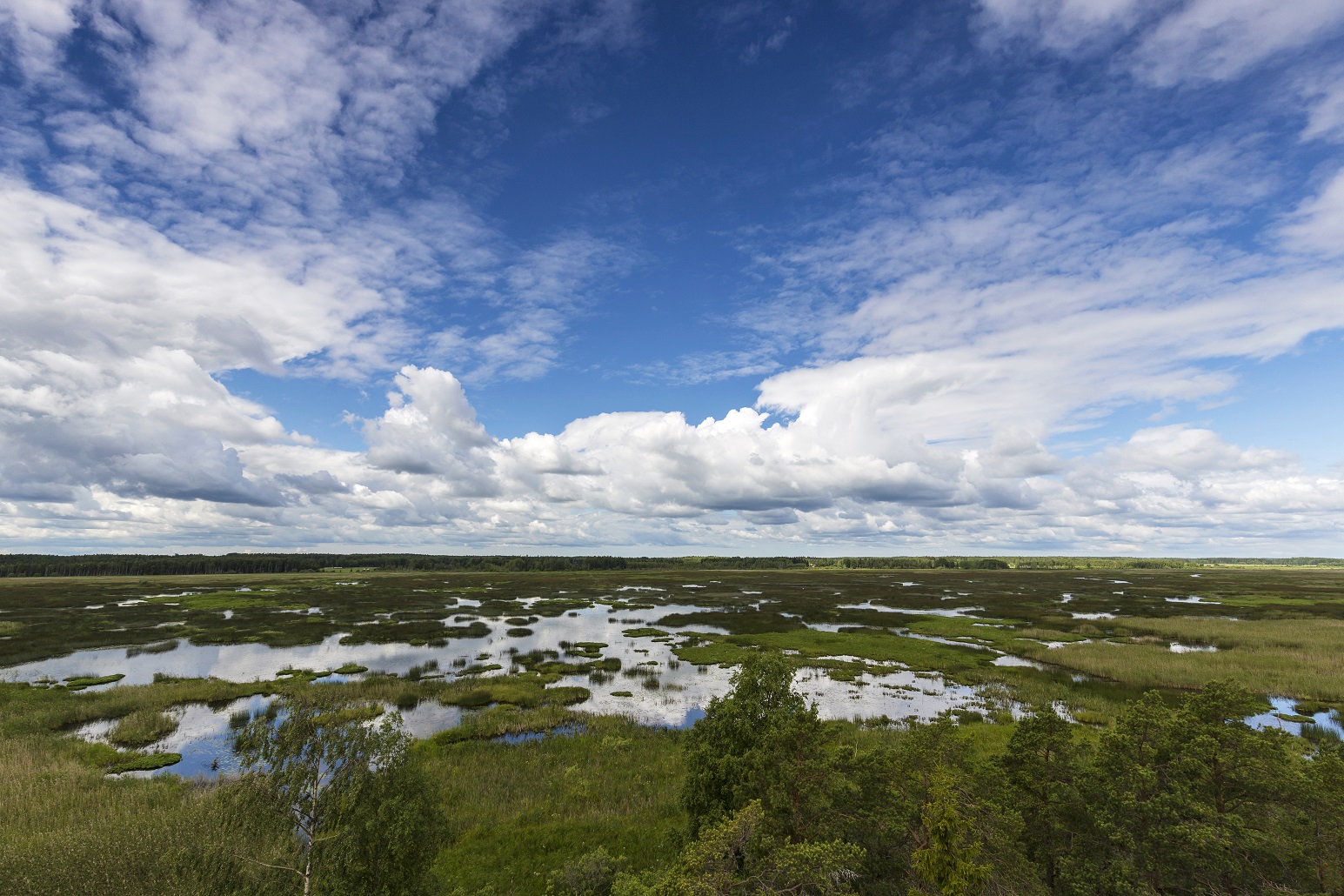
According to UBA's 2025 projections, the land sector (land use, land-use change and forestry – LULUCF) will fall short by 77 million tonnes of CO₂ equivalents in 2045 to meet the target set out in the Climate Action Act. Targeted investment in the rewetting of peatlands, adapted forest management and the planting of trees and shrubs on agricultural land could close this gap. The new UBA study ‘Achieving LULUCF targets: What do effective climate protection measures cost?’ shows that these measures can, for the most part, be implemented cost-effectively: over three-quarters of the target gap could be closed for less than 60 euros per tonne of CO₂ equivalents. This corresponds to the amount that consumers and businesses already pay for fossil fuels today. The UBA study provides guidance for the implementation of the 2026 Climate Protection Programme recently adopted by the Federal Government, which sets out measures in the land sector designed to close the gap to the target.
UBA President Dirk Messner: “We need targeted investments in healthy and climate-resilient forests and productive soils in order to achieve our climate targets. At the same time, this will mitigate the effects of climate change, such as heatwaves and droughts. With this new assessment of the impact and costs of the urgently needed measures, we can successfully implement programmes such as the Climate Protection Programme 2026 and the Federal Environment Ministry’s Action Programme for Natural Climate Protection.”
Bogs and forests deliver the greatest benefits
The study examines five measures. Together, they could save just under 84 million tonnes of CO₂ equivalents. This would close – and even exceed – the gap in achieving the climate targets in the LULUCF sector:
- Adapted forest management: around 20 million tonnes
- Woody vegetation (trees, hedges) on agricultural land: around 16 million tonnes
- Re-wetting of agricultural peatlands: around 24 million tonnes
- More long-lasting wood products: up to 18 million tonnes
- Re-wetting of forested peatlands: around 3 million tonnes
- Additional forest areas: around 3 million tonnes
More than three-quarters of the gap for under 60 euros per tonne
Some 77% of the gap to the target can be closed for less than 60 euros per tonne of CO₂ equivalent. This is roughly equivalent to the CO₂ price that consumers and businesses currently pay for fossil fuels (2026: 55 to 65 euros per tonne). A further 16% cost between 60 and 100 euros per tonne. Only around 7% cost between 100 and 143 euros per tonne.
The total cost of closing the gap to the target thus amounts to around 92 billion euros by 2045. This figure does not include the costs of increased carbon sequestration in wood products, as it was not possible to make reliable assumptions in this regard for methodological reasons.
Study as a framework for the cost-effective implementation of the ANK
The study, carried out by the Öko-Institut on behalf of the UBA, examined the CO₂ price per tonne at which a measure becomes worthwhile for agricultural and forestry businesses – in other words, what remains per hectare after all costs have been deducted. The analysis takes into account investment, operating and maintenance costs, as well as lost income and reductions in value resulting from changes in land use, such as in the case of peatland rewetting.
The measures examined are based on the revised Action Programme for Natural Climate Protection (ANK) of March 2026 and the Climate Protection Programme. The ANK is a nationwide funding framework designed to improve ecosystems and strengthen their climate protection performance.
The results show a theoretical cost trajectory and serve as a guide for funding policy and carbon markets. In practice, operational, financial and institutional framework conditions also play a role. The study thus provides a sound basis for the cost-effective implementation of the ANK. Additional benefits of natural climate protection – such as improved soil and water protection, adaptation to climate impacts and the preservation of biodiversity – are not included in these calculations.