
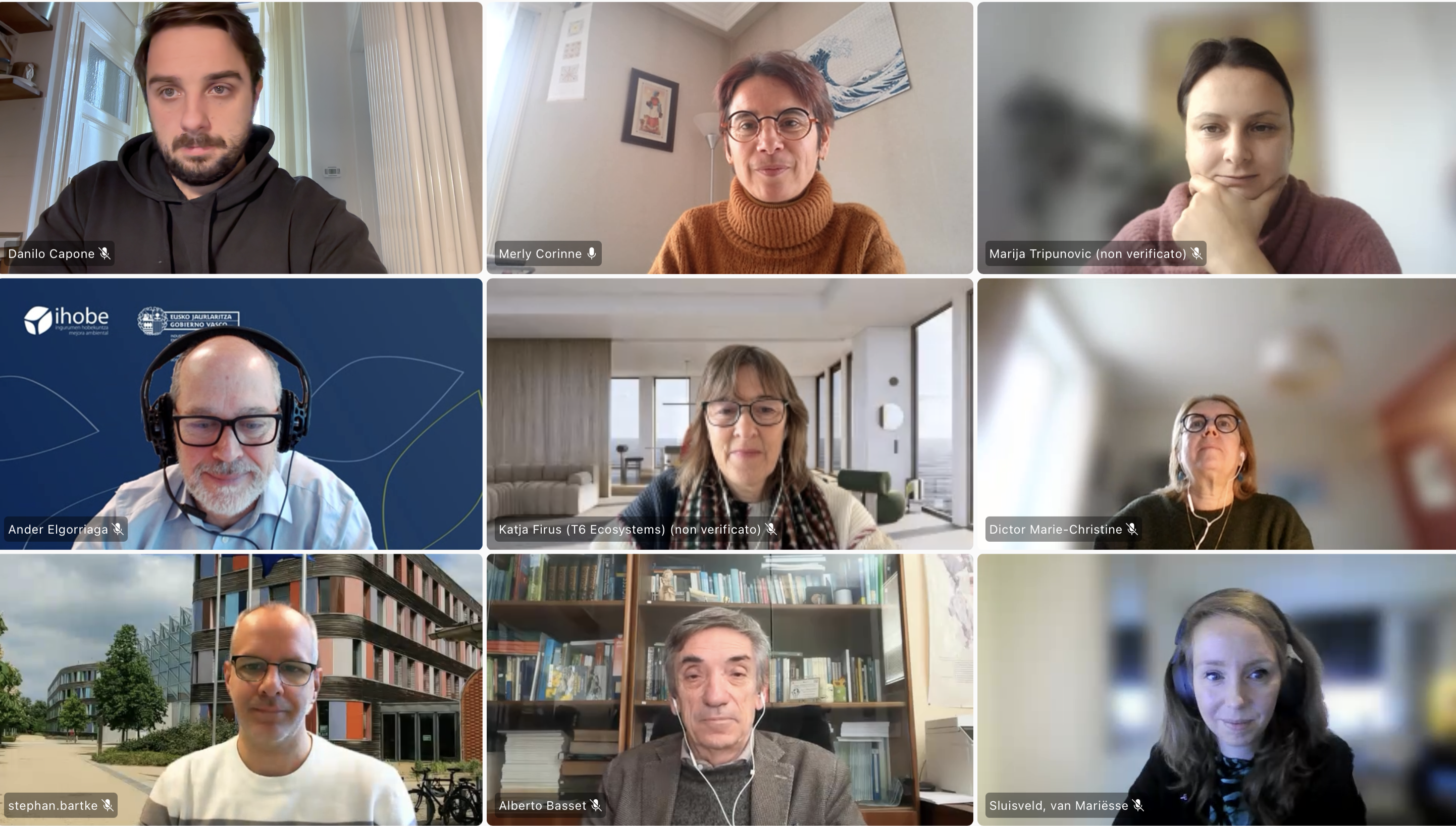
The development of CASRI’s Strategic Research and Innovation Agenda (SRIA) moved forward with an online workshop dedicated to co-designing its content and structure on the 2nd of December 2025. Further to a CASRI introduction given by CASRI’s coordinator Stephan Bartke (UBA, German Environment Agency), the workshop was led by Corinne Merly and Marie-Christine Dictor from the French Geological Survey (BRGM).
The workshop gathered twenty-four participants from 11 countries including Belgium (Flanders), Finland, France, Germany, Italy, Montenegro, The Netherlands, , Slovakia, Spain (Basque Countries), Switzerland, and the United Kingdom (Wales). Participants included Environment Protection Agencies (EPAs), EPA-like bodies, and national R&I programme managers and funders, reflecting a strong mix of policy, science and funding perspectives. Together, they made a new step towards transnational convergence in sustainable R&D actors, exchanging common interests across countries.
The aims of the workshop were both to translate the CASRI topics originating from CASRI previous outcomes - “Selected topics for the matchmaking process for environmental and sustainability research and innovation”, Deliverable 3.2 - into clear research and innovation (R&I) questions and to discuss how the SRIA should be organised to ensure co-ownership among agencies, funders and programme managers, as well as to facilitate future synergy and pre-implementation.
This workshop is part of a broader trajectory in which CASRI has identified more than 600 knowledge needs around 8 themes across 14 countries. Among these themes, 20 topics were selected as transnational common priorities. The current step focuses on transforming these needs into concrete, shared R&I directions.
From Consultation to Topic Selection
Out of the 20 topics, the workshop focused on those identified through a pre-selection survey conducted with national research and development programme managers and funders in November 2025. The survey assessed fit with national priorities, coverage by existing transnational initiatives, innovation potential, funding interest and relevance as a European priority - including for FP10.
Twenty-one responses were received on the day of the workshop, leading to the identification of common areas of interest and opportunities for synergy from the participants’ perspectives. On this basis, ten topics were selected and assigned to Interest Groups for in-depth discussion among participants:
- Innovation for resilient, net-zero and circular production systems
- Effectiveness of climate policy
- Comprehensive and timely biodiversity monitoring
- Green Space Provision
- Governance of nature-, environmentally and socially friendly energy transition
- Comprehensive data security and environmental data
- Social vulnerabilities of multi-scale climate adaptation
- Inclusive science-policy-practice interface
- Integrating environmental and health data for socially just urban transformation
- Smart, adaptive and effective regulation
Thematic Insights & take-aways
Interest Groups discussed key R&I questions for each topic. For circular production systems, participants highlighted acceptance factors alongside technological innovation. Climate policy discussions stressed strong modelling and tools to demonstrate real costs and benefits.
On data security, coordination across EU, national and local levels emerged as a priority. The science–policy–practice interface group emphasised integrating local and indigenous knowledge. Discussions on regulation addressed how regulatory effectiveness links to agency capacity and sustainable markets.
Biodiversity monitoring groups underscored alignment with existing initiatives. Green Space Provision highlighted social and cultural aspects essential for nature-based solutions. Groups on social vulnerabilities and environmental–health data integration pointed to challenges involving climate-related migration, insurance systems, harmonised data and cross-agency cooperation.
Next Steps
The workshop results will feed directly into the drafting of the SRIA, which will consolidate R&I needs and propose suitable instruments for national and European contexts. Next 29th and 30th of January2026 , the upcoming in-person workshop in Paris will take the next step: beginning to match the selected topics with potential funding opportunities and identifying organisations ready to support them.