First half of 2026: Renewable energy is growing across all sectors

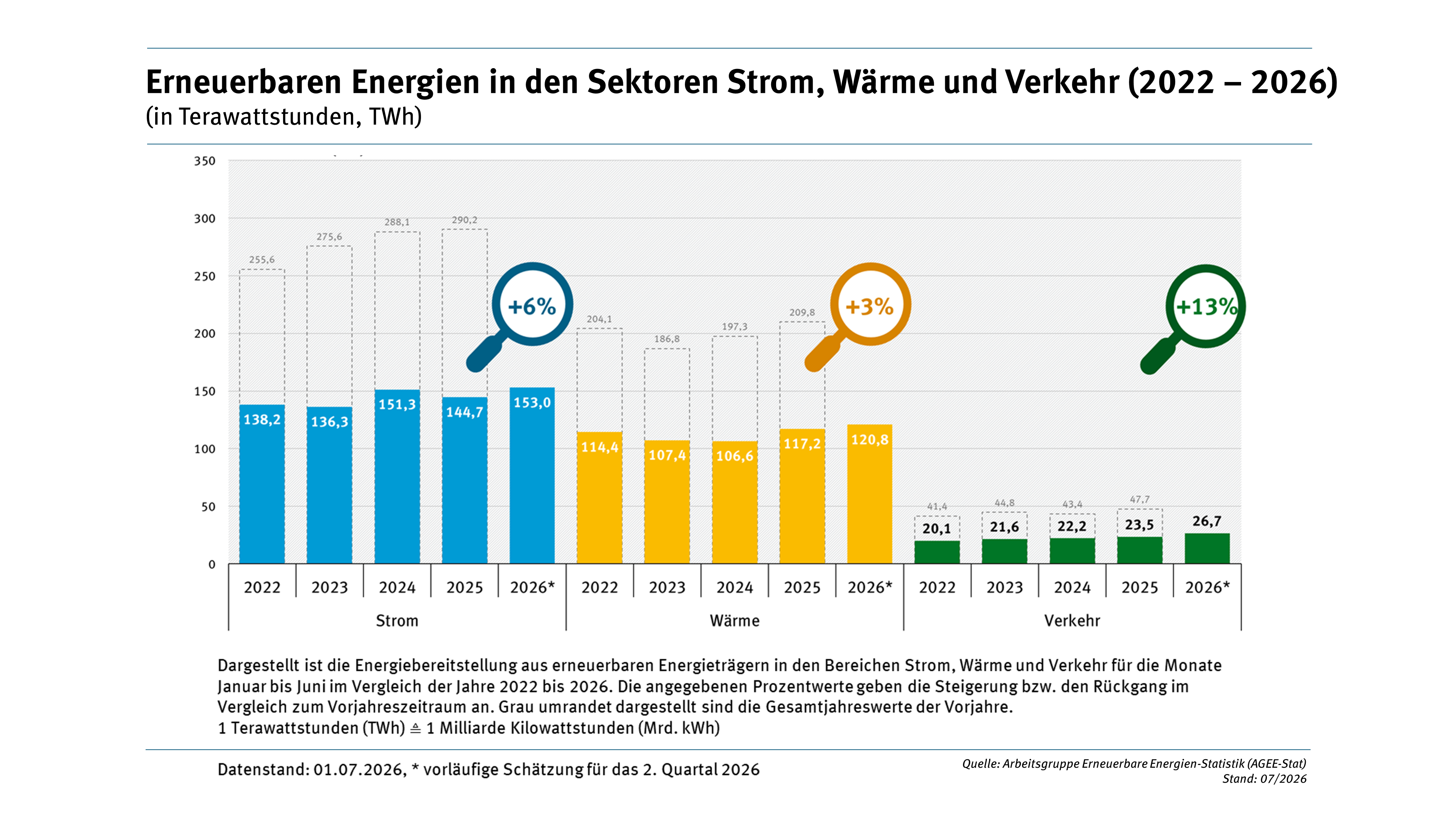
In the first half of 2026, around 57 percent of the electricity consumed in Germany came from renewable energy sources. This is shown by new data from the Working Group on Renewable Energy Statistics (AGEE-Stat). According to the figures, around six percent more electricity was generated from wind, hydro, solar and bioenergy than in the same period of the previous year. Renewable energy also increased in the buildings and transport sectors: environmental heat and geothermal energy from heat pumps rose by 19 percent; the use of biofuels and electricity in the transport sector rose by 13 percent.
“The figures for the first half of 2026 give cause for optimism. Now, more than ever, we should continue to drive forward the expansion of these future-oriented technologies," said UBA President Dirk Messner. "The upturn in wind and solar power must not blind us to the fact that the transition of the heating and transport sectors should also be accelerated . Electric cars and heat pumps must be rolled out more widely, and the electricity system must become more flexible through new large-scale battery storage facilities. Only if all sectors gain momentum together can we achieve our climate targets.”
Electricity generation: share of renewables stands at 57 percent
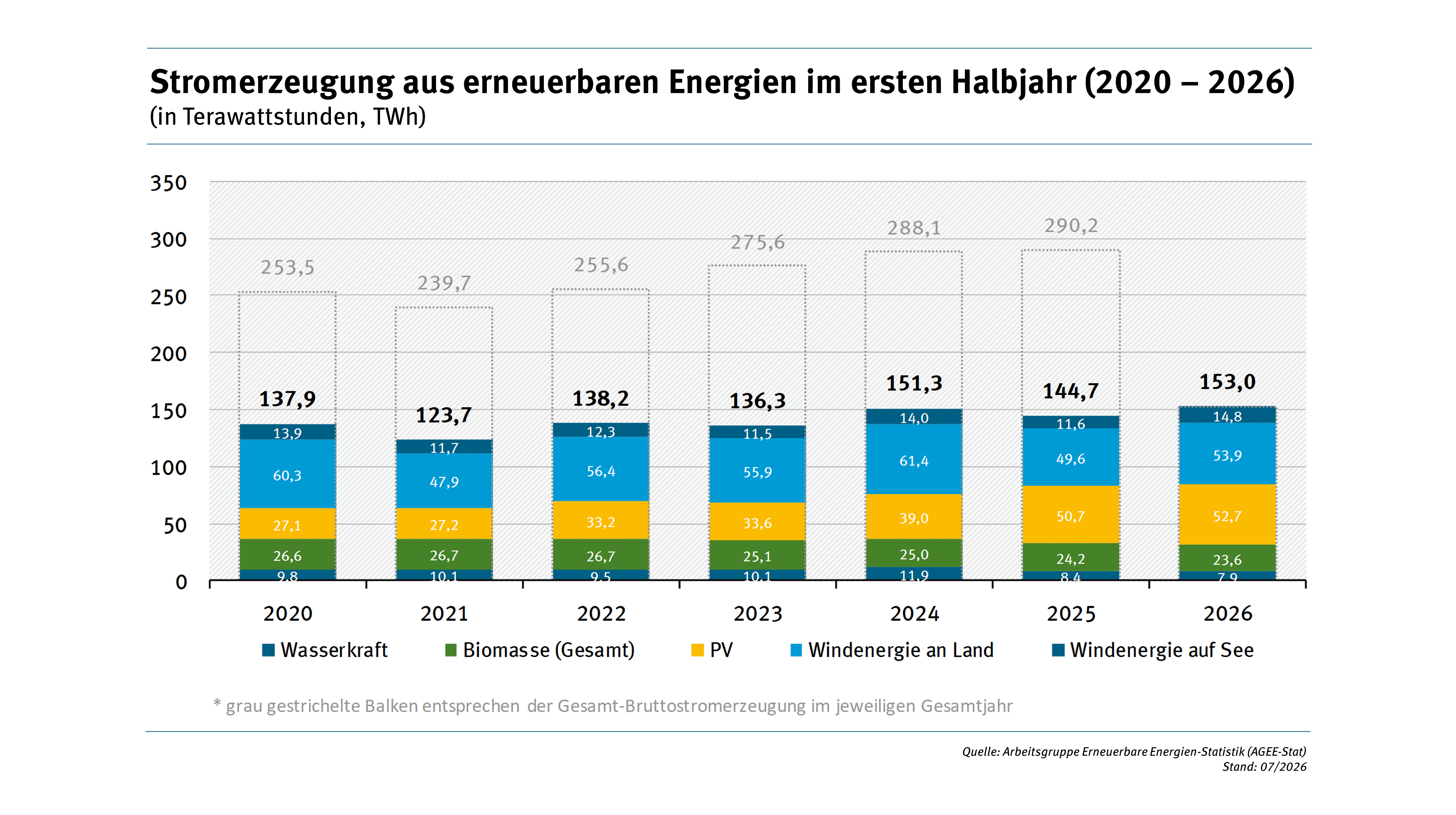
In the first half of 2026, around 153 terawatt-hours (TWh) of electricity were generated from renewable sources – six percent more than in the same period of the previous year (145 TWh). In contrast to the exceptionally wind-poor first half of 2025, wind speeds in 2026 have so far been closer to the long-term average. Wind energy was therefore once again the mainstay of renewable electricity production, accounting for around 45 percent, followed by photovoltaics (34 percent), biomass (15 percent), hydropower (five percent) and geothermal energy (less than one percent).
As in the previous year, photovoltaics benefited from above-average solar radiation and further expansion of installed capacity. In the first half of 2026, a total of around eight gigawatts (GW) of new gross capacity was installed. This means that the expansion target set by the Renewable Energy Sources Act (EEG) for 2026 – 128 GW of total installed PV capacity – will already be reached by the summer of that year. With a net increase of around two GW, onshore wind turbines had a total installed capacity of approximately 70 GW by the end of the first half of 2026. The current rate of onshore wind expansion therefore does not yet reflect the growing number of new permits granted. The EEG target of 84 GW by the end of the year is expected to be significantly missed.
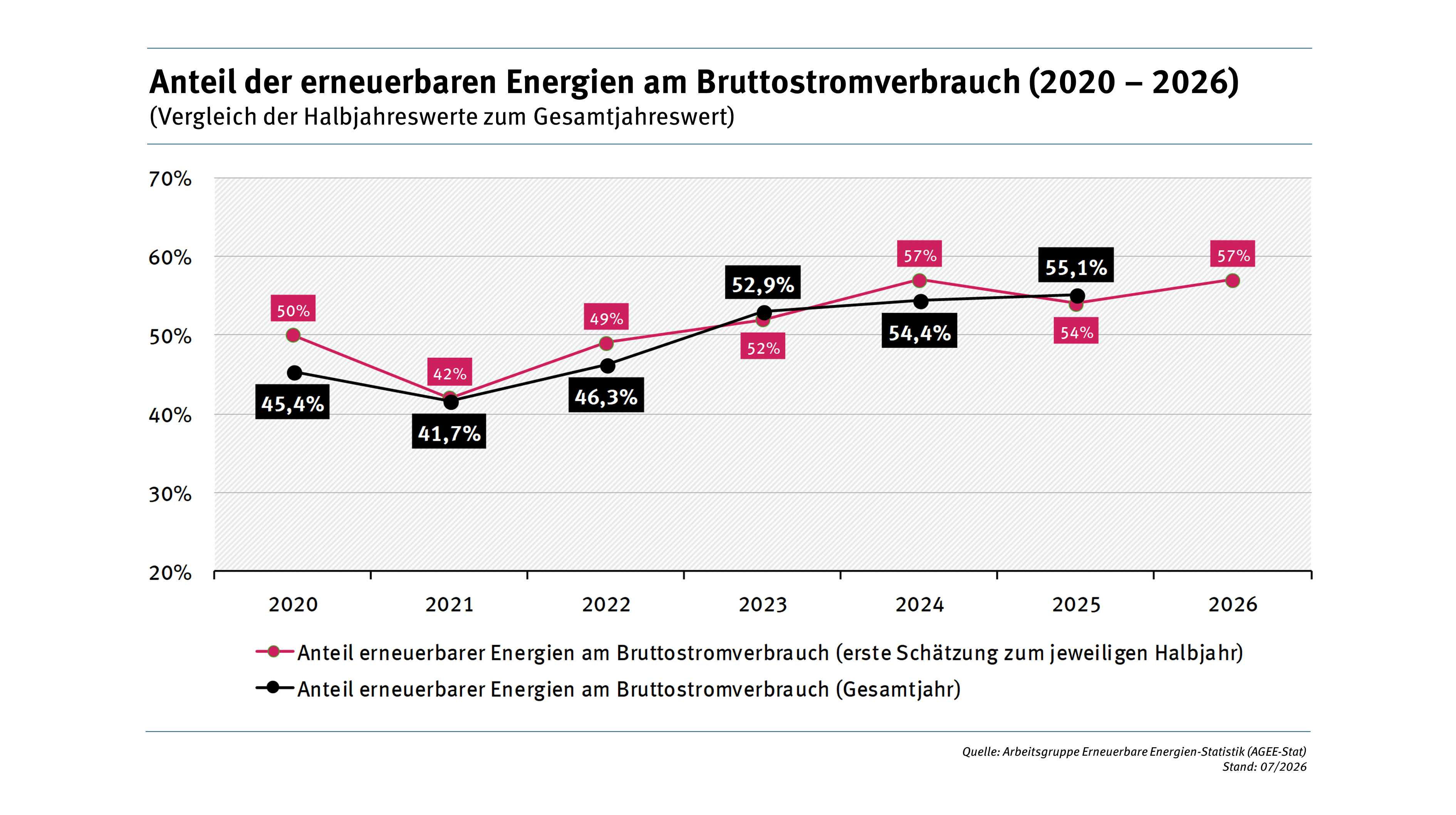
The share of renewable energies in gross electricity consumption stood at around 57 percent in the first half of 2026 (2025: 54 percent, 2024: 57 percent). A reliable projection for the whole of 2026 is not possible at this stage, as both renewable electricity generation and electricity consumption depend on weather conditions for the rest of the year and, to some extent, on economic developments.
Heat pumps are driving the heat transition
Heat generation from renewable sources totalled around 121 TWh in the first half of 2026, representing an overall increase of three percent. In particular, ambient heat harnessed by heat pumps and near-surface geothermal energy rose by over 19 percent compared with the same period last year.
In addition, heat generation from solar thermal energy (up three percent) and gaseous biomass (up one percent) also rose slightly. Just under two-thirds of renewable heat supply continued to come from the use of solid biomass (up one percent). The main driver was the slightly cooler weather in the first quarter, which led to an overall increase in heating energy demand.
Biofuels and electric mobility show strong growth
In the transport sector, around 27 TWh from renewable sources was used in the first half of 2026. This represents an increase of around 13 percent compared with the same period last year and is therefore the highest half-year figure to date. The growth was largely driven by the increase in the greenhouse gas reduction target from 10.6 percent in 2025 to 12 percent in 2026, and the resulting rise in sales of biofuels, particularly biodiesel/HVO (up 11.4 percent in total).
The use of renewable electricity in road transport also grew particularly strongly: the growing fleet of electric vehicles, combined with the rising share of green electricity in the electricity mix, led to an increase of over 20 percent in the calculated volume of renewable electricity used for transport purposes.
Further information:
AGEE-Stat compiles statistics on the use of renewable energy on behalf of the Federal Ministry for Economic Affairs and Energy and continuously produces reports on the development of renewable energy based on the latest available data. In addition to annual publications, AGEE-Stat also regularly publishes monthly and quarterly reports. In the latest quarterly report, you will find further charts on the current trends in renewable energy in 2026. AGEE-Stat’s office is located at the UBA in Dessau-Roßlau.