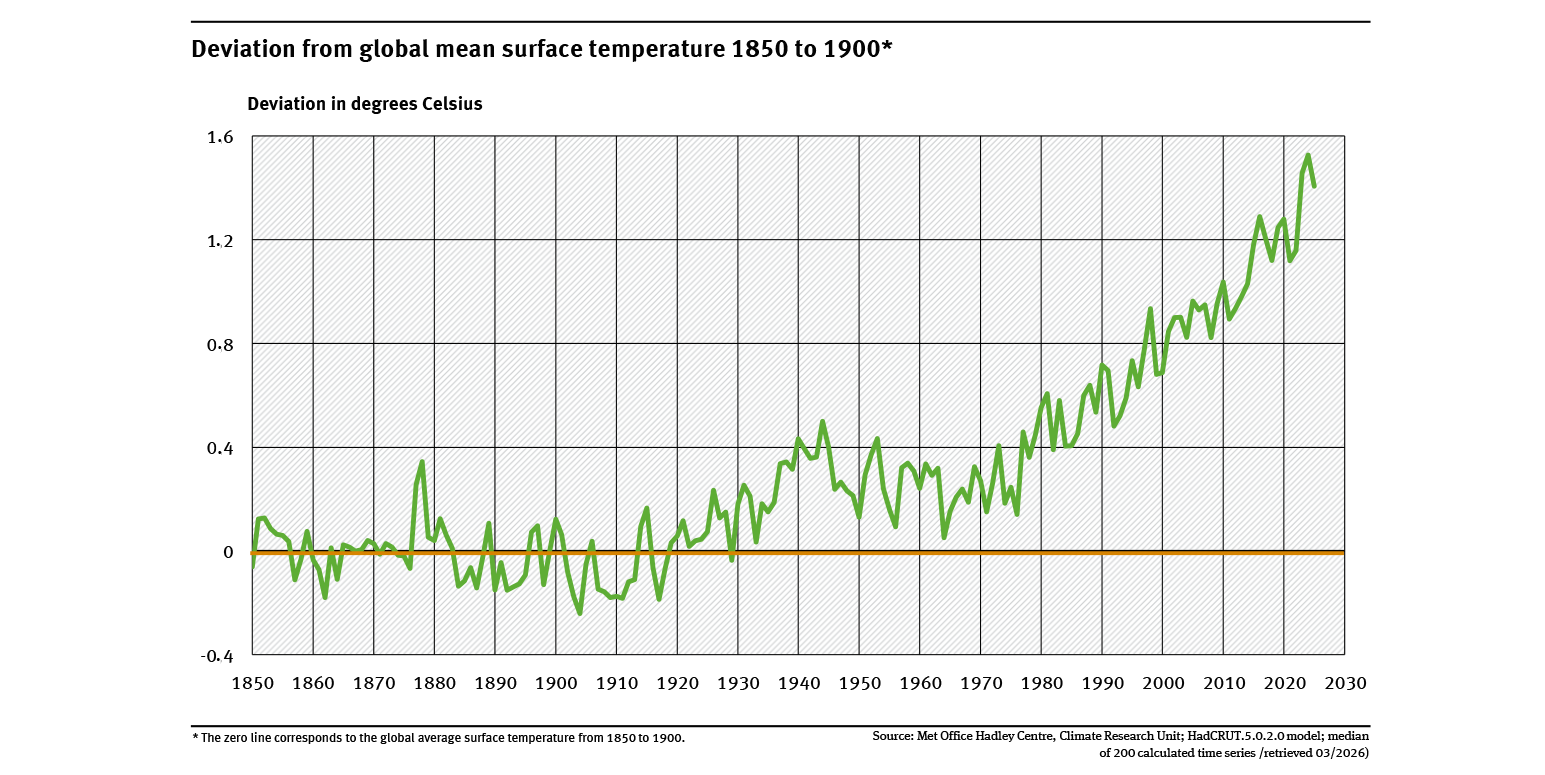
To prevent dangerous interference to the climate system, the aim is to limit the temperature increase to well below 2 degrees Celsius (°C) above pre-industrial levels, and even to 1.5 °C. This is the Paris Agreement adopted by the global community at the 2015 Climate Conference in Paris (UNFCCC 2015). To meet this target, global greenhouse gas emissions must be reduced rapidly and substantially (cf. ‘Greenhouse gas emissions’ indicator), to achieve global greenhouse gas neutrality by 2050 at the latest.
In 2025, the global mean of ground-level air temperature was about 1.41 °C above the mean from pre-industrial times, according to WMO calculations. This made 2025 the third warmest year ever recorded, with a very small gap to the previously warmest year. The last ten years were the warmest years worldwide since 1850.