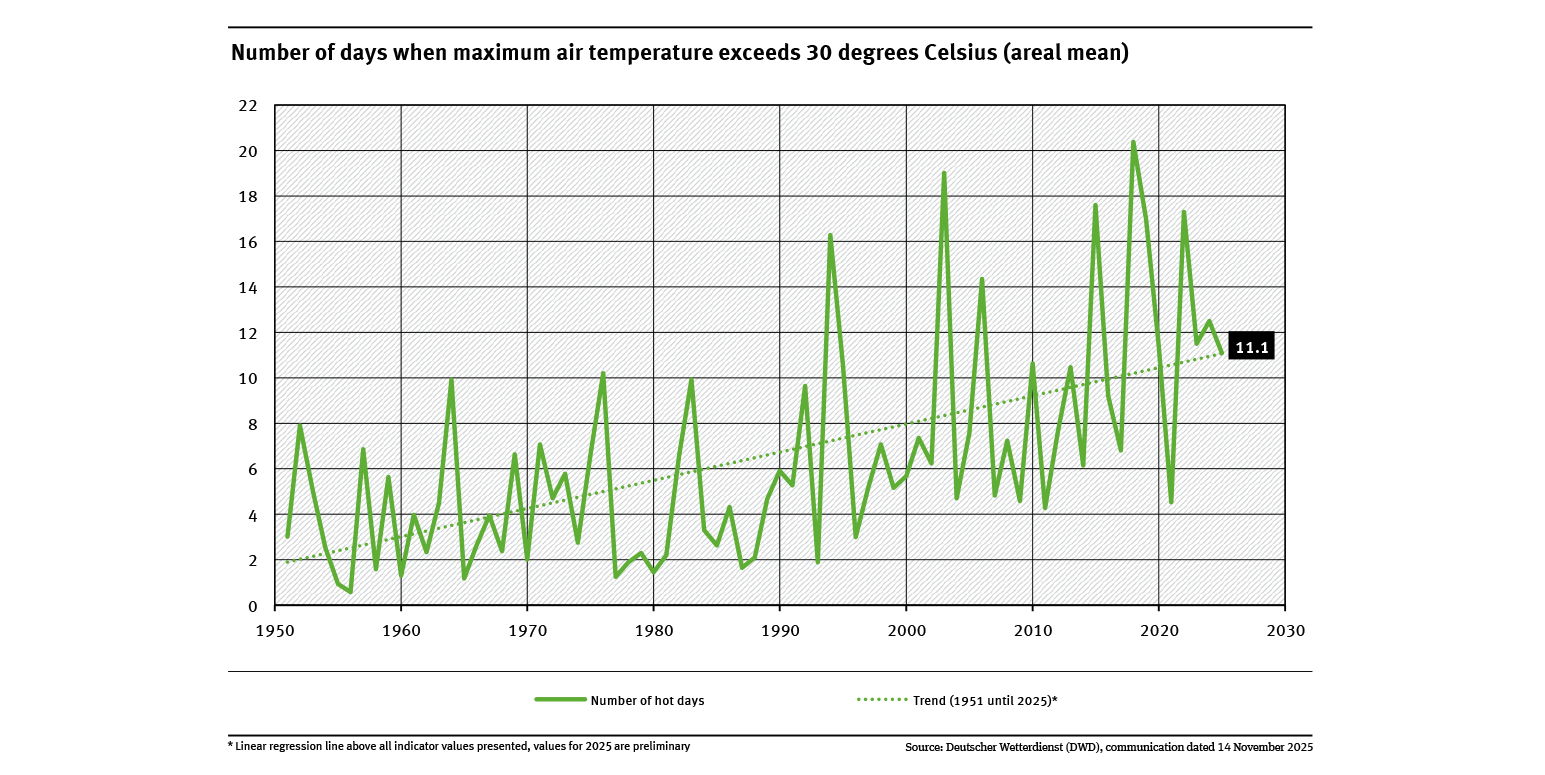
Rising temperatures can adversely affect human health. Germany's National Meterological Service, the Deutscher Wetterdienst (DWD), defines the ‘hot day’ as any day on which the maximum temperature exceeds 30 degrees Celsius (°C).
High air temperatures have a direct impact on the human body, as the heat can cause circulatory problems. Indirectly, hot weather can raise pollutant levels in the air we breathe, leading to an increase in respiratory and circulatory diseases. High air temperatures combined with intense sunlight encourage the formation of ground-level ozone. Ozone irritates the eyes and airways and can exacerbate existing respiratory diseases. It can also trigger allergic reactions.