
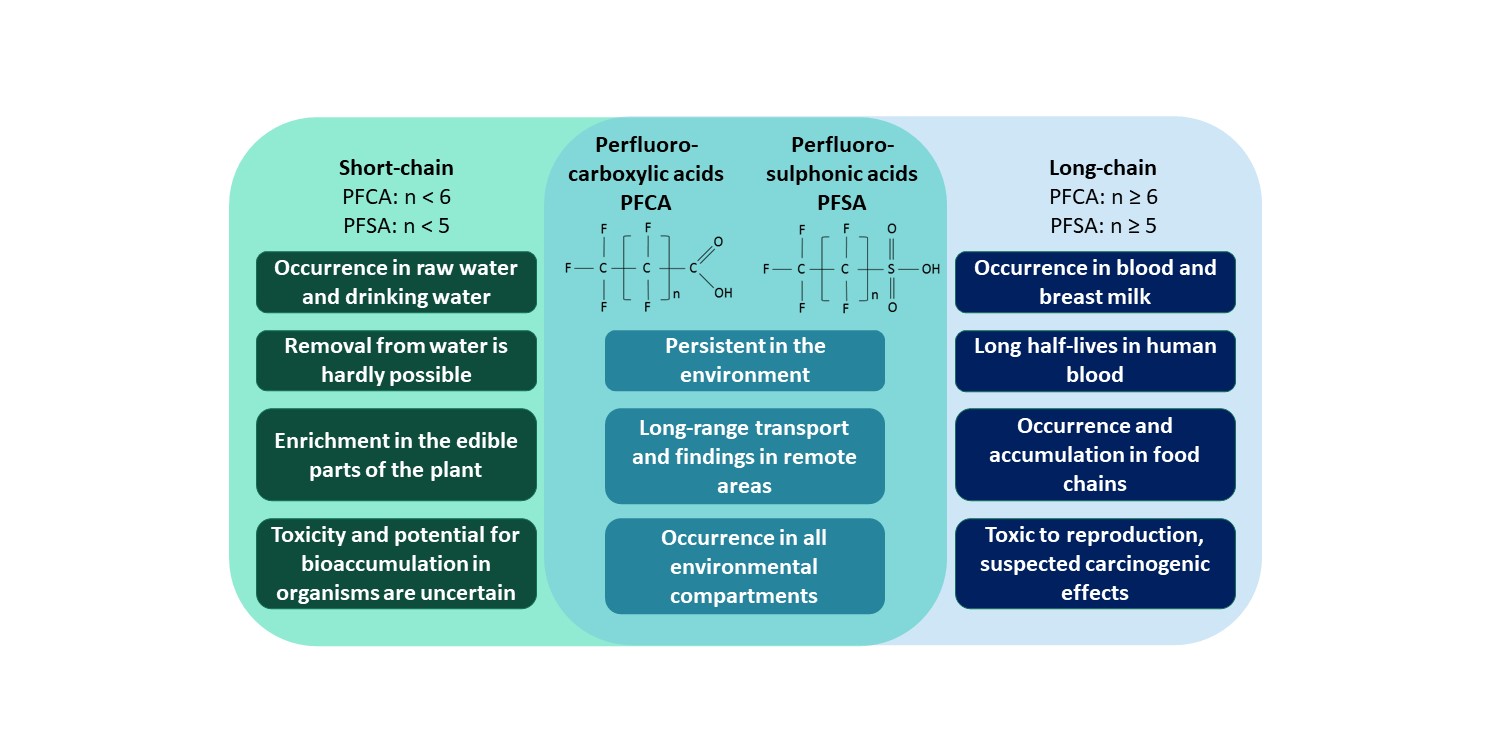
Long-chain PFAS have (very) persistent, (very) bioaccumulative and toxic properties, whilst short-chain PFAS are extremely persistent and mobile.
What does this mean?
The very stable bond between carbon and fluorine can only be broken with a very high energy input. Under natural environmental conditions, neither biotic processes (bacteria) nor abiotic processes (water, air, light) can contribute to the degradation of PFAS. Once PFAS are released into the environment, they distribute, for example in water and sediment, but are not degraded. Some PFAS, particularly those consisting of a long perfluorinated carbon chain, also accumulate in organisms and along the food chain. PFAS with a short perfluorinated carbon chain – known as short-chain PFAS – accumulate to a lesser extent in organisms but are highly mobile in water and soil. Short-chain PFAS are not retained in the soil and therefore quickly reach the groundwater. Groundwater and surface water are sources of drinking water. Due to their low adsorption potential, short-chain PFAS can hardly be removed from the water during treatment. Furthermore, short-chain PFAS are taken up by plants from the soil and can end up in the edible parts of the plant.
Some PFAS may affect metabolism, hormone balance, reproduction and the immune system; others are also suspected of being carcinogenic. However, the vast majority of PFAS have not yet been sufficiently studied to draw definitive conclusions about their effects on health. Further information on effects on human health can be found in the article PFCs in humans | Federal Environment Agency