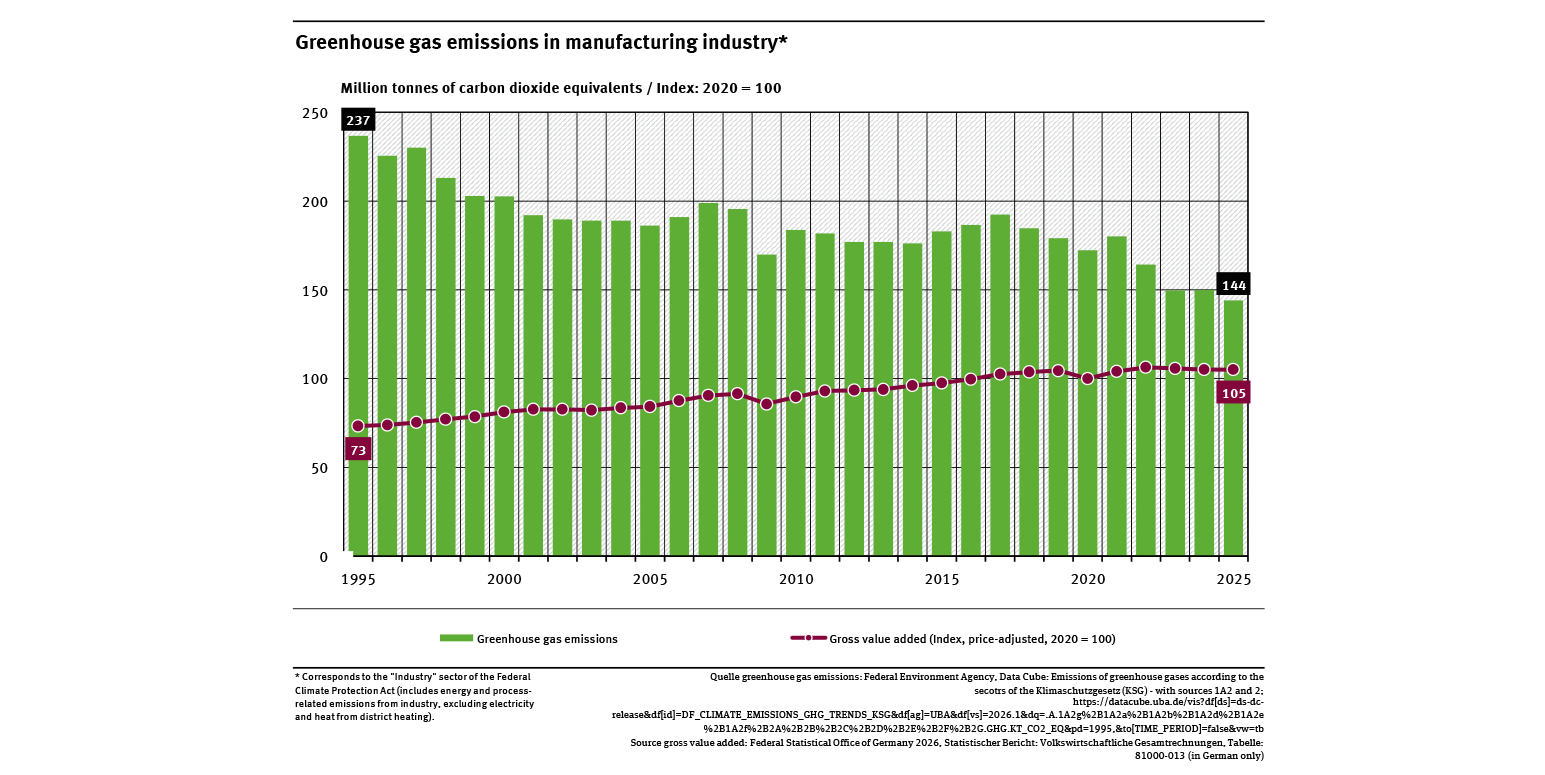
Since the beginning of industrialisation, humans have caused the emission of large amounts of greenhouse gases into the atmosphere. As a consequence, temperatures rose. This has a number of repercussions, such as an increase in the number of extreme weather events (e.g. storms, droughts and floods), destabilisation of infrastructure, the spread of tropical diseases etc.
The most important source of greenhouse gas emissions has been and still is the combustion of fossil energy sources. Energy is largely used in the production of goods. This explains the important role the manufacturing sector plays in resolving the climate issue.
The industry is also an indirect cause of greenhouse gas emissions, as it purchases electricity and heat from external power plant operators. This share of emissions should also be attributed to the industry, but the effect is not considered in the indicator, because no current data are available.