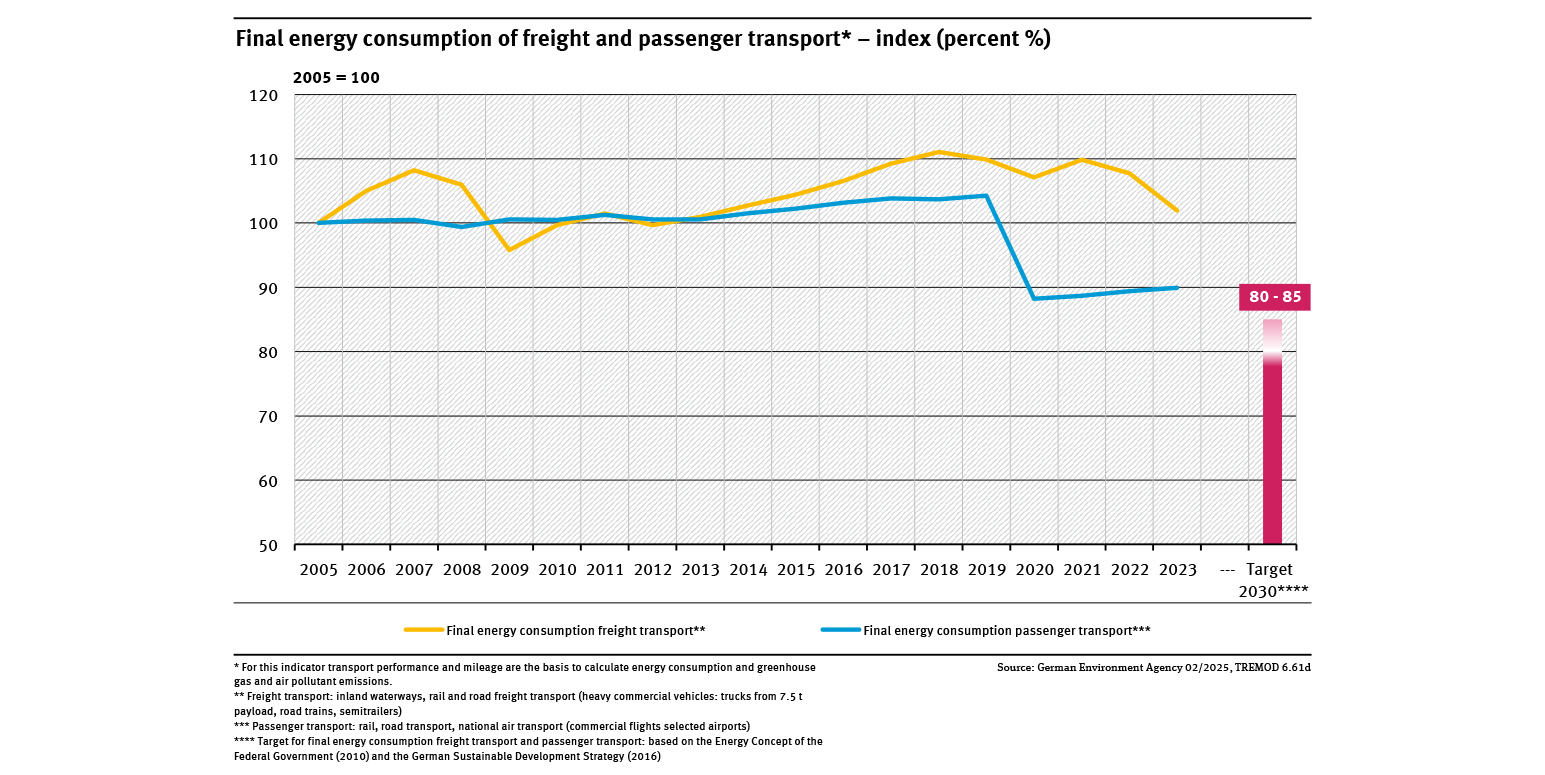
Final energy consumption is the consumption required to operate the vehicles. From 2005 to 2019, the final energy consumption of passenger transport increased by around 4.3 %. In freight transport, on the other hand, it rose by around 9.9 % over the same period. Nevertheless, over the same time frame, transport performance rose faster than its energy consumption. As a result, both transport sectors have become significantly more energy-efficient, however, the target of absolute energy savings was not achieved. Due to the pandemic, there was a sharp drop in final energy consumption in 2020 and 2021 as a result of the fall in passenger transport performance. In 2023, final energy consumption in passenger transport was still 10.1 % lower than in 2005, but rose again compared to the previous year. However, a general trend cannot be derived from this.
If the energy consumption of transport is to decline, the demand for transport in particular must decrease or slow down and energy-efficient drive alternatives have to be promoted more strongly, or transport performance must shift to more environmentally friendly modes of transport (cf. ‘Environmentally friendly passenger transport’ and ‘Environmentally friendly freight transport’).