
How does emissions trading work?
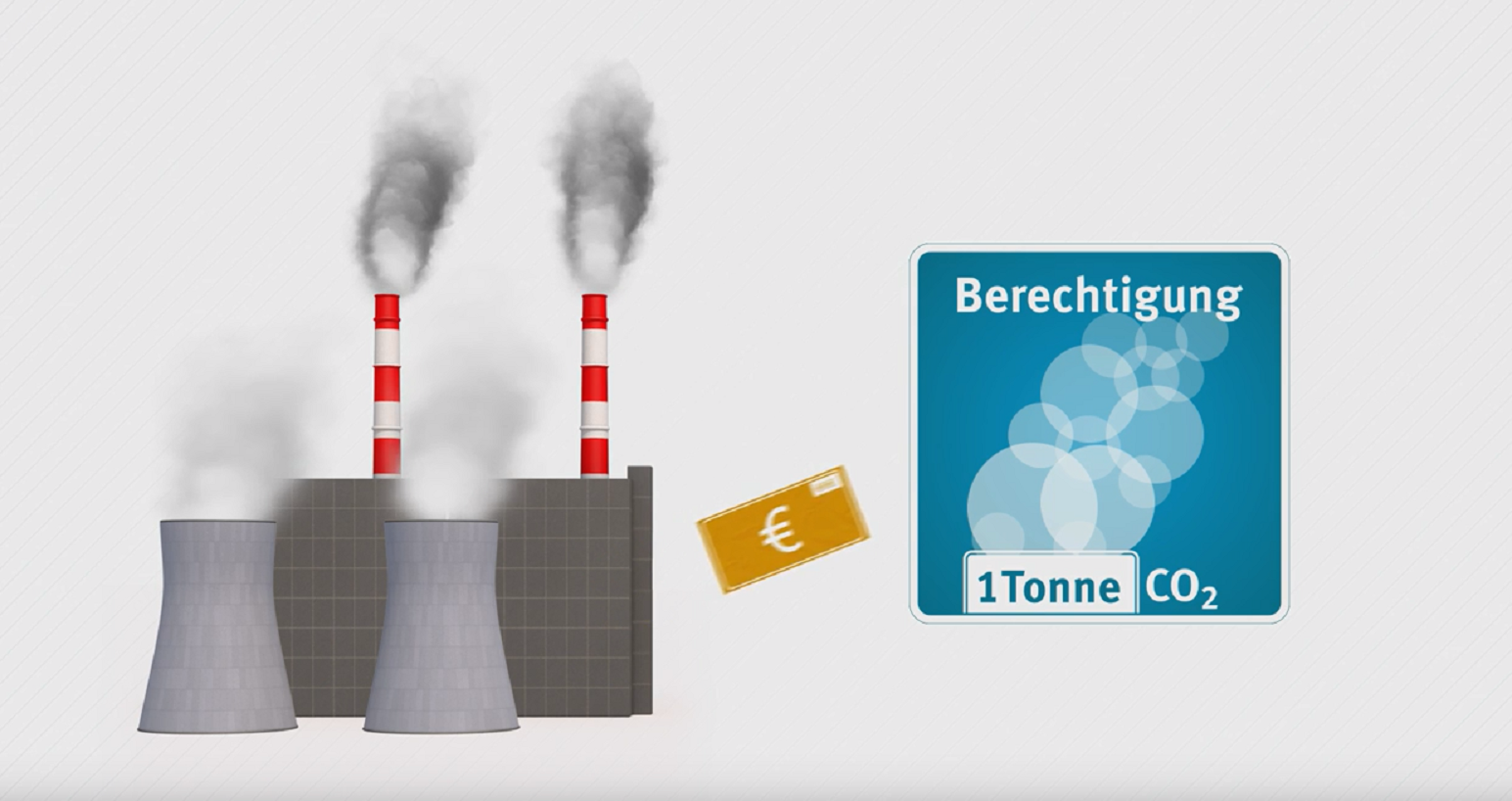
Why is there a trade in or with emissions? Who specifies the framework conditions and how does emissions trading actually work? An explanatory film gives short and concise answers to these questions and explains the contribution of emissions trading to climate protection.
The consequences of extreme weather events and ever-increasing global warming show the need for effective climate protection. In 2005, based on the UN Kyoto Protocol, the European Union introduced emissions trading, a far-reaching instrument.
The explanatory film now published shows in sound and pictures how emissions trading works in practice: e.g. what is the ‘cap and trade’ principle?
How does trade between companies work and what role do emission allowances play here?
The short film answers these questions and explains why is it economically viable for companies to invest in environmentally friendly technologies and thus make a contribution to climate protection.
More information on emissions trading can be found on the website of the German Emissions Trading Authority (DEHSt) at the German Environment Agency. DEHSt is the responsible national authority for emissions trading.
Associated content
Links
Related contents
Related publications
- The extension of the EU ETS 1 to maritime transport: impacts on sectoral decarbonisation
- Commonalities and Differences Between the EU ETS 1 and the UK ETS
- The extension of the EU ETS 1 to maritime transport: market and policy mix analysis
- Effectiveness of EU Emissions Trading: What drives emission developments?
- Carbon leakage in AI-driven data center growth?