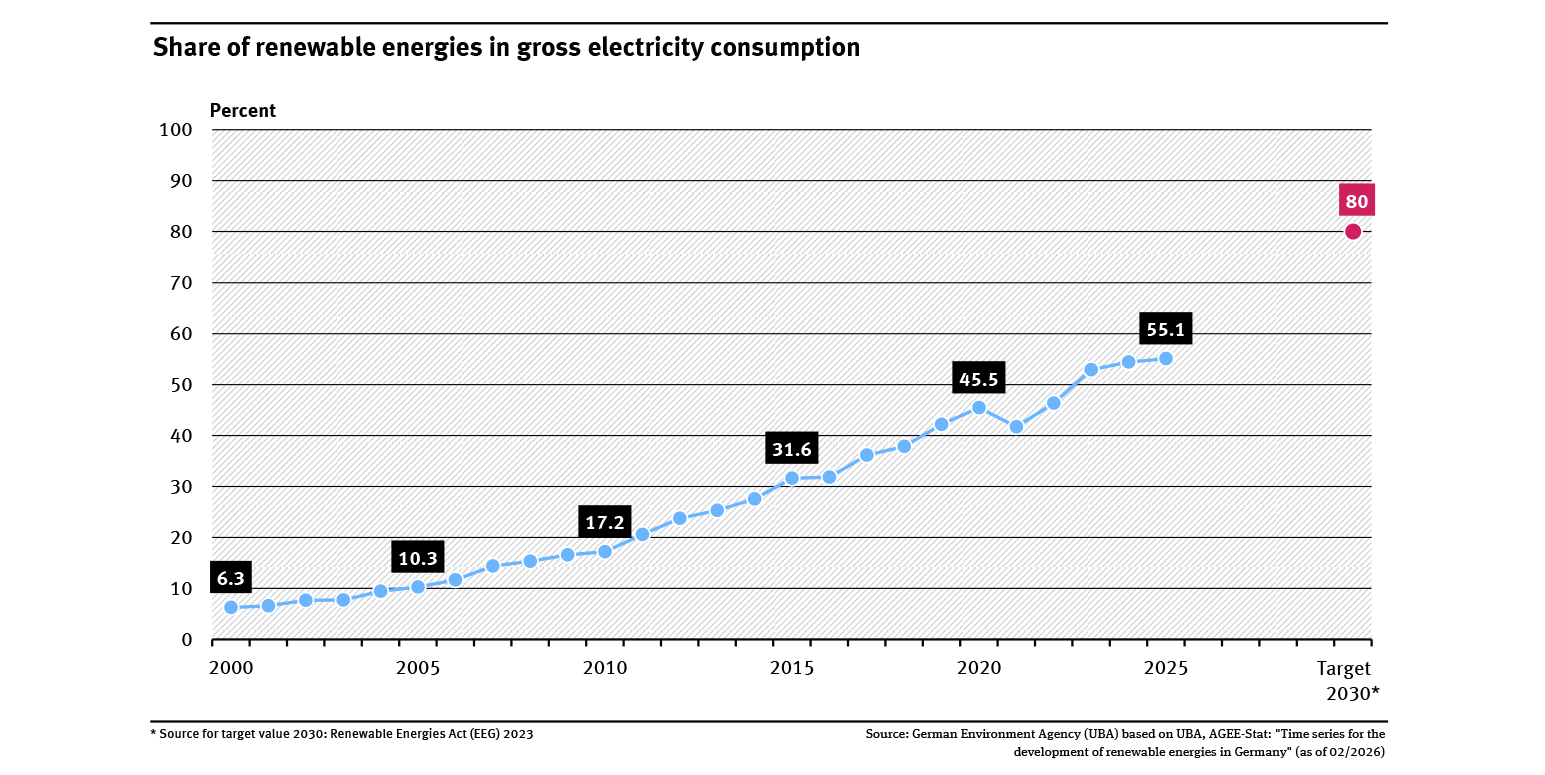
In 2025, electricity accounted for about one quarter of total final energy consumption in Germany - significantly more energy was used for mobility (fuels) and heating (e.g. with natural gas). In future, however, heat generation and mobility will increasingly be based on electricity. This means that the ‘share of renewable energies in gross electricity consumption’ will become an increasingly important climate and energy policy indicator.
Until just a few years ago, electricity generation in Germany was predominantly based on fossil and nuclear energy sources. Hard coal and lignite in particular caused high greenhouse gas emissions. By contrast, electricity generation from renewable sources has resulted in little to no additional greenhouse gas emissions. Furthermore, electricity generation can be largely based on domestic (renewable) resources.
Gross electricity consumption comprises the net electricity consumption used by so-called end consumers such as industry or private households as well as the power plants' own consumption and transmission losses. As the indicator thus fully reflects the electricity system, it is a preferred political target indicator.