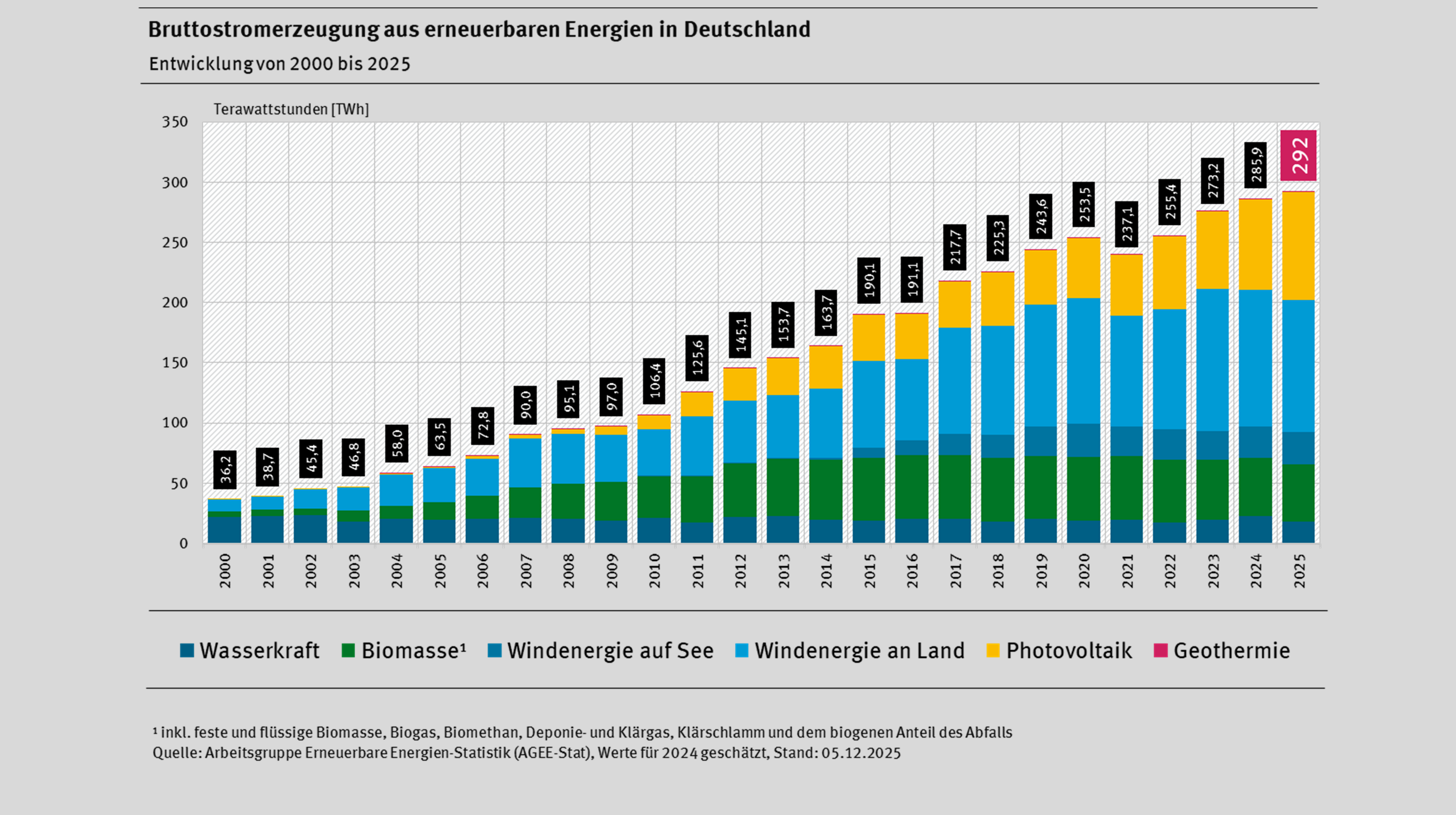
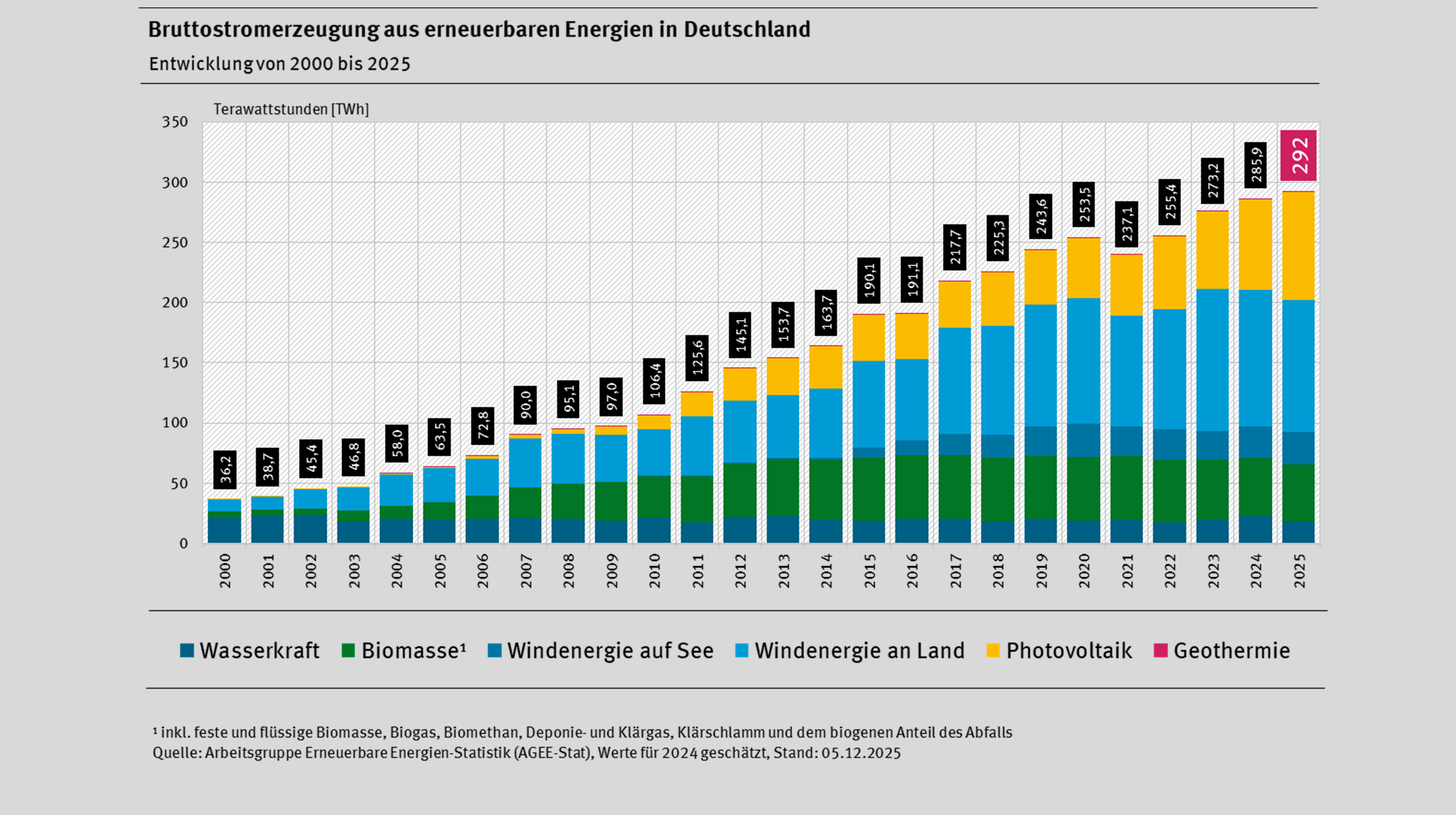
“Overall, we are on the right track. Renewable electricity generation continues to grow,” says Dirk Messner, President of the German Environment Agency. “But to reach the target of covering 80 percent of gross electricity consumption in 2030 from renewable sources, expansion needs to accelerate further. It remains crucial to maintain a high pace of expansion by ensuring reliable and appropriate framework conditions.”
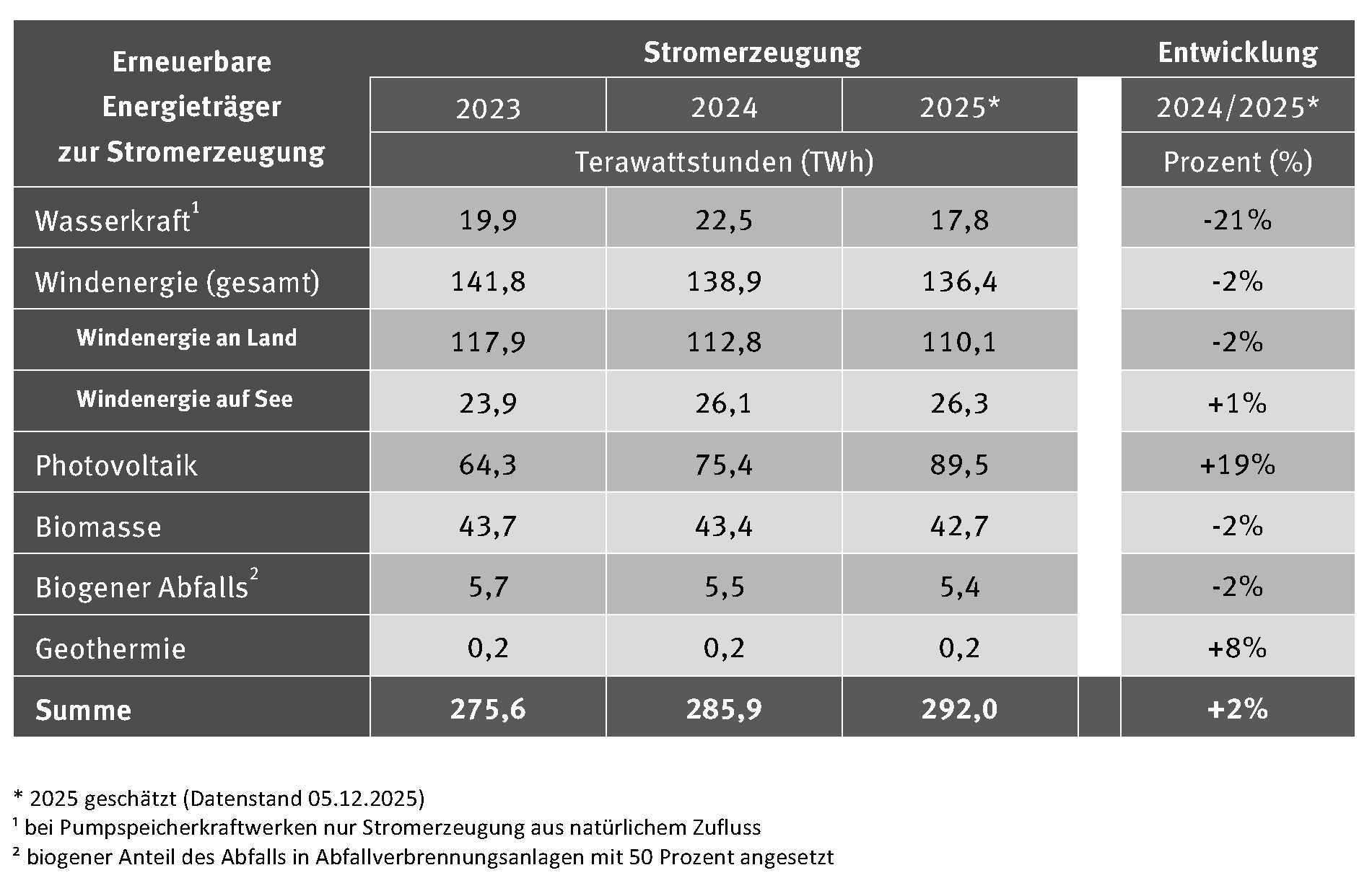
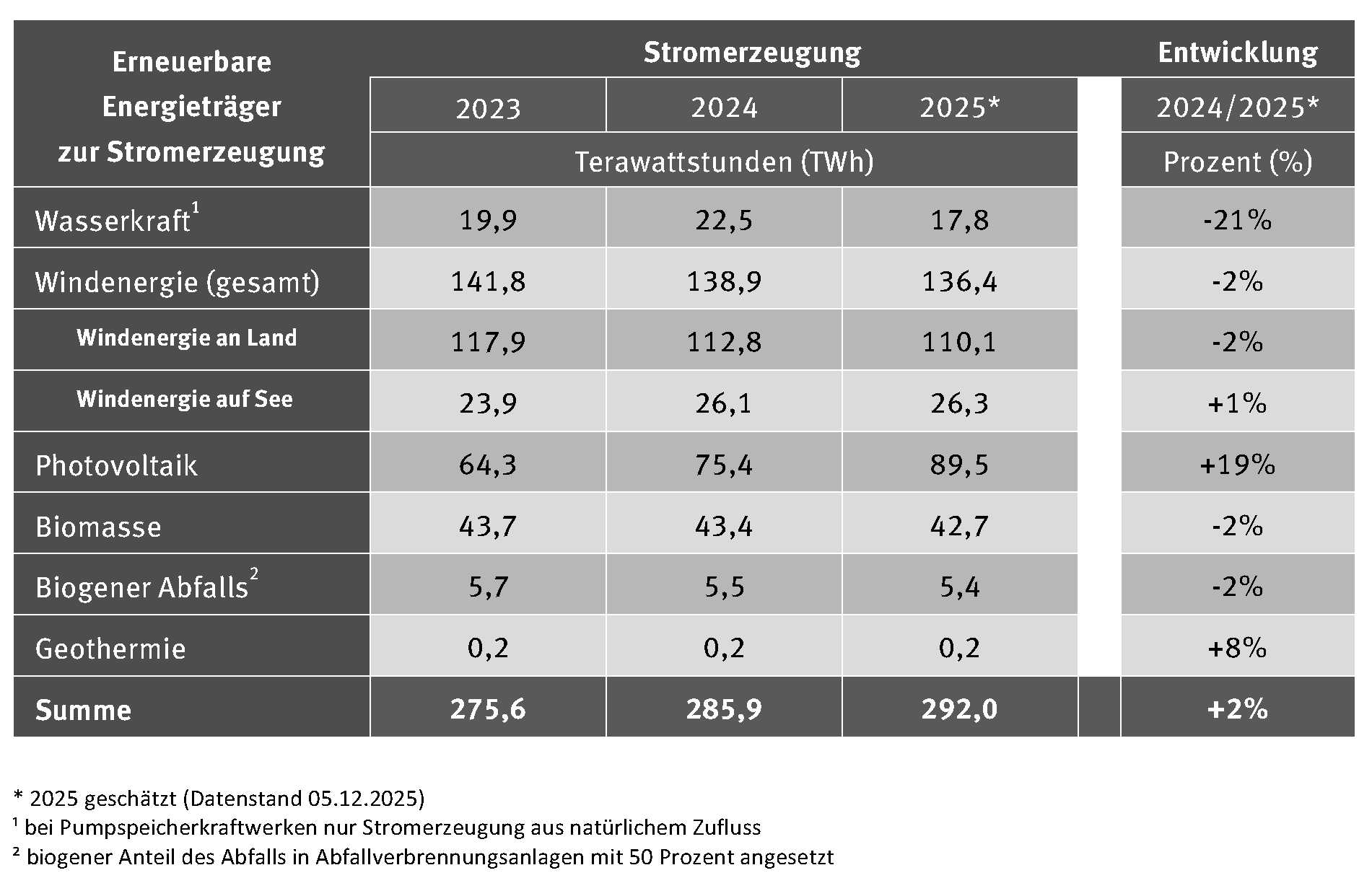
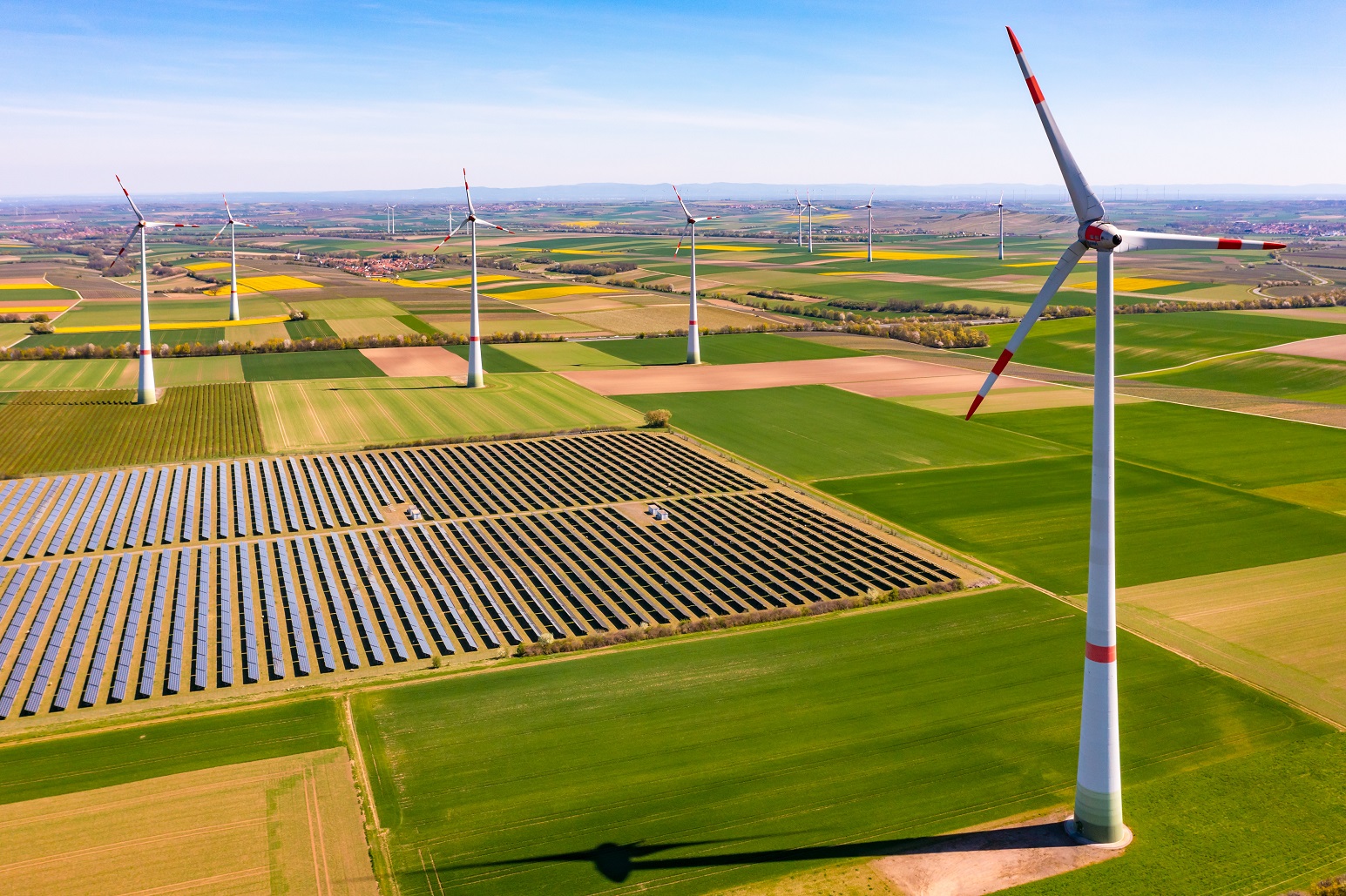
Wind energy will remain by far the most important energy source in the 2025 emission intensity. However, due to historically low wind conditions in the first half of 2025, electricity generation from wind energy amounted to around 136 TWh, about 2 percent below the previous year’s level. At the same time, a net increase of about 4.4 gigawatts (GW) of wind capacity was added, significantly than in the previous year (2.6 GW) Total installed wind capacity thus increased by six percent to more than 77 GW. High numbers of permits for new onshore wind installations indicate further growth in the coming years.
Due to generally sunny weather and continued strong capacity additions, electricity generation from photovoltaic systems rose by an estimated 19 percent compared with the previous year, reaching more than 89 TWh. At the same time, total installed capacity increased by about 15.9 GW to a total of 118 GW. In addition to solar and wind, biomass, hydropower and, to a lesser extent, geothermal plants also supplied renewable electricity. Electricity generation from biomass was slightly below the previous year's level (down two percent). Notable was the unusually sharp 21 percent decline in hydropower, which is attributable to prolonged dry spells in spring and summer.
To advance climate protection sustainably, the heating and transport sectors, in addition to the electricity sector, must become more efficient and switch to renewable sources. The challenges in these sectors remain substantial. According to the current data, the use of renewable energy in the heating sector increased noticeably, by about eight percent, but mainly due to significantly colder weather. The amount of heat harnessed from geothermal energy and ambient heat via heat pumps rose by as much as 17 percent and thus remains the most dynamic driver of the heat transition. Because the cooler weather patterns also led to higher consumption of fossil fuels, only a slight increase in the overall share of renewable energy sources in the heating sector is expected for 2025.
After a significant decrease in biofuels being used in the transport sector in the previous year compared with earlier years, the use of biodiesel, bioethanol and other renewable fuels rose markedly again in 2025. Overall, the figures indicate an increase of five percent.
However, growth in the use of renewable electricity in transport was even stronger: In rail and road transport, an estimated 10.8 TWh of renewable electricity was used. This is about 17 percent more than in the previous year. Nevertheless, the amount of renewable electricity used in transport still accounts for only four percent of renewable electricity generation.
Further information:
The Working Group on Renewable Energy Statistics (AGEE-Stat) compiles statistics on the use of renewable energy on behalf of the Federal Ministry for Economic Affairs and Energy (BMWE). Based on currently available data, it has produced an initial estimate of developments in renewable energy in the electricity, heating and transport sectors in 2025. In the heating and transport sectors, the data available so far are still subject to uncertainties. In March 2026, AGEE-Stat will publish its annual background paper “Renewable energy in Germany - Data on developments in 2025”. The background paper will present consolidated data for the electricity, heating and transport sectors, along with in-depth assessments of developments.

 Click to enlarge