
Biogas must become more environmentally friendly
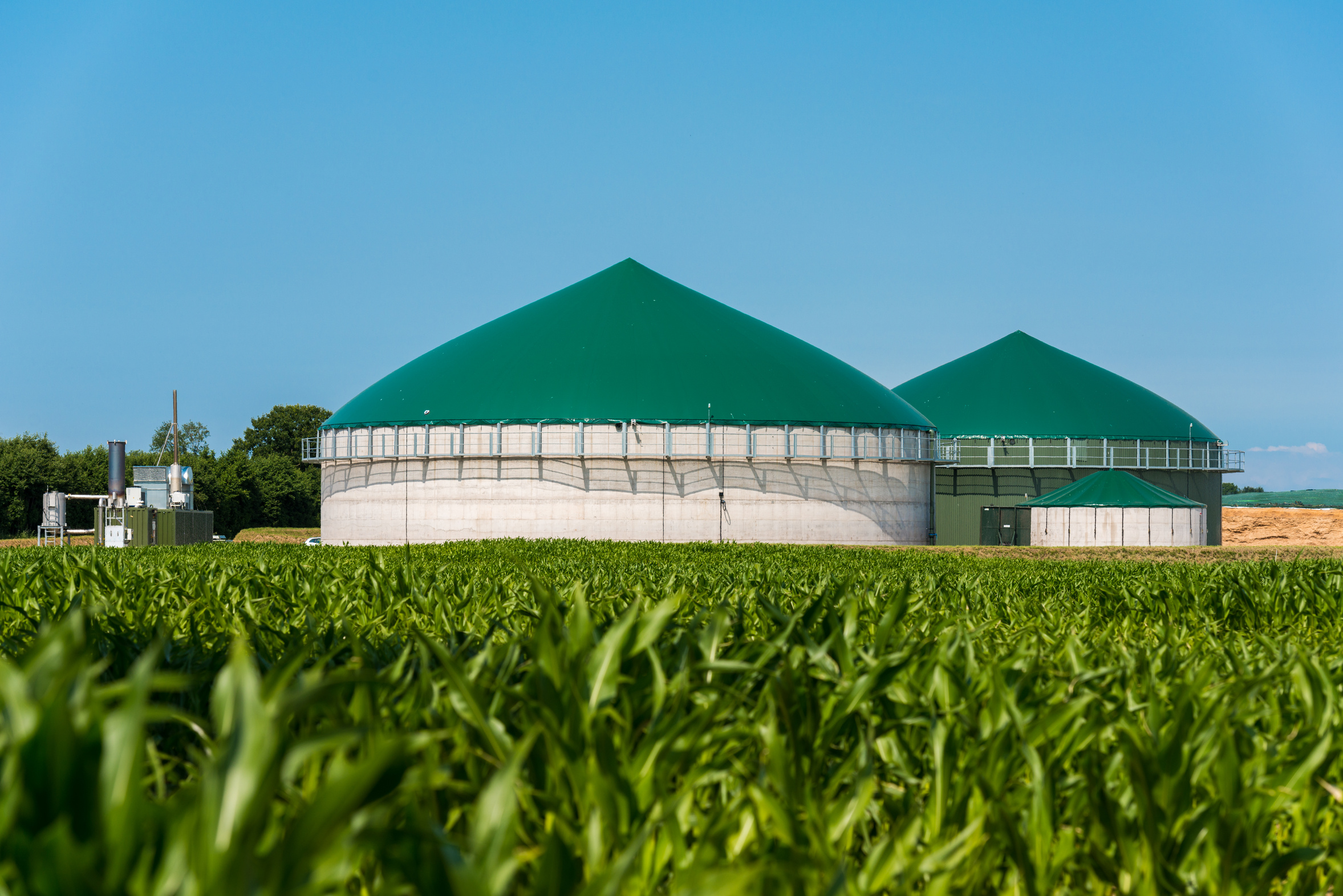
Production of biomass and its use to generate electricity and heat have increased greatly in Germany in recent years, driven by the Renewable Energy Sources Act. The Agriculture Commission at the UBA (KLU) has formulated recommendations on how its further expansion can be designed in an environmentally and nature-friendly way.
In order to use energy more efficiently and thereby improve the climate balance, the siting and capacity of a biogas plant should be geared mainly to the local heating requirement and less to maximum electricity generation to meet supra-regional demand. For energy recovery, mainly residual and waste material as well as feedstocks whose cultivation has benefits for the environment should be used. This could be grassland growth from extensive farming, clover grass crops or lucerne grass crops, for example. Conversion of grassland for maize cultivation should be ruled out through mandatory requirements, particularly in the case of carbon-rich fen soils.
Associated content
Publications
Related publications
- Report on typical GHG emission values for the cultivation of agricultural raw materials for NUTS 2 regions or a more disaggregated level in Germany according to RED II
- Biogenic and fossil carbon in sewage sludge and digester gas determined by isotope investigation
- What issues need to be addressed in the RED II draft to ensure environmental integrity and net climate benefit of bioenergy use
- On the Future of Biogas Generation and Utilisation
- Development of strategies and sustainability standards for the certification of biomass for international trade